Building a Better Future, One Structure at a Time
Concrete is one of the most widely used construction materials in the world, but it also comes with a significant environmental cost. Cement production—the key ingredient in concrete—is responsible for approximately 7–8% of global carbon dioxide (CO₂) emissions, making it one of the largest industrial contributors to climate change.
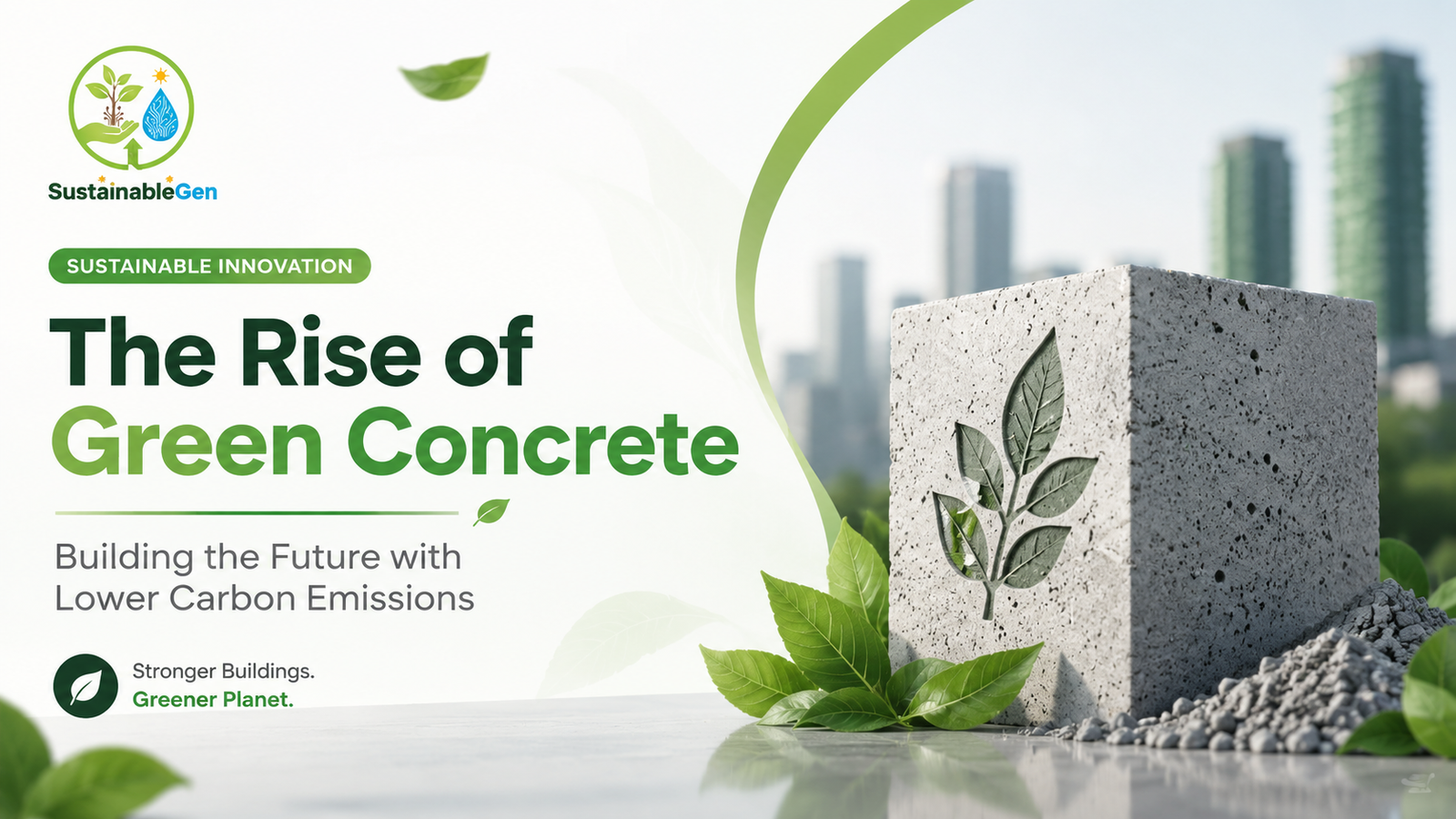
Today, engineers, researchers, and construction companies are working to change that through green concrete—an innovative alternative designed to reduce environmental impact while maintaining the strength and durability needed for modern infrastructure.
What Is Green Concrete?
Green concrete refers to concrete produced using environmentally friendly materials and manufacturing processes. Instead of relying solely on traditional cement, it incorporates recycled materials such as fly ash, ground granulated blast-furnace slag (GGBS), silica fume, or recycled aggregates.
These alternatives help lower emissions, reduce industrial waste, and conserve natural resources without compromising structural performance.
Why It Matters
As cities continue to grow and infrastructure projects expand worldwide, the demand for construction materials is increasing rapidly. By adopting greener alternatives, the construction industry can significantly reduce its carbon footprint while supporting global climate goals.
Some of the key benefits include:
- Lower greenhouse gas emissions
- Reduced use of virgin raw materials
- Increased recycling of industrial by-products
- Improved long-term durability
- Better resource efficiency
These improvements make green concrete an important step toward creating more sustainable and resilient cities.
Innovation Driving Change
Researchers are continuously developing new technologies to make sustainable concrete even more effective.
Some promising innovations include:
- Carbon-cured concrete, which permanently stores captured carbon dioxide within the material.
- Geopolymer concrete, which replaces much of the traditional cement with industrial by-products.
- Self-healing concrete, capable of repairing small cracks using naturally occurring bacteria or specialized additives.
- AI-powered mix optimization, helping engineers reduce material use while maintaining structural strength.
Together, these advancements demonstrate how innovation can help transform one of the world’s most carbon-intensive industries.
Challenges Ahead
Although green concrete offers significant environmental benefits, widespread adoption still faces challenges.
Higher upfront costs, limited availability of sustainable materials, evolving building standards, and varying regional regulations can slow implementation. Continued investment, research, and collaboration between governments, industry, and academia will be essential to accelerate its adoption.
Looking Ahead
Sustainability is increasingly becoming a core consideration in infrastructure development. Green concrete represents more than just an alternative building material—it reflects a broader shift toward responsible innovation and climate-conscious design.
As technologies mature and adoption expands, sustainable construction materials have the potential to play a meaningful role in reducing emissions while supporting the cities and communities of tomorrow.
Key Takeaway
Innovation in construction is proving that stronger infrastructure and environmental responsibility can go hand in hand. Green concrete is one example of how sustainable thinking is reshaping industries and helping build a more resilient future.
Leave a Reply