
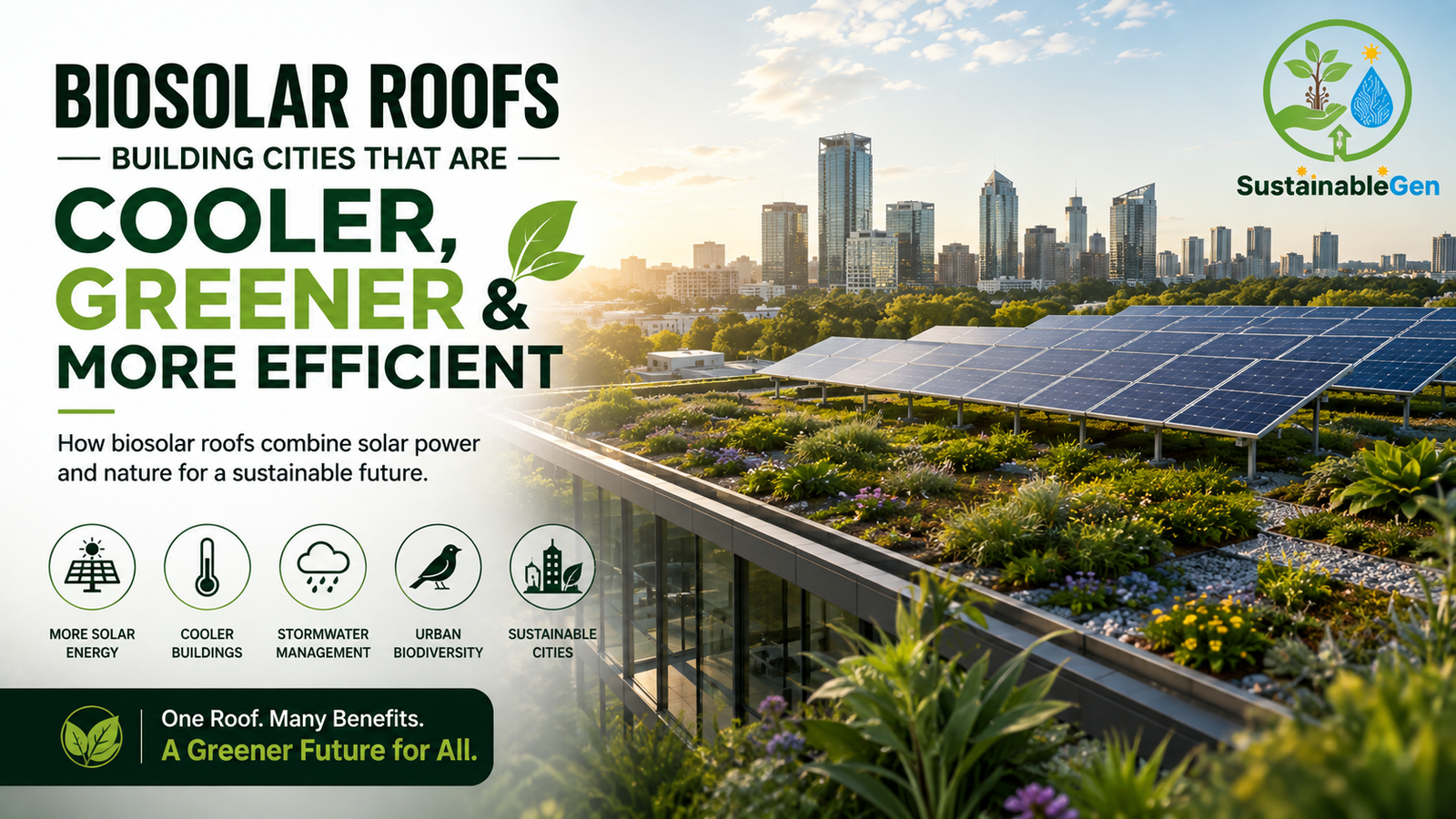
A roof does not have to serve just one purpose. A new biosolar roof at Bradfield City in Western Sydney is showing how solar panels, native vegetation, stormwater management and urban biodiversity can work together in the same space.
New findings published on August 12, 2026, show that the 1,300-square-metre installation generated more solar electricity than a conventional rooftop system while also providing environmental benefits. The project is being developed and monitored by researchers from the University of Technology Sydney (UTS) in partnership with the Bradfield Development Authority.
The Problem: Cities Are Getting Hotter
Modern cities contain large areas of concrete, metal and other hard surfaces that absorb and retain heat. This contributes to the urban heat-island effect, making built-up areas hotter than surrounding environments.
Rooftop solar helps reduce dependence on fossil fuels, but solar panels also face a simple physical problem: high temperatures reduce their efficiency.
Green roofs address a different set of problems. Vegetation can provide shade, retain rainwater, support biodiversity and help cool buildings.
The challenge is that urban land is limited. Using a roof for one environmental purpose can mean losing the opportunity to use it for another.
Biosolar design takes a different approach: combine them.
What Is a Biosolar Roof?
A biosolar roof combines solar photovoltaic panels with a living green roof.
At Bradfield City’s First Building, the system includes 319 north-facing solar panels and more than 14,000 native plants representing 15 species from the Cumberland Plain. The green roof also includes a drainage system capable of holding 20,000 litres of water.
The idea is relatively simple.
Plants release water through a natural process called evapotranspiration. As water moves from the plants and surrounding soil into the atmosphere, it removes heat from the local environment.
That cooling effect can help reduce the temperature around the solar panels.
How the Cooling Effect Improves Solar Performance
Solar panels generally perform better at moderate temperatures. As their temperature rises, their electrical efficiency declines.
At Bradfield City, researchers found that the biosolar roof’s solar panels outperformed panels on a conventional roof by an average of 11.1% during summer.
On particularly hot days, the difference reached 23.25%.
During extreme heat events, the biosolar roof itself was measured at up to 28°C cooler than a conventional aluminium roof.
This is particularly interesting because the cooling effect becomes more valuable when temperatures rise.
In other words, the vegetation is not simply decorative. It is helping create a more favourable operating environment for the solar panels.
More Than Solar Power
The energy benefit is only part of the story.
Researchers found that the roof retained an average of 73% of stormwater runoff and removed more than 90% of key pollutants.
The rooftop ecosystem also supported 39 species of birds, insects, mammals and gastropods.
This demonstrates an important principle in sustainable urban design: a single piece of infrastructure can potentially solve several problems at once.
Instead of treating energy generation, biodiversity and stormwater management as separate projects, a biosolar roof integrates them into one system.
Why Native Plants Matter
The Bradfield installation does not simply place generic vegetation on top of a building.
The roof contains more than 14,000 plants that are native to the Cumberland Plain, helping connect the development with the local ecosystem.
Native planting can provide habitat and food for local species while requiring designs suited to the regional climate.
The NSW Government also says the green roof is intended to act as a “living shield”, helping cool the building and improve the efficiency of the biosolar rooftop.
From Research to a New City
What makes Bradfield particularly interesting is that the project is not being treated simply as an isolated experiment.
Bradfield City is Australia’s newest city and is being developed as a major technology, manufacturing and innovation hub.
Its planning framework includes a target for 80% of suitable roof space to incorporate green roofs or biosolar systems.
That gives researchers an opportunity to study how nature-based infrastructure performs not just on one building, but as part of a larger urban environment.
UTS has described the project as a way of translating years of research into practical urban design. Earlier research from the university had already shown that combining green roofs with solar systems can reduce rooftop temperatures and increase solar generation.
Challenges and Limitations
Biosolar roofs are promising, but they are not a universal solution.
They require additional structural design, planting systems, irrigation and maintenance compared with a conventional solar roof.
The roof must also be able to support soil, vegetation and water while providing safe access for maintenance.
Cost is another consideration. UTS has previously identified upfront costs and industry inertia as barriers to wider adoption.
And although the Bradfield results are encouraging, performance can vary depending on climate, plant selection, roof design, solar-panel configuration and maintenance practices.
That is why real-world monitoring matters.
What Comes Next?
Bradfield City provides an opportunity to continue collecting real-world data on how biosolar roofs perform over time.
The city’s wider sustainability strategy aims to make green and biosolar infrastructure part of future development rather than treating it as an optional addition.
Other projects are also exploring similar approaches. UTS researchers are involved in studying nature-based solutions at Sydney’s Harbourside precinct, which is planned to include 4,700 square metres of green roofs alongside renewable-energy systems.
The broader direction is clear: cities are beginning to look at rooftops as multifunctional environmental infrastructure rather than unused surfaces.
Key Takeaway
The biosolar roof at Bradfield City demonstrates that sustainable infrastructure does not always have to involve choosing one benefit over another.
A single rooftop can generate renewable electricity, reduce heat, retain stormwater and provide habitat.
The bigger lesson is about designing cities to work with nature rather than simply building around it.
As urban areas become hotter and more densely populated, making every available surface perform multiple useful functions could become an important part of creating resilient, climate-smart cities.
Leave a Reply