Water is often discussed as a basic resource. But as climate change alters rainfall, increases drought and intensifies extreme weather, water security is becoming something much bigger: a question of health, food, livelihoods, ecosystems and resilience.
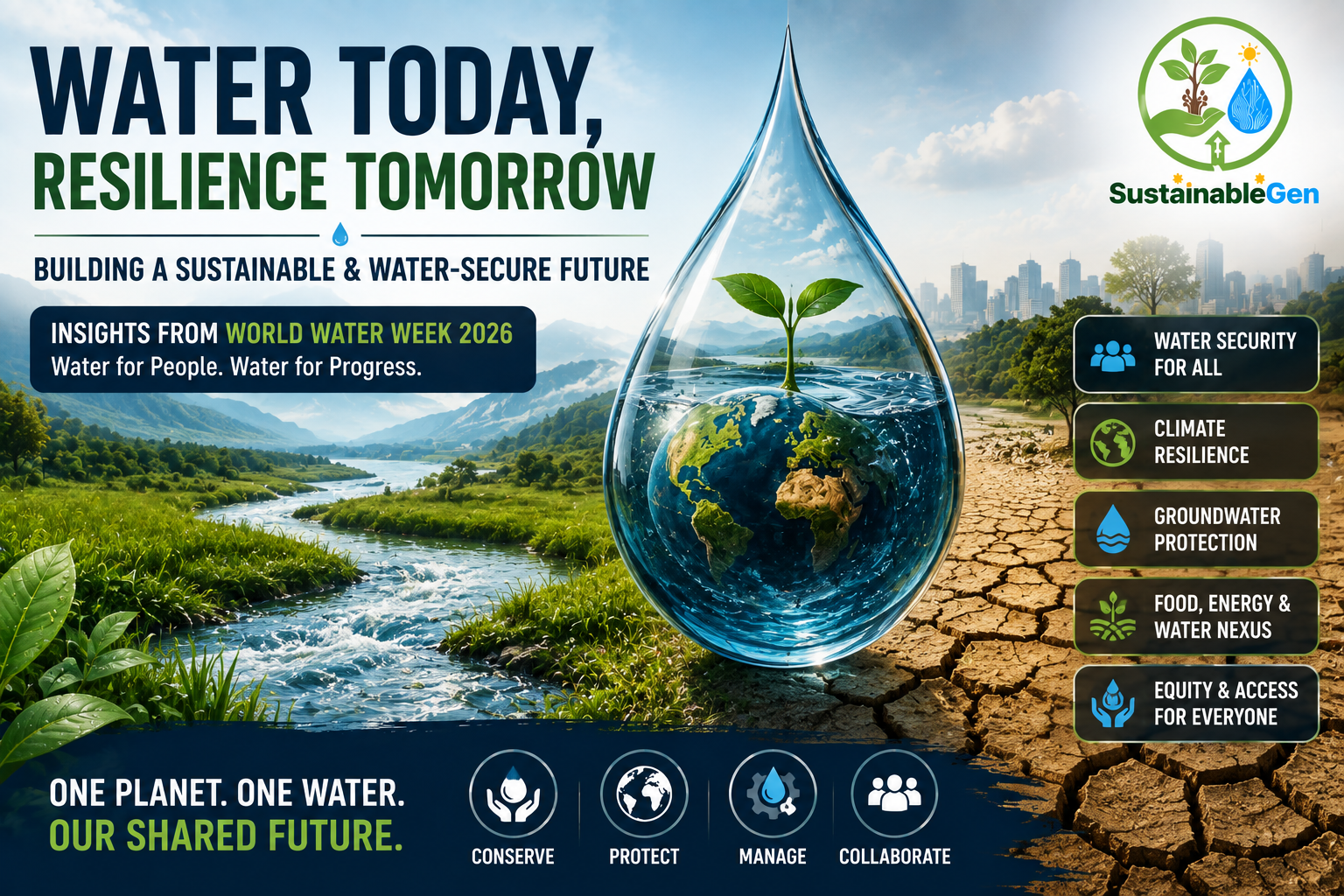
This week, scientists, policymakers, development organizations and water practitioners from around the world are gathering in Stockholm for World Water Week 2026, running from 23–27 August under the theme “Water for People and Progress.”
The event comes at an important moment, with the global community preparing for the UN 2026 Water Conference later this year.
Why Water Security Matters
Billions of people still lack reliable access to safely managed drinking water and sanitation.
At the same time, climate change is making water systems harder to manage. Changing rainfall patterns, droughts, floods and rising temperatures can put pressure on communities, agriculture and ecosystems.
This means water policy can no longer focus only on supplying more water.
It increasingly needs to focus on building systems that can withstand change.
From Water Supply to Water Resilience
One of the key ideas being explored at World Water Week is how countries can make water systems more resilient while ensuring that access remains fair.
A major session today is examining the water-energy-food-environment nexus, often called the WEFE nexus.
The idea is that these systems are connected.
For example, agriculture needs water and energy. Energy production can require water. Healthy ecosystems influence water availability. Food production affects land and water quality.
Managing each issue separately can therefore create unintended problems somewhere else.
The goal is to find solutions that improve several systems at once.
Groundwater Is Getting More Attention
Another important focus this week is groundwater resilience.
Groundwater is largely invisible, but it supplies drinking water, supports agriculture and acts as an important buffer during periods of limited rainfall.
Because it is underground, however, changes can remain difficult to see until water levels have already fallen significantly.
World Water Week is bringing together researchers and policymakers to explore how better groundwater data and management can improve water security and food security.
Better information can make a major difference.
Knowing where groundwater is being depleted, how quickly aquifers are recovering and who depends on them can help governments design more sustainable extraction policies.
Water Security Is Also About People
A sustainable water system is not simply one with enough water.
It also needs to be accessible and equitable.
Water stress can affect communities very differently depending on income, geography, gender and access to infrastructure.
This year’s World Water Week therefore places particular emphasis on inequality and the people most vulnerable to water insecurity. UN-Water describes safely managed water and sanitation as foundations for human development, health and resilience.
That makes water sustainability both an environmental and a social issue.
Connecting Rivers, Land and Oceans
Another interesting direction being discussed this week is source-to-sea management.
Instead of treating rivers, wetlands, coastlines and oceans as separate systems, this approach looks at how environmental pressures move through the entire water system.
Pollution entering a river can eventually affect coastal ecosystems.
Land degradation can influence sediment and water quality.
Decisions made upstream can therefore have consequences far downstream.
Integrated management can help governments and communities understand these connections rather than addressing each problem in isolation.
What Comes Next?
World Water Week is more than a conference. It is also part of a wider international process leading toward the UN Water Conference in Abu Dhabi in December 2026.
The discussions taking place in Stockholm are expected to contribute ideas around water security, cooperation, climate resilience, sanitation and sustainable development.
The bigger challenge will be turning those discussions into investment and action.
That means improving water infrastructure, protecting watersheds, managing groundwater responsibly, supporting climate-resilient agriculture and ensuring vulnerable communities are not left behind.
Key Takeaway
The water crisis is not simply about running out of water.
It is about whether societies can manage water fairly and sustainably in a changing climate.
The discussions taking place at World Water Week 2026 highlight an important shift: water needs to be treated as part of the connected systems that support food, energy, ecosystems and human development.
Building a water-secure future will require better science, smarter management—and cooperation across borders and sectors.
Leave a Reply