
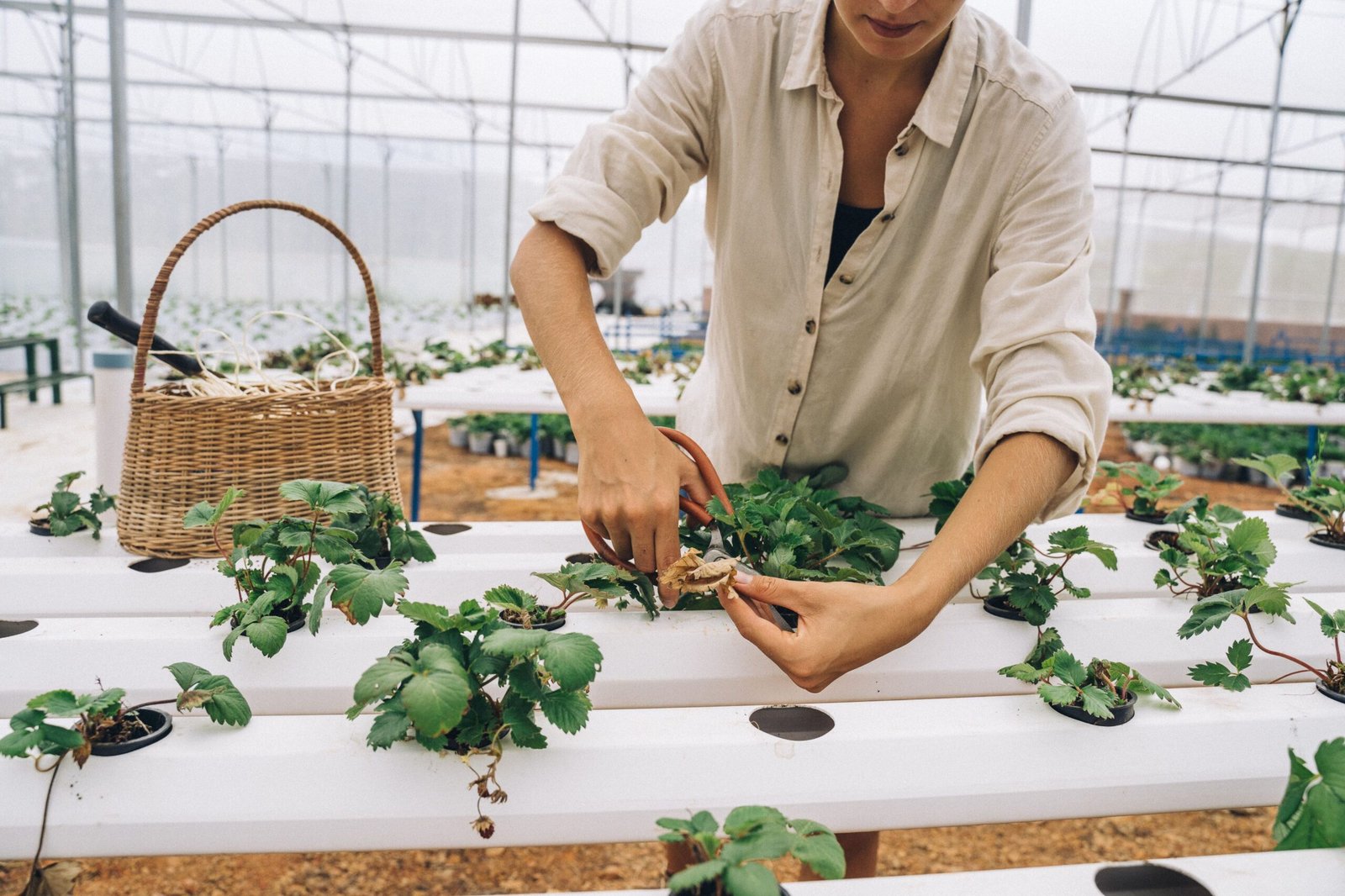
Hydroponic farming has already changed the way some dairy operations produce fresh fodder. But growing crops without soil does not automatically make the process easy.
A small problem inside a growing tray can quickly become a large loss. Uneven germination, fungal contamination or poor growth can affect an entire batch before an operator notices what is happening.
An Indian agritech startup is now trying to tackle that problem with an unusual combination of AI, crop images and real production data.
On September 16, Shunya Agritech launched FodrPulse, a free digital platform designed specifically for hydroponic fodder growers. The company developed it through a research partnership with the Indian Council of Agricultural Research’s Indian Institute of Maize Research and 24 months of data from its own growing operations.
Rather than presenting AI as a generic farming assistant, FodrPulse focuses on one narrow problem: helping growers run hydroponic fodder production more consistently.
What Happens Inside a Hydroponic Fodder Unit?
Hydroponic fodder typically grows from grain to a dense green mat in a short period.
That speed creates both an opportunity and a problem.
There is little room for mistakes.
If something goes wrong early in the cycle, an operator may not have much time to correct it before the batch is ready.
Shunya says its new platform was built around the questions its own operators encounter during everyday production rather than around generic agricultural advice.
That gives the technology a very specific purpose.
It is not trying to manage an entire farm.
It is trying to make one type of biological production easier to monitor.
The Most Interesting Part Is the Camera
One of FodrPulse’s main features is FodrDrishti, a visual AI system that analyses photographs of fodder trays.
An operator can photograph a tray during its growing cycle. The system then assesses factors such as growth uniformity, visible fungal contamination and whether the crop appears to be developing according to its expected stage. It provides a simple assessment such as healthy, monitor or intervene.
Shunya says the system was trained using thousands of tray images collected through its own Growth and Logistics Centre network.
That approach is interesting because agricultural AI often depends heavily on large general datasets.
Here, the company is attempting something more focused: training an AI system around a particular production environment and a specific crop-growing process.
Catching a Problem Before It Becomes a Loss
The potential value is straightforward.
A hydroponic fodder operator might look at a tray and see that something does not appear right. But by the time a problem becomes obvious, the affected batch may already be difficult to save.
Shunya says FodrDrishti can identify certain contamination and growth problems earlier, potentially giving operators two to three additional days to respond.
That claim comes from the company and should be treated as an early operational result rather than independently established evidence.
Still, the principle is compelling.
In short-cycle agriculture, early detection can matter more than sophisticated prediction.
Four Tools Inside One Platform
FodrPulse currently brings together four main functions.
FodrVidhi provides step-by-step growing protocols.
FodrDrishti analyses photographs of the growing fodder.
FodrIQ provides AI-based answers using Shunya’s own production protocols.
FodrShield provides guidance for dealing with pest and fungal contamination using the company’s proprietary formulations.
The company says the app is free for hydroponic fodder operators and is available internationally.
That free-access approach could be important if Shunya wants the technology to spread beyond its own production network.
Why Dairy Is Part of This Story
Fodder may not receive the same attention as milk, but it sits directly underneath dairy productivity.
The quality and consistency of animal nutrition can affect livestock performance and therefore farmer economics.
That is why the involvement of Ananda Dairy is notable.
Ananda Dairy’s founder and chairman, Dr. Radhey Shyam Dixit, launched FodrPulse alongside Shunya’s leadership in Gurgaon. Shunya says the collaboration is intended to improve consistency in fodder production across dairy-linked farming networks.
This gives the technology a potential route from an agritech startup into an existing agricultural supply chain.
AI Is Moving Closer to the Physical Farm
There is a broader trend behind this small launch.
The first wave of agricultural digitalisation focused heavily on information.
Farmers received weather forecasts, market prices and advisory messages.
The next generation is becoming more operational.
Cameras can inspect crops.
Sensors can monitor growing conditions.
AI can identify patterns.
Digital systems can turn those observations into decisions.
FodrPulse represents a particularly simple version of this idea.
Instead of asking a farmer to interpret a complicated dashboard, the system asks them to take a picture.
That could make AI more accessible in environments where farmers or operators do not have the time or technical expertise to work with complex software.
But There Is a Question About Scale
The technology is new, and there are still important questions.
How accurately does the visual system perform across different fodder varieties?
Will it work under different lighting conditions and production environments?
Can its recommendations remain reliable when growers use different equipment or processes?
And most importantly, does using the platform consistently improve production economics?
Those questions will require independent testing and larger-scale adoption.
The current evidence mainly comes from Shunya’s own operations and development programme, so it would be premature to describe FodrPulse as a proven solution for the entire hydroponic fodder industry.
A Small Technology With a Bigger Idea
What makes this launch worth watching is not simply that another agricultural AI app has appeared.
It shows how specialised AI may become increasingly useful in agriculture.
The most valuable systems may not be the ones promising to transform all of farming at once.
They may be the ones that solve one recurring problem extremely well.
For hydroponic fodder growers, that problem is consistency.
If an operator can identify contamination earlier, understand crop development more clearly and access reliable production guidance from a phone, a relatively simple AI tool could prevent losses that would otherwise go unnoticed.
That is where agricultural innovation becomes interesting.
Not when AI sounds impressive, but when it quietly helps a farmer make a better decision at exactly the moment that decision matters.
Leave a Reply