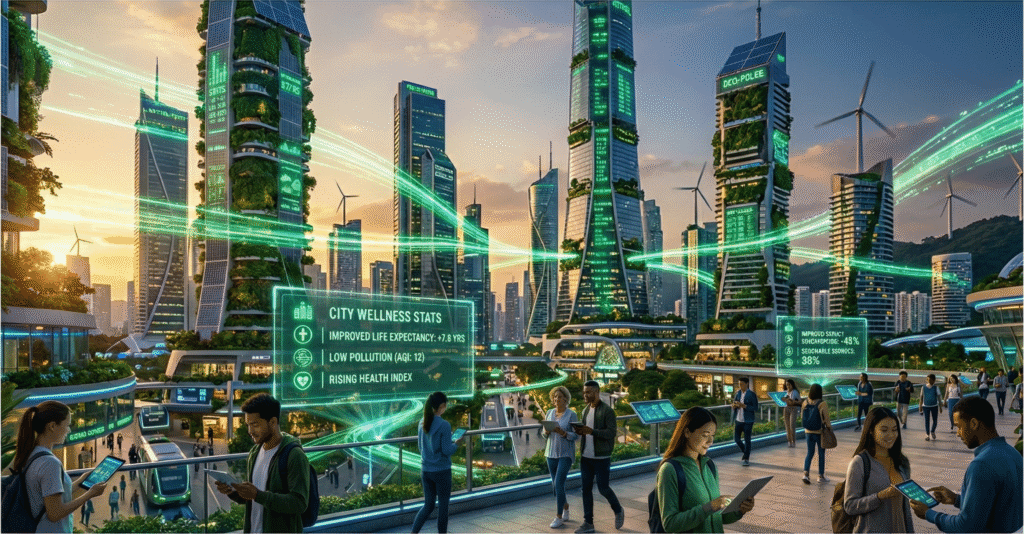
The global push toward sustainability is gaining momentum, and new research suggests that combining digital growth with environmentally responsible practices could transform both economic and public health outcomes. A recent study conducted by researchers at Henan University of Urban Construction highlights how a green digital economy can significantly reduce energy consumption while improving quality of life by 2030.
The study used an advanced economic modeling approach to evaluate how integrating digital technologies with sustainable energy systems can influence carbon emissions, economic growth, and life expectancy. The findings suggest that it is possible to achieve economic progress without compromising environmental health.
What Is a Green Digital Economy
A green digital economy refers to the integration of digital technologies such as cloud computing, data infrastructure, and high-speed connectivity with sustainable practices like renewable energy and energy-efficient systems. This approach ensures that digital expansion does not come at the cost of environmental degradation.
By aligning innovation with sustainability, countries can create systems that are both productive and environmentally responsible.
Key Benefits of Green Digital Integration
The research presents several compelling benefits of adopting a green digital strategy.
Reduced Energy Consumption
The study estimates that energy usage could decline to around 250 million tons of standard coal equivalent by 2030. This represents a reduction of approximately 20 percent compared to conventional growth models. Such a decrease would play a major role in lowering overall carbon emissions.
Improved Air Quality
Air pollution levels are also expected to improve significantly. PM2.5 concentrations could drop to 22.36 micrograms per cubic meter, reflecting an improvement of about 11.5 percent. Cleaner air directly contributes to fewer respiratory illnesses and better overall public health.
Sustained Economic Growth
One of the most important findings is that economic growth does not have to slow down. In fact, the study suggests that GDP growth can remain stable or even accelerate when sustainability is integrated into digital expansion. This challenges the common belief that environmental policies limit economic progress.
Stronger Infrastructure with Clean Energy
The benefits become even more impactful when digital infrastructure such as data centers and communication networks are powered by renewable energy sources. This combination ensures long-term efficiency and sustainability.
Policy Roadmap for a Sustainable Future
To unlock the full potential of a green digital economy, policymakers need to align digital development with environmental strategies. According to the study’s lead researcher, Songtao Huo, this approach allows economies to grow while reducing their environmental impact.
Governments and urban planners can use these insights to design policies that encourage investment in clean energy, smart infrastructure, and sustainable urban development. These steps can lead to better air quality, improved public health, and long-term economic resilience.
Why the Green Digital Transition Matters Now
The findings of this study provide clear evidence that a green digital economy offers benefits for both people and the planet. By focusing on efficiency, clean technologies, and responsible innovation, countries can create healthier environments without sacrificing growth.
Nations that take early action have the opportunity to lead globally in sustainable development. The transition is not just an environmental necessity but also a strategic move toward a more balanced and future-ready economy.