
Tag: green hydrogen

  • Green Technology Innovations Driving Sustainable Growth in 2026

    Futuristic 2026 green tech city blending advanced batteries, carbon capture towers, and AI-driven sustainable farms for a cleaner planet.
    generated by google gemini

    Sustainability is no longer just a social responsibility. In 2026, green technology innovations are transforming environmental challenges into practical business opportunities. Companies across the world are adopting cleaner technologies not only to protect the environment but also to improve efficiency and reduce operational costs.

    Research institutions and technology developers are introducing solutions that help industries move toward a low carbon future. From energy storage to intelligent farming tools, these innovations are making sustainability more accessible and profitable for businesses.

    Key Green Technology Innovations in 2026

    Several technological developments are playing a major role in accelerating sustainability this year. Three innovations stand out for their strong impact on industries and global environmental goals.

    Advanced Energy Storage Systems

    Energy storage has become a critical part of the renewable energy ecosystem. Modern battery systems are helping businesses and households store power generated from renewable sources such as solar and wind.

    Improved battery designs now offer higher efficiency, longer life cycles, and faster charging capabilities. These systems allow organizations to use renewable energy more reliably, even when the sun is not shining or the wind is not blowing.

    Carbon Capture Technologies

    Another breakthrough comes from carbon capture solutions designed to remove carbon dioxide from the atmosphere. These systems capture CO2 emissions from industrial processes and store or reuse them in various products.

    Captured carbon can be used in manufacturing materials like concrete, reducing the need for new raw resources. This approach supports global net zero targets while helping companies lower their carbon footprint.

    AI Optimized Agriculture

    Technology is also reshaping agriculture. Artificial intelligence based farming tools help farmers monitor soil conditions, crop health, and weather patterns in real time.

    These systems analyze large amounts of data to recommend the right amount of water, fertilizer, and pesticides. As a result, farmers can improve crop yields while using fewer natural resources. This method supports more resilient and sustainable food production systems.

    Business Benefits of Green Technology

    Green innovations are changing the way businesses view sustainability. Instead of treating environmental initiatives as a cost, companies now see them as an investment that can generate long term value.

    Organizations that adopt sustainable technologies often experience lower energy expenses, improved operational efficiency, and stronger brand credibility. Customers and investors increasingly prefer companies that demonstrate responsible environmental practices.

    In addition, governments around the world are introducing stricter environmental regulations. Businesses that integrate green solutions early can stay ahead of compliance requirements and avoid future penalties.

    A good example is the growing use of Green hydrogen in heavy industries. Steel manufacturing and other energy intensive sectors are beginning to use this cleaner fuel alternative to reduce emissions while maintaining productivity.

    The Future of Sustainable Innovation

    The pace of green technology development is expected to increase in the coming years. Governments, investors, and private companies are expanding funding for sustainable research and infrastructure.

    As adoption grows, these innovations will continue to reshape industries such as energy, manufacturing, agriculture, and transportation. Businesses that invest in sustainable technology today will likely play a major role in building a cleaner and more resilient global economy.

    Looking ahead to 2027 and beyond, green innovation will not only help address environmental challenges but also create new markets, jobs, and economic opportunities worldwide.

    Conclusion

    Green technology innovations are proving that sustainability and profitability can work together. From advanced batteries to carbon capture systems and AI driven agriculture, these solutions are helping businesses operate more efficiently while protecting the planet.

    Companies that embrace these technologies early will gain both environmental and competitive advantages in the years ahead.
  • Key Advances in Solar and Renewable Energy

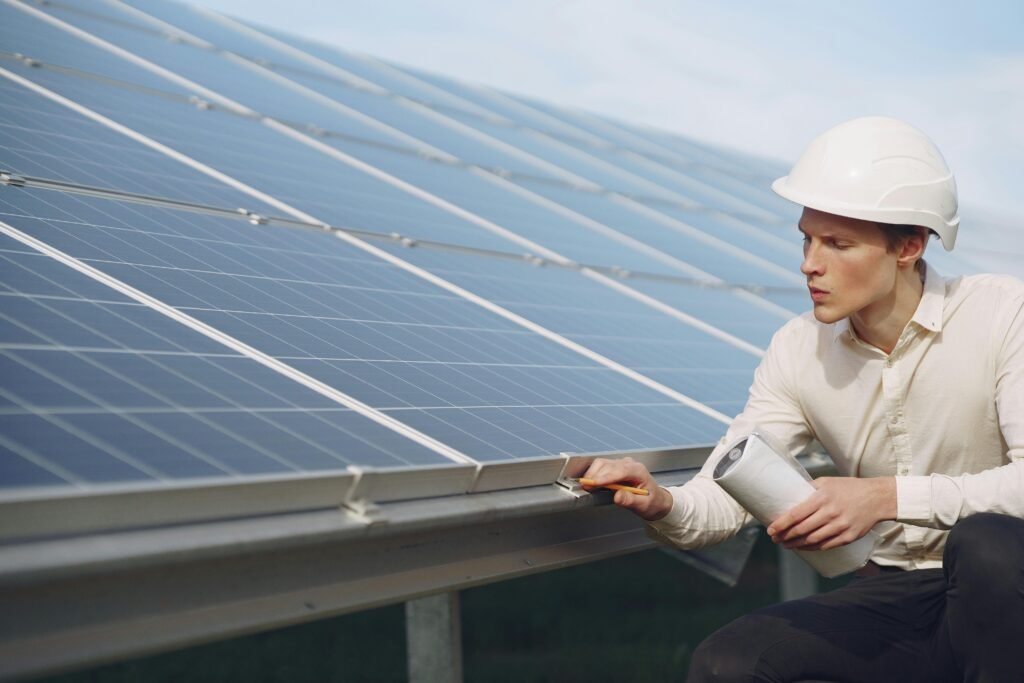
    Solar technician in safety gear closely inspecting large photovoltaic panels on a sunny day, highlighting routine maintenance for efficient renewable energy systems.
    Royalty free image via pexels.

    The global energy landscape is changing quickly. Innovations in renewable technology are making clean power more efficient, affordable, and reliable. By 2025 and beyond, these developments are expected to accelerate the shift away from fossil fuels.

    Advances in solar power, hydrogen fuel, battery storage, and smart grid technology are helping renewable energy move closer to becoming the primary source of electricity worldwide. As research and investment continue to grow, these technologies are opening new possibilities for sustainable power generation.

    Perovskite Solar Breakthroughs

    One of the most exciting developments in solar energy is the progress in perovskite solar cells. These advanced materials have demonstrated impressive efficiency levels in laboratory testing, often exceeding 25 percent. Researchers are also combining perovskite layers with traditional silicon cells to achieve even higher performance.

    Another advantage of perovskite technology is its flexibility. Unlike conventional solar panels, these cells can be lightweight and adaptable. This makes them suitable for building-integrated solar systems, portable energy solutions, and innovative architectural designs.

    However, durability remains a challenge. Exposure to moisture, heat, and sunlight can affect their long term stability. Scientists are currently working on improved coatings and protective layers to address these issues. As production methods improve and costs decrease, perovskite solar technology could soon become a practical option for large scale deployment.

    The Rise of Green Hydrogen

    Green hydrogen is gaining global attention as a clean fuel for industries that are difficult to decarbonize. It is produced through electrolysis powered by renewable energy, which separates hydrogen from water without generating carbon emissions.

    This technology has strong potential in sectors such as steel production, shipping, and heavy transportation. These industries require high energy intensity, making traditional electrification more challenging.

    Investment in green hydrogen projects has increased significantly in recent years. By 2024, global funding had reached around 75 billion dollars, with strong manufacturing growth in countries like China. Continued innovation is expected to reduce production costs and improve water efficiency. Analysts estimate that global output could reach nearly 49 million tons annually by 2030.

    Next Generation Energy Storage

    Reliable energy storage is essential for expanding renewable power. Solar and wind energy are variable by nature, which means electricity must be stored for use when production drops.

    New battery technologies are helping solve this challenge. Solid state batteries and flow batteries offer higher energy density and longer operational lifespans compared with traditional lithium ion systems. These technologies could play an important role in stabilizing power grids.

    Thermal storage systems are also becoming more common. Some facilities use molten salt to store heat from solar power plants, allowing electricity generation even after sunset. Meanwhile, sodium ion batteries are emerging as an alternative that could reduce reliance on limited lithium supplies.

    The global energy storage market is expanding rapidly and is projected to reach more than 31 billion dollars by 2031.

    Growth of Bifacial and Floating Solar

    Solar technology is also evolving in the design of photovoltaic panels. Bifacial solar panels are capable of capturing sunlight on both sides of the module. When installed over reflective surfaces such as sand, water, or light colored rooftops, they can increase energy output by up to 30 percent.

    Today, bifacial modules are becoming the standard design in new solar installations, accounting for a large share of modern photovoltaic systems.

    Floating solar farms represent another innovative solution. These installations are placed on reservoirs, lakes, or other water bodies. The cooling effect of water helps improve panel efficiency by roughly 15 percent. At the same time, floating solar reduces land use and minimizes water evaporation.

    If deployed on a large scale, floating solar could potentially generate energy levels far greater than current global solar capacity.

    Battery Systems and Artificial Intelligence Optimization

    Battery Energy Storage Systems are becoming a critical component of modern renewable energy networks. Technologies such as lithium iron phosphate batteries are helping stabilize electricity grids by storing excess energy generated during peak production.

    The battery storage sector is growing quickly and is expected to expand at an annual rate of nearly 27 percent in the coming years.

    Artificial intelligence is also playing an important role in energy management. AI based systems can predict electricity demand and renewable energy production, allowing grid operators to balance supply more effectively. In addition, digital twin technology allows companies to simulate energy assets and optimize performance before making costly infrastructure decisions.

    Wind and Blockchain Innovations

    Wind energy continues to advance through new engineering designs. Floating wind turbines are opening opportunities for power generation in deeper offshore waters where wind resources are stronger and more consistent.

    Vertical axis wind turbines are also gaining attention because they can operate efficiently in urban environments with complex wind patterns. Some developers are experimenting with wooden turbine towers, which can reduce construction related emissions.

    At the same time, blockchain technology is beginning to reshape energy markets. Blockchain platforms allow direct peer to peer electricity trading between consumers and producers. The technology can also verify renewable energy certificates, improving transparency in green energy markets.

    The blockchain energy sector is expected to grow rapidly over the next decade.

    Diverse Renewables and Smart Grid Integration

    Renewable energy systems are strongest when they combine multiple power sources. Hydropower and geothermal energy provide stable base load electricity that complements variable solar and wind production.

    Modern smart grids are helping integrate these diverse resources. Using real time data and advanced sensors, smart grid systems can automatically adjust electricity flows, balance supply and demand, and reduce energy waste. This improves reliability while making renewable energy networks more resilient.

    Broader Impacts of Renewable Energy Innovation

    The rapid development of renewable technologies is creating benefits far beyond electricity generation. Clean energy investments are generating new employment opportunities, strengthening energy security, and reducing pollution related health risks.

    As technology costs continue to fall and supportive policies expand, renewable energy is positioned to become the backbone of a low carbon global economy. The coming decade will likely see even greater innovation as governments, businesses, and researchers work together to build a sustainable energy future.