Introduction
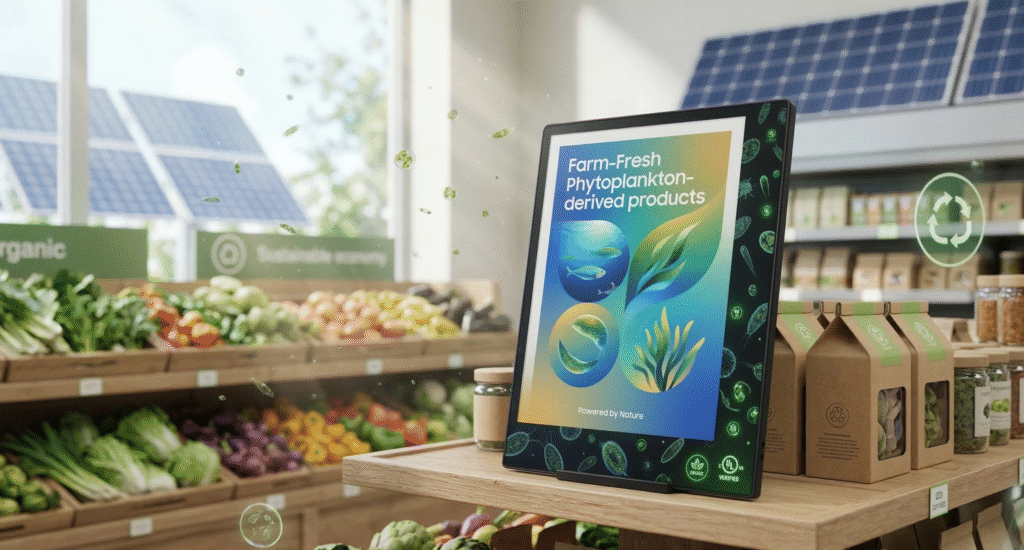
Sustainability is no longer just a trend in the tech industry. It is becoming a core priority. Samsung Electronics has taken a meaningful step in this direction by launching an innovative 13-inch color e-paper display made using bio-resin derived from phytoplankton. This development not only reduces environmental impact but also maintains high performance standards.
Designed primarily for business signage, this display reflects how technology can evolve while being mindful of the planet.
A Smarter Choice of Materials
One of the most impressive aspects of this display is its material composition. The outer body is made using 45 percent recycled plastic combined with 10 percent bio-resin sourced from phytoplankton. This eco-friendly combination has been verified through UL certification, ensuring its credibility and safety standards.
By replacing a portion of traditional petroleum-based plastics, Samsung has managed to reduce manufacturing carbon emissions by more than 40 percent. The phytoplankton-based resin offers durability and flexibility similar to conventional plastic, while also relying on renewable resources. When processed under the right conditions, it can even support biodegradability.
This shift shows how alternative materials can play a crucial role in reducing the environmental footprint of electronics.
Energy Efficiency That Makes a Difference
Beyond sustainable materials, the display also stands out for its energy-saving capabilities. The Color E-Paper, known as the EM13DX model, uses advanced digital ink technology that consumes extremely low power.
One of its most notable features is the ability to display static content without using any power at all. This makes it an excellent replacement for traditional printed signage, especially in commercial environments.
Businesses can easily control and update the display remotely using the Samsung E-Paper App or the VXT platform. Its slim and lightweight design, along with battery support, allows for flexible installation without the need for a constant power supply.
Supporting Broader Sustainability Goals
Samsung has extended its sustainability efforts beyond just the product itself. The packaging for this display is completely paper-based, reducing plastic waste even further.
While the current focus is on business signage, the potential applications of this technology are much wider. It could eventually be integrated into consumer devices, helping reduce reliance on fossil fuel-based plastics across the electronics industry.
Such innovations align with global sustainability efforts by promoting cleaner production methods and reducing pollution caused by traditional materials.
What This Means for the Future
As the production of bio-resin becomes more advanced and scalable, we can expect to see its use expand across various industries. Samsung’s initiative highlights how natural materials like phytoplankton can reshape the future of electronics manufacturing.
This move positions the company as a leader in green innovation, especially in areas like digital signage and e-readers. More importantly, it sets an example for other companies to follow in creating technology that is both efficient and environmentally responsible.
Conclusion
Samsung’s new e-paper display is more than just a product launch. It represents a shift toward responsible innovation. By combining sustainable materials with energy-efficient technology, the company is proving that environmental responsibility and performance can go hand in hand.
As industries continue to explore greener alternatives, developments like this bring us closer to a more sustainable future.