Tag: sustainable agriculture

  • Pioneering Sustainability Through Innovation and Global Collaboration

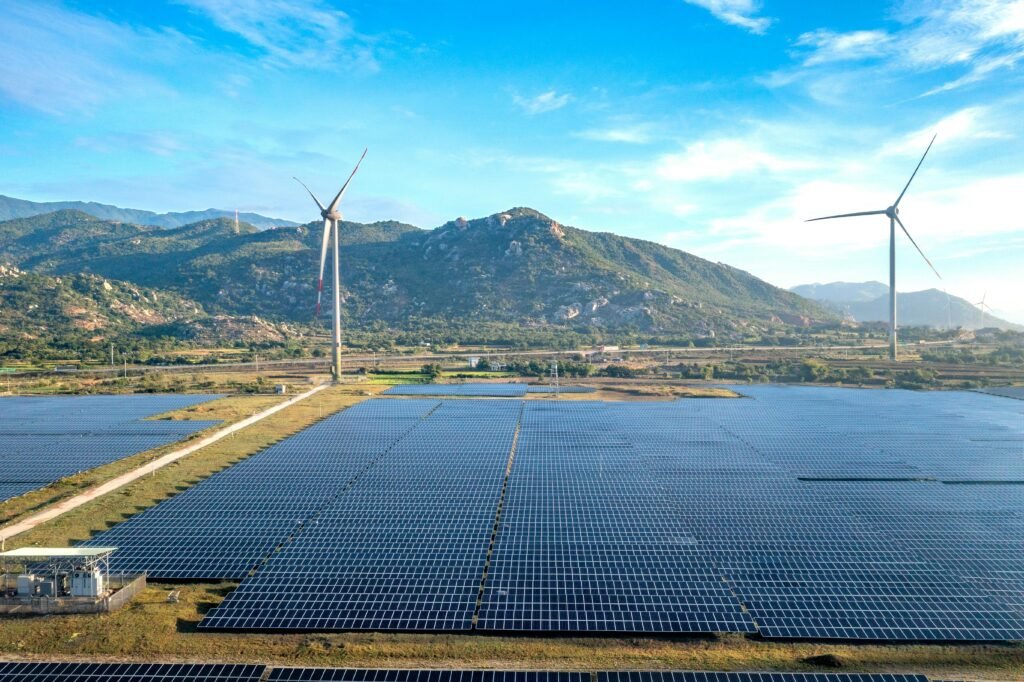
    A hyper-realistic aerial view captures wind turbines and solar panels spanning arid hills in Vietnam's Ninh Thuan province, a leading renewable energy hub.
​
    Royalty free image via pexels.

    Sustainability has moved beyond long term promises and policy statements. Companies, institutions, and communities across the world now drive measurable climate action through innovation and collaboration. Recent updates from Green Sustainability Magazine show how organizations actively reduce emissions, strengthen circular economies, and accelerate renewable energy adoption.

    These initiatives highlight a clear trend. Environmental responsibility and business growth can advance together when leaders invest in practical solutions.


    Industry Leaders Accelerating Sustainable Change

    The December 2025 edition highlights organizations that actively reshape sustainability across key industries.

    Kemvera leads the transition toward carbon negative chemical production by using bio based feedstocks and carbon dioxide derived processes. This model cuts emissions while delivering scalable alternatives to traditional chemicals.

    In agriculture, TIMAC AGRO Deutschland GmbH supports resilient farming through bio innovative tools that improve soil health and help farmers adapt to climate stress.

    FluoroFusion addresses emissions from cooling systems by advancing refrigerant recycling and materials innovation, which reduces high impact greenhouse gases.

    The edition also highlights global sustainable chemistry leadership from the American Chemical Society, low carbon energy development by Sizewell C, and low carbon engineering solutions from ANDRITZ. Forward looking architecture from RODE Architects further reinforces the role of design in climate resilience.


    Sustainable Innovation From Earlier Editions

    The October 2025 edition focused on progress in materials, manufacturing, and circular systems.

    Brenntag continues to improve greener chemical distribution through optimized logistics and responsible sourcing. At the same time, BEWI Group expands polystyrene recycling infrastructure across Europe.

    Manufacturers such as Midas Pattern Company now deliver carbon neutral polyurethane tooling without sacrificing performance.

    Additional contributions from Zest Associates, Thinking Adrenaline, Capsum, and MAJOR FLEX-MAT show how sustainability strategies can strengthen brand value.

    Circular economy leadership also comes from North American Mattress Upcycling, Whitefox Technologies, and Wind Harvest, all of which link environmental impact with commercial success.


    Global Events and Strategic Partnerships

    International collaboration continues to play a central role in climate progress.

    The European Congress on Climate Change and Environmental Sustainability, held on November 6–7, 2025 in Vienna, brings together experts to address carbon strategies, sustainable agriculture, resilient infrastructure, environmental justice, and climate focused technologies.

    Green Sustainability Magazine works with Better Planet Education to provide climate and biodiversity learning resources for young audiences.

    Community focused action also remains a priority. Support for Project Apis CIC in Norfolk strengthens pollinator protection while improving mental wellbeing and social inclusion through accessible beekeeping programs.

    The magazine also supports the 3rd World Congress on Recycling and Waste Management in Singapore from April 13–15, 2026, along with initiatives from The Rivers Trust, which leads river restoration through nature based solutions.


    Sustainability Progress Across Key Industries

    Major industries continue to integrate sustainability into core operations.

    The Mærsk Mc-Kinney Møller Center advances zero carbon shipping by developing green corridors, multi fuel modeling, and cross sector partnerships.

    Hunt’s Food Group achieved B Corp certification by investing in solar energy, optimizing delivery routes, and redistributing surplus food to reduce waste.

    Vermeer UK & Ireland expands its sustainable infrastructure portfolio through electric drilling equipment and low emission fleet transitions.

    Technology driven energy solutions from RJ Power integrate artificial intelligence monitoring and advanced battery systems.

    In hospitality, The Wellbeing Farm delivers certified B Corp events using off grid power and reusable decor. Meanwhile, Blooming Color transforms printing through on demand digital production and closed loop recycling.


    Energy and Agriculture Innovations Shaping the Future

    Transport, renewable energy, and industrial heating continue to evolve rapidly.

    Volvo Trucks targets net zero emissions by 2040 through electric urban trucks, hydrogen powered long haul vehicles, green steel adoption, biogas, and circular battery reuse.

    Eurowind Energy expands wind, solar, and green hydrogen projects across Southern Europe while strengthening local partnerships and digital optimization.

    In industrial heating, ACME Engineering Products leads electrode boiler deployment to support clean energy transitions, particularly in China and the Middle East.


    A Clear Path Forward for Global Sustainability

    These developments point to a shared global direction. Organizations now treat sustainability as a driver of innovation, resilience, and long term value. As these solutions scale, they strengthen both environmental protection and economic stability.

  • How Sustainable Practices Are Strengthening Small Farms and Rural Economies

    Sustainability is no longer limited to large agricultural enterprises. Across many regions, small farms are proving that environmentally responsible methods can also support steady income and long-term resilience. By adopting practical innovations tailored to limited land and resources, these farms are improving soil health, reducing risks from climate change, and strengthening local food systems.

    This article highlights how small-scale farms are using proven sustainability strategies in real-world settings. The focus remains on original insights and verified practices, without replicating source material.

    Why Sustainability Matters for Small Farms

    When small farms adopt sustainable approaches, the benefits extend well beyond environmental protection. Healthier soils retain more moisture and nutrients, helping crops withstand extreme weather conditions such as droughts or heat stress. Organic and regenerative methods also support natural carbon storage, which improves long-term productivity.

    Many farmers report that sustainable systems reduce reliance on synthetic chemicals while maintaining yields comparable to conventional methods. Over time, this balance lowers input costs and supports stable profitability.

    Real-World Examples of Sustainable Small Farms

    Practical success stories demonstrate that sustainability works across diverse climates and markets.

    Rodale Institute, Pennsylvania, USA

    This research-driven farm uses crop rotation, cover crops, and no-till farming to rebuild soil health. Its long-term trials show higher soil organic matter and crop yields that often match or outperform conventional farms during challenging weather years.

    Sweet Greens Farm, Virginia, USA

    By combining regenerative vegetable production with wildflower borders and minimal tillage, this farm has improved soil biodiversity. Pollinators and beneficial insects help manage pests naturally, reducing the need for chemical interventions.

    Sustainable Harvest Farm, Kentucky, USA

    This operation integrates organic vegetable farming, community-supported agriculture programs, and grass-fed livestock. As one of the first certified organic farms in the region, it has created stable income through direct community engagement.

    Harmony Farm, New York, USA

    Using a community-supported agriculture model, Harmony Farm supplies organic vegetables through seasonal produce shares. The system offers members reliable access to fresh food while ensuring predictable revenue for the farm.

    Technology Supporting Small-Scale Sustainability

    New technologies are making sustainable farming more accessible for smaller operations. Soil sensors and drone-based monitoring help farmers apply water and nutrients only where needed, reducing waste and improving efficiency.

    In addition to digital tools, practices like companion planting increase crop diversity and naturally suppress pests. These methods enhance productivity while keeping chemical use low.

    Challenges Facing Small Sustainable Farms

    Despite the advantages, small farms face real obstacles when transitioning to sustainable systems. Access to capital can limit investment in new tools or training. Competition from large-scale producers can also make early-stage costs harder to manage.

    Climate variability adds another layer of complexity. To adapt, many farmers rely on shared solutions such as cooperatives that spread costs and resources across multiple operations.

    Pathways to Stronger Support Systems

    Collaboration plays a major role in overcoming these challenges. Cooperatives allow farmers to purchase supplies in bulk, share equipment, and exchange practical knowledge. Community-supported agriculture programs create dependable revenue while strengthening relationships between producers and consumers.

    Government policies and grant programs also help accelerate the shift by reducing financial barriers and encouraging long-term resilience.

    Wider Impact on Food Systems and Communities

    Sustainable small farms contribute to more than just local markets. Studies show that organic farms often earn higher revenues through price premiums, while also capturing carbon and reducing soil erosion.

    By selling through farmers markets and community programs, these farms keep money circulating locally. The result is stronger rural economies, improved environmental outcomes, and a more secure food system.

  • GreenSync Uses AI to Transform Farm Data into Smarter Agricultural Decisions

    Close-up of a hand holding a smartphone displaying colorful charts and graphs for farm data analysis.
    Royalty free image via pexels

    GreenSync is a Delaware-based agritech startup founded in 2023 with a clear mission to help farmers make better decisions using artificial intelligence. The company focuses on turning complex and scattered farm data into practical insights that improve productivity and support sustainable farming practices across the globe.

    By combining advanced analytics with real-world farm inputs, GreenSync enables growers to increase yields while reducing unnecessary costs and environmental impact.

    A Single Platform for Complete Farm Data

    One of GreenSync’s key strengths is its unified data platform. The system gathers information from multiple sources, including field sensors, farm machinery, weather stations, soil analysis reports, and historical farm records. All this data is organized into a single, easy-to-use dashboard.

    This centralized approach removes the need for manual data handling and allows farmers to quickly identify trends and performance differences between fields. As a result, daily farm operations become faster, more accurate, and easier to manage.

    AI-Driven Recommendations Tailored to Every Field

    GreenSync’s platform uses machine learning models that continuously analyze field performance. Based on this analysis, the system provides customized recommendations for seeding, fertilizer use, crop protection, and harvest timing.

    The technology allows farmers to apply successful strategies from high-performing fields to areas that need improvement. These recommendations take into account crop type, soil conditions, available equipment, and local weather patterns, ensuring that each decision is practical and field-specific.

    Measurable Improvements in Yield and Cost Efficiency

    Farmers using GreenSync have reported noticeable gains within a single growing season. Many users see yield increases of up to 15 percent compared to previous years. At the same time, input costs have dropped by more than 100 dollars per acre due to more precise use of fertilizers and crop protection products.

    In addition to productivity benefits, the platform tracks carbon emissions and sustainability metrics. This feature helps farms meet environmental standards and supports compliance with evolving agricultural regulations.

    Value for Agribusiness and Sustainable Farming

    Beyond individual farmers, GreenSync also delivers value to farm managers, agribusinesses, and input suppliers. Optimized resource planning, reduced waste, and data-driven insights contribute to higher profitability at scale.

    By encouraging efficient input use and supporting regenerative agriculture practices, GreenSync plays a role in advancing long-term sustainability while maintaining strong economic performance.