
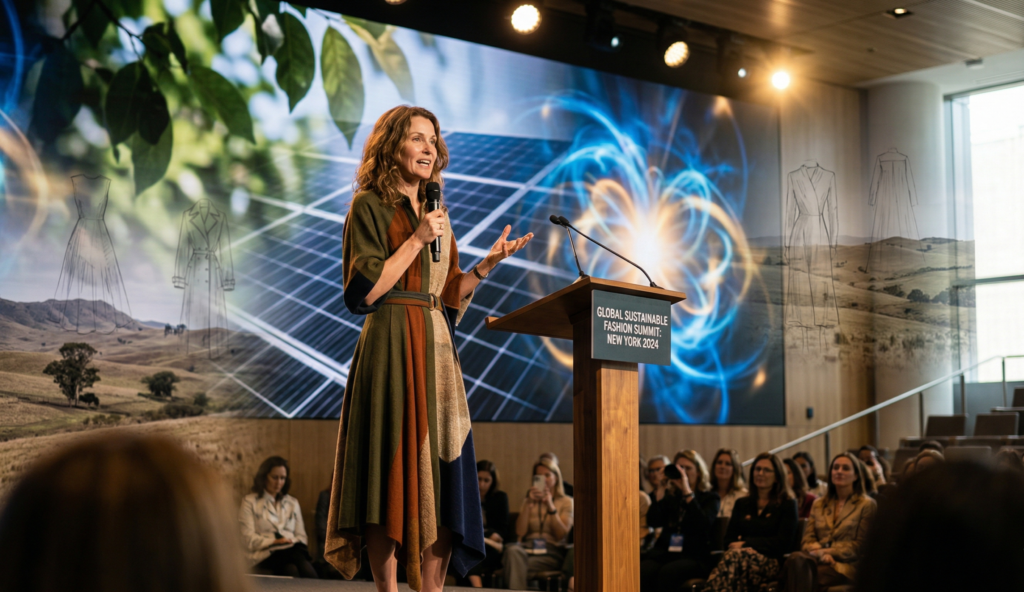
Sustainable fashion is no longer a niche concept. It is becoming a defining standard for the future of the industry. At a recent eco-focused event in New York City, Gabriela Hearst shared her vision for combining high-end fashion with environmental responsibility. During a panel discussion, she explained how luxury and sustainability can work together without compromise.
Summit Overview
At the Ecoscious Living Summit, Hearst brought together experts from multiple fields, including green design, plant-based nutrition, and water conservation. The goal was simple: encourage practical solutions for a more sustainable lifestyle.
In conversation with Lynette Nylander, Executive Digital Director at Harper’s Bazaar, Hearst spoke about the urgent need to rethink how fashion operates. According to her, true luxury is not defined by excess. Instead, it lies in creating timeless, well-crafted pieces designed to last for generations.
Personal Background
Hearst’s approach to sustainability is deeply personal. She grew up on a ranch in Uruguay, where respect for natural resources was a part of everyday life. This early exposure shaped her philosophy as a designer.
She later carried these values into her brand and her role as creative director at Chloé from 2020 to 2023. Her recent collections reflect a forward-thinking mindset, drawing inspiration from nuclear fusion. This concept represents a future powered by clean and limitless energy. To bring authenticity to her work, Hearst even visited fusion research facilities around the world.
A New Approach to Sustainable Fashion
Hearst strongly believes that sustainability should not be treated as separate from luxury. Instead of following fast-changing trends, she encourages a shift toward mindful consumption and long-lasting design.
For her Spring/Summer 2026 collection, her team used around 90 percent deadstock fabrics. By avoiding the creation of new materials, she demonstrated that large-scale brands can adopt more sustainable practices without sacrificing quality or creativity.
She also supports the use of existing resources such as vintage garments and surplus fabrics. This approach reduces waste and extends the lifecycle of materials that would otherwise go unused.
Practical Tips for Consumers
While industry leaders play a key role, Hearst emphasizes that consumers also have the power to drive change. One of her strongest recommendations is to buy secondhand or vintage clothing.
This simple shift can significantly reduce demand for new production. At the same time, it encourages a return to meaningful traditions, such as passing down clothing through generations.
Today, there are more options than ever when it comes to pre-owned fashion. By choosing these alternatives, individuals can contribute to a more sustainable future without compromising on style.
The Future of Fashion
Gabriela Hearst’s message is clear. Sustainability is not a limitation but an opportunity to redefine what luxury truly means. By focusing on quality, longevity, and responsible sourcing, the fashion industry can move toward a more balanced and conscious future.
Leave a Reply