

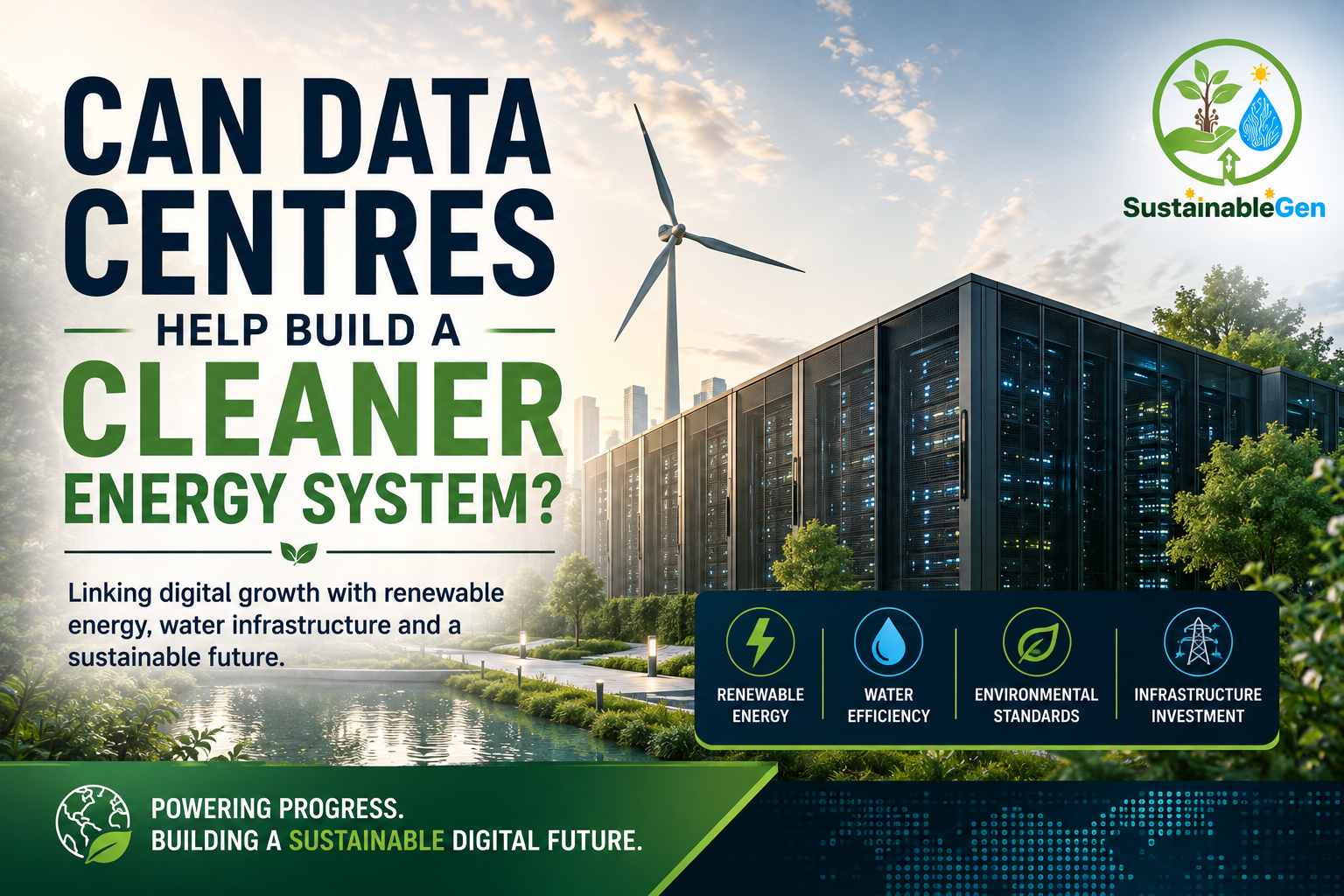
Artificial intelligence is expanding rapidly, but behind every AI model are physical data centres that consume large amounts of electricity and water.
New policy measures in New South Wales, Australia, are attempting to address this challenge by linking future data-centre development with investment in renewable energy, water infrastructure and environmental performance.
The idea is simple: if digital infrastructure creates new demand, it should also help build the infrastructure needed to support that growth sustainably.
Why Data Centres Are Becoming a Sustainability Issue
AI requires powerful computers to process enormous amounts of information. Those computers operate inside data centres, which need electricity around the clock and cooling systems to manage the heat they produce.
The International Energy Agency estimates that global data-centre electricity consumption was around 415 TWh in 2024 and could more than double by 2030.
As AI adoption accelerates, this demand is becoming an increasingly important part of the global energy transition.
The challenge is making sure that growing electricity demand does not simply lead to greater dependence on fossil fuels.
NSW Takes a New Approach
On 17 August 2026, the NSW Government announced a new Data Centre Policy Framework designed to manage the rapid expansion of the sector.
Under the framework, future data-centre development is expected to contribute toward additional renewable energy and water infrastructure.
The policy also aims to ensure that large data-centre projects contribute toward the electricity-network upgrades they require, rather than shifting those costs onto households and smaller electricity users.
This creates a different model for digital infrastructure:
Data-centre growth → additional demand → additional infrastructure investment.
Energy Is Only Part of the Equation
A sustainable data centre cannot be judged only by whether it purchases renewable electricity.
It also needs to consider:
- Energy efficiency
- Water consumption
- Cooling systems
- Grid infrastructure
- Construction impacts
- Local environmental effects
Water is particularly important because some cooling technologies can require substantial amounts of water.
The NSW framework therefore encourages efficient water use and greater use of recycled water where possible.
Why Renewable Energy Alone Isn’t Enough
Solar and wind can provide large amounts of clean electricity, but data centres require reliable power continuously.
When renewable generation falls, the electricity system needs other resources to maintain supply.
That makes battery storage, transmission infrastructure, flexible demand and other forms of firming capacity increasingly important.
The future challenge isn’t simply producing more renewable electricity.
It is building an energy system capable of delivering clean electricity reliably when and where it is needed.
Could AI Growth Support the Clean-Energy Transition?
There is an interesting possibility here.
Data centres need more electricity, but their investment could also help create demand for new renewable projects, storage systems and grid infrastructure.
If governments and developers ensure that new digital infrastructure contributes to the additional clean-energy capacity it requires, AI growth could become a catalyst for wider investment in the energy transition.
But this is not automatic.
The actual environmental benefit will depend on how projects are designed, where their electricity comes from, how much water they consume and whether new infrastructure genuinely adds clean capacity.
What Comes Next?
NSW’s framework is still being implemented, so it is too early to say whether it will become a model for other regions.
But the underlying challenge is global.
As AI and cloud computing expand, countries will need to answer a difficult question:
How do we build the digital infrastructure of the future without creating an equally large environmental burden?
The answer will require more than efficient servers. It will require cleaner electricity, smarter grids, responsible water use and better infrastructure planning.
Key Takeaway
The AI revolution may be digital, but its environmental footprint is physical.
Every data centre needs energy, water and infrastructure.
NSW’s new approach highlights an important principle for the future: the companies and projects creating new resource demand should also help build the sustainable infrastructure needed to support it.
Leave a Reply