Forests are often discussed as climate assets because they absorb and store carbon. But what happens when a region tries to turn that environmental value into a broader economic opportunity?
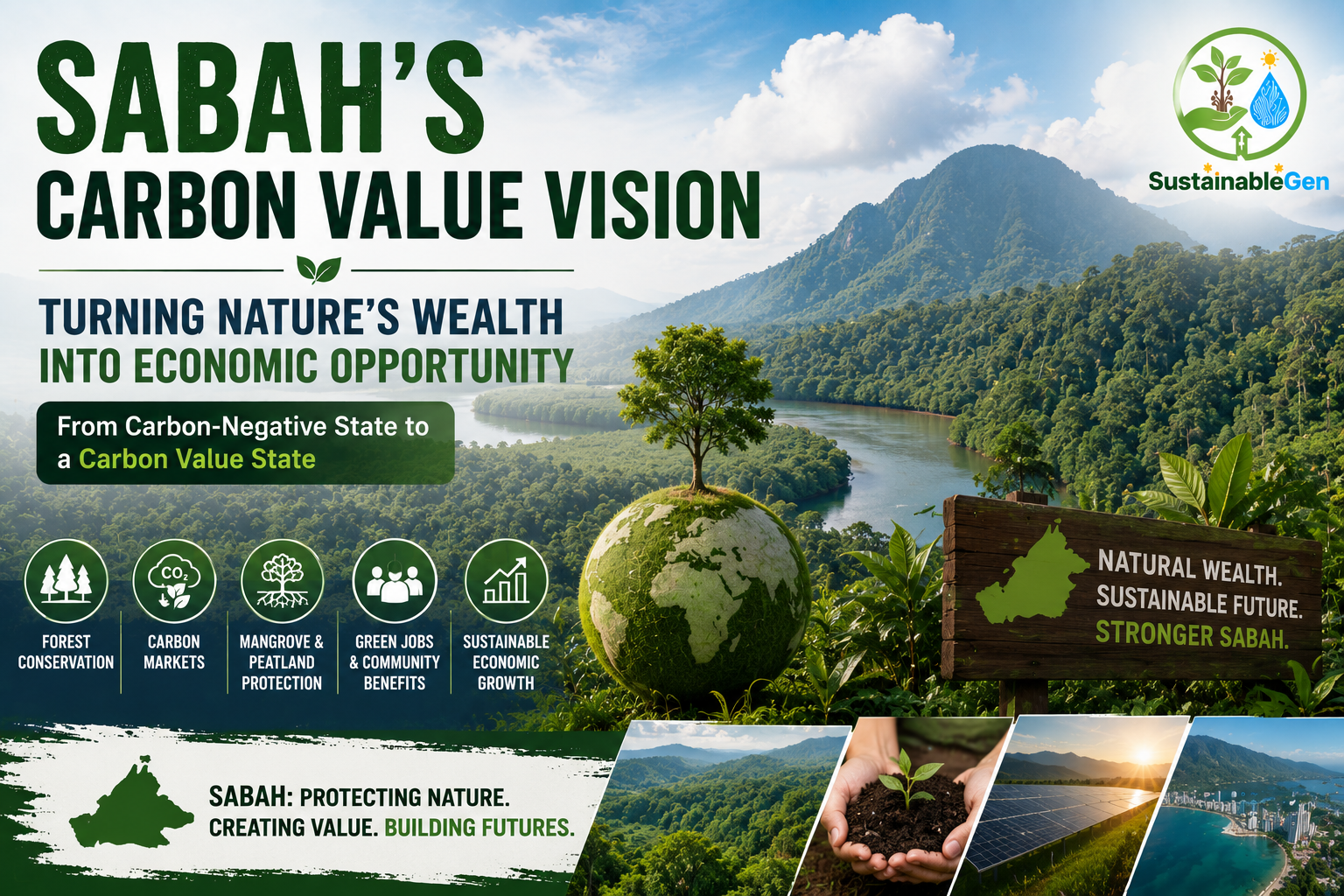
In a development reported on 19 August 2026, Malaysia’s Sabah state government said it wants to move beyond being known as a carbon-negative state and become a “Carbon Value State”—using its natural wealth to create economic value, jobs and sustainable development.
The idea highlights a growing debate in sustainability: Can protecting nature also become an engine for economic development?
From Carbon Sink to Carbon Value
Sabah has extensive forests and ecosystems that absorb carbon dioxide from the atmosphere.
The state has maintained its status as a net carbon sink, supported by its significant forest cover. Sabah’s Chief Minister has also highlighted the potential of forests, peatlands and mangroves to contribute to a nature-based economy.
The proposed “Carbon Value State” approach takes this idea further.
Instead of viewing forests only as protected areas or sources of timber, Sabah wants to recognise the wider economic value of the environmental services they provide.
That could include carbon-related activities, biodiversity conservation and other forms of sustainable use.
Why This Matters
Natural ecosystems already provide services that economies depend on.
Forests store carbon, regulate water, protect soil and provide habitat for wildlife. Mangroves can help protect coastlines, while healthy ecosystems support agriculture, fisheries and tourism.
These benefits often have enormous value—but much of that value does not appear directly in conventional economic accounts.
Carbon markets and other environmental finance mechanisms are one attempt to change that.
If carefully designed, they can create financial incentives for protecting ecosystems rather than destroying them.
Sabah Already Has a Carbon Governance Framework
Sabah is not starting from zero.
The state enacted the Sabah Climate Change and Carbon Governance Enactment 2025, which establishes a framework covering climate governance, carbon activities, greenhouse-gas reporting and carbon rights. However, the legislation is not yet in force.
Sabah’s 2026 budget also allocated RM195.56 million to biodiversity and natural-resource sustainability programmes and highlighted exploration of new revenue sources through domestic and international carbon markets.
This provides an important foundation for the state’s broader ambition.
The Opportunity—and the Risk
Turning natural assets into economic value could provide funding for conservation and create new employment opportunities.
But there is a major distinction between valuing nature and commodifying nature.
A forest should not be protected simply because its carbon has a market price.
Its biodiversity, cultural importance, water functions and role in supporting communities can be just as important.
Carbon markets also need strong monitoring and transparent rules. Poorly designed projects can produce questionable credits or create incentives that do not deliver genuine additional environmental benefits.
That means economic value should support conservation—not replace it.
What Could a Carbon-Value Economy Look Like?
If Sabah succeeds, its approach could involve several interconnected areas:
Carbon markets could provide financial value for verified emissions reductions or removals.
Forest conservation could protect existing carbon stores while maintaining biodiversity.
Mangrove and peatland protection could combine climate benefits with coastal and ecosystem protection.
Nature-based employment could create opportunities in restoration, monitoring, conservation and sustainable land management.
Green investment could channel private capital toward projects that deliver measurable environmental outcomes.
The key will be ensuring that these activities produce real and measurable benefits.
What Comes Next?
Sabah’s ambition is still developing. The state’s carbon-governance legislation has not yet come into force, meaning the institutional framework is not fully operational.
The next stage will therefore be important.
Sabah will need credible measurement systems, transparent carbon governance, strong environmental safeguards and mechanisms that ensure local communities benefit from the transition.
If those pieces come together, the state could offer an interesting example of how biodiversity, climate policy and economic development can be connected.
Key Takeaway
Sabah’s “Carbon Value State” ambition reflects a broader shift in sustainability thinking.
Nature is not simply something to protect after economic development happens. Healthy ecosystems are themselves economic infrastructure.
The challenge is to create financial systems that recognise that value without allowing markets to become an excuse for environmental damage.
If done well, protecting forests could become not just an environmental responsibility, but a source of long-term economic resilience and opportunity.
Leave a Reply