Lakes may look like quiet landscapes, but they are some of the most important freshwater ecosystems on Earth.
They provide water, support food production and livelihoods, sustain biodiversity, influence local climates and help communities adapt to environmental change. Yet many lakes are facing growing pressure from pollution, overuse and climate change.
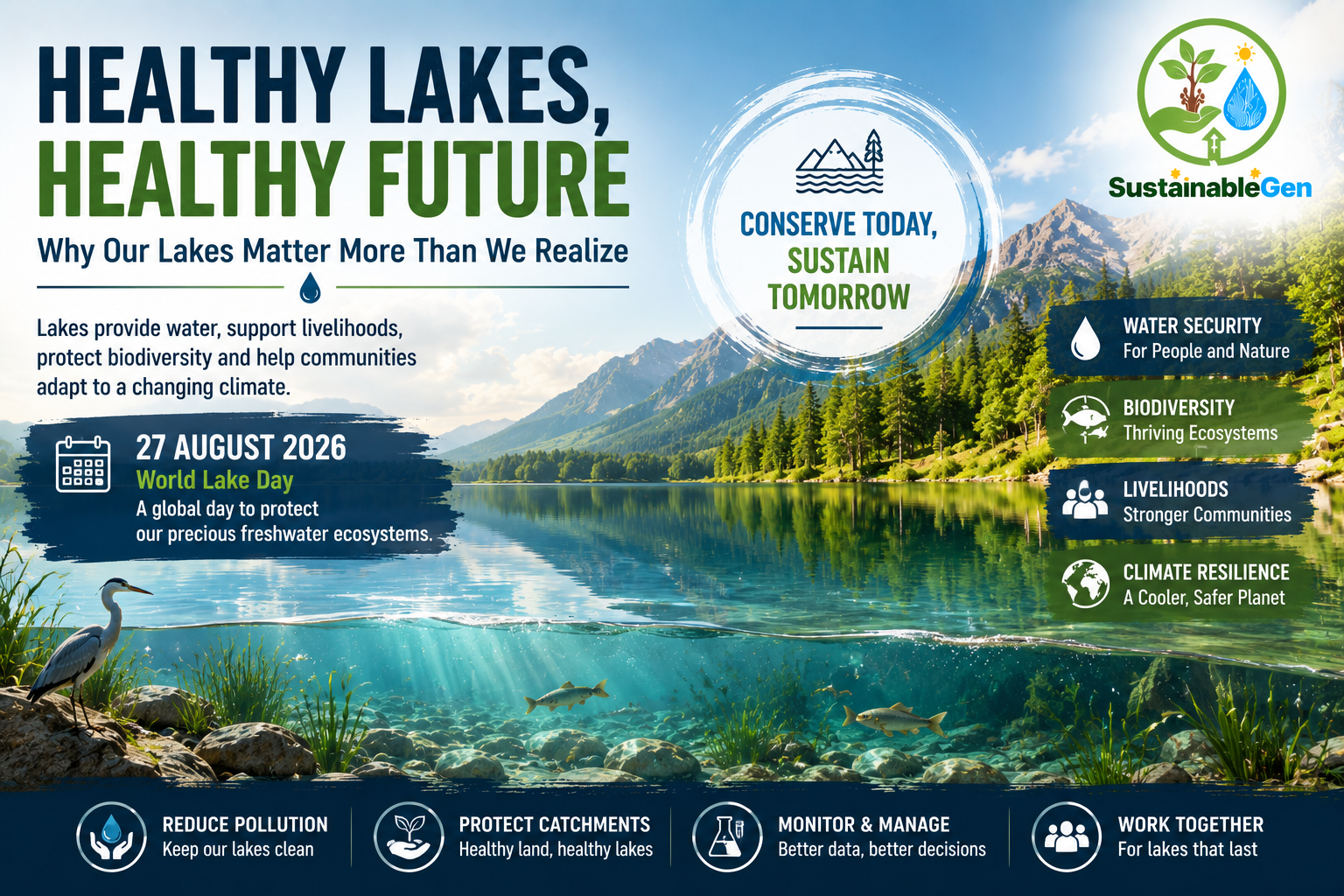
Today, 27 August 2026, the United Nations is marking the first World Lake Day, bringing global attention to the need for sustainable lake management. The day was formally established by the UN General Assembly in 2024.
Why Lakes Matter
Lakes are far more than sources of drinking water.
They support fisheries and agriculture, provide habitats for plants and animals, contribute to local economies and can help regulate surrounding environments.
According to UN sources, lakes and reservoirs contain more than 90% of the world’s liquid surface freshwater. This makes their health directly connected to water security for people and ecosystems.
A degraded lake can therefore create problems far beyond its shoreline.
What Is Happening to the World’s Lakes?
Lakes are under pressure from several directions at once.
Pollution from wastewater, agriculture and industry can introduce excessive nutrients and harmful substances into water.
Climate change can increase evaporation and alter rainfall patterns, changing both the quantity and quality of available water.
Over-abstraction can reduce water levels when communities, farms or industries withdraw water faster than natural systems can replenish it.
Habitat destruction and invasive species can further weaken freshwater ecosystems.
These pressures can also reinforce each other.
For example, nutrient pollution can trigger excessive algae growth. When algae die and decompose, oxygen levels can fall, creating conditions that are harmful to fish and other aquatic organisms.
The Problem Is Not Always Visible
One reason lake degradation can be overlooked is that changes often happen gradually.
A lake may still appear full of water while its ecological condition is deteriorating.
Scientists therefore monitor indicators such as turbidity, nutrient levels, water quality and ecological changes to understand what is happening beneath the surface.
The UN’s water-quality monitoring framework tracks thousands of large lakes globally. Its assessments have identified worsening conditions in many lake basins, including increasing turbidity and eutrophication.
This makes monitoring an important part of sustainable water management.
Why Catchments Matter
Protecting a lake does not necessarily mean focusing only on the water inside it.
A lake is connected to the landscape around it through its catchment—the area from which water flows into the lake.
Rainwater can carry soil, fertilizers, wastewater and other pollutants from surrounding land into rivers and eventually into lakes.
That means protecting a lake may require action far beyond its shoreline.
Better agricultural practices, wastewater treatment, wetland protection, erosion control and responsible water use can all contribute to healthier lake systems.
UNEP increasingly highlights catchment-based management as an important approach to protecting freshwater ecosystems.
A New Global Focus on Lake Conservation
The creation of World Lake Day is significant because it gives lakes a dedicated international platform.
The UN resolution establishing the day calls for greater education and awareness and encourages countries and stakeholders to preserve, conserve, restore and sustainably manage lakes and related ecosystems.
Today, the UN is also holding a special event focused on strengthening global cooperation for sustainable lake management.
The emphasis is important because many lakes cross administrative or national boundaries.
Protecting them can therefore require cooperation between governments, communities, scientists, businesses and local stakeholders.
What Can Be Done?
There is no single solution for every lake.
But several approaches can make a difference:
- Reduce agricultural runoff and nutrient pollution.
- Improve wastewater treatment.
- Protect wetlands and natural catchments.
- Monitor water quality and lake levels.
- Use freshwater resources more efficiently.
- Restore damaged habitats.
- Control invasive species.
- Involve local communities in lake management.
- Strengthen cooperation where lakes cross borders.
The goal should not simply be to keep lakes looking healthy.
It should be to maintain the ecological functions that allow lakes to continue supporting people and nature.
What Comes Next?
World Lake Day is only the beginning.
The real challenge is translating awareness into long-term management.
As climate change and human demand place increasing pressure on freshwater systems, countries will need better data, stronger policies and investment in restoration and pollution prevention.
Lake conservation also needs to become part of wider climate, agriculture, biodiversity and water strategies rather than being treated as a separate environmental issue.
Key Takeaway
A lake can look peaceful while quietly losing its ability to support life.
The first World Lake Day is a reminder that freshwater ecosystems are not simply scenic places or water reservoirs. They are essential infrastructure for people, food, biodiversity and climate resilience.
Protecting lakes means protecting the systems that depend on them.
Healthy lakes are not just an environmental goal—they are part of a sustainable future.
Leave a Reply