Tag Archives: green technology

Samsung’s New Eco-Friendly Display: A Step Toward Sustainable Electronics

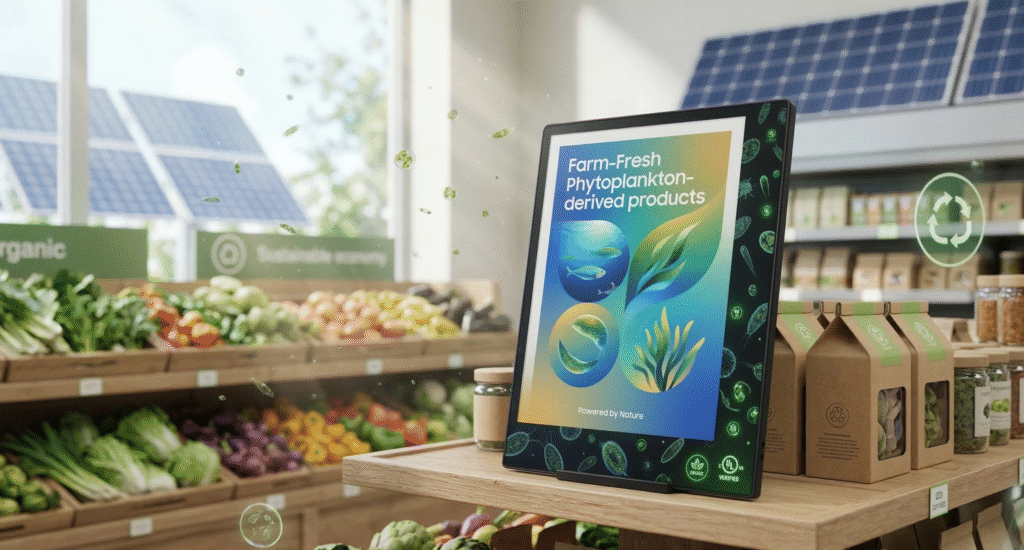
Hyper-realistic Samsung 13-inch Color E-Paper display with phytoplankton bio-resin housing on sustainable retail shelf, showcasing eco-friendly digital signage innovation for agriculture and green tech.
generated by google gemini

Introduction

Sustainability is no longer just a trend in the tech industry. It is becoming a core priority. Samsung Electronics has taken a meaningful step in this direction by launching an innovative 13-inch color e-paper display made using bio-resin derived from phytoplankton. This development not only reduces environmental impact but also maintains high performance standards.

Designed primarily for business signage, this display reflects how technology can evolve while being mindful of the planet.


A Smarter Choice of Materials

One of the most impressive aspects of this display is its material composition. The outer body is made using 45 percent recycled plastic combined with 10 percent bio-resin sourced from phytoplankton. This eco-friendly combination has been verified through UL certification, ensuring its credibility and safety standards.

By replacing a portion of traditional petroleum-based plastics, Samsung has managed to reduce manufacturing carbon emissions by more than 40 percent. The phytoplankton-based resin offers durability and flexibility similar to conventional plastic, while also relying on renewable resources. When processed under the right conditions, it can even support biodegradability.

This shift shows how alternative materials can play a crucial role in reducing the environmental footprint of electronics.


Energy Efficiency That Makes a Difference

Beyond sustainable materials, the display also stands out for its energy-saving capabilities. The Color E-Paper, known as the EM13DX model, uses advanced digital ink technology that consumes extremely low power.

One of its most notable features is the ability to display static content without using any power at all. This makes it an excellent replacement for traditional printed signage, especially in commercial environments.

Businesses can easily control and update the display remotely using the Samsung E-Paper App or the VXT platform. Its slim and lightweight design, along with battery support, allows for flexible installation without the need for a constant power supply.


Supporting Broader Sustainability Goals

Samsung has extended its sustainability efforts beyond just the product itself. The packaging for this display is completely paper-based, reducing plastic waste even further.

While the current focus is on business signage, the potential applications of this technology are much wider. It could eventually be integrated into consumer devices, helping reduce reliance on fossil fuel-based plastics across the electronics industry.

Such innovations align with global sustainability efforts by promoting cleaner production methods and reducing pollution caused by traditional materials.


What This Means for the Future

As the production of bio-resin becomes more advanced and scalable, we can expect to see its use expand across various industries. Samsung’s initiative highlights how natural materials like phytoplankton can reshape the future of electronics manufacturing.

This move positions the company as a leader in green innovation, especially in areas like digital signage and e-readers. More importantly, it sets an example for other companies to follow in creating technology that is both efficient and environmentally responsible.


Conclusion

Samsung’s new e-paper display is more than just a product launch. It represents a shift toward responsible innovation. By combining sustainable materials with energy-efficient technology, the company is proving that environmental responsibility and performance can go hand in hand.

As industries continue to explore greener alternatives, developments like this bring us closer to a more sustainable future.


Sustainable Tech Innovations Transforming Modern Businesses

A hyper-realistic photograph shows a modern data center powered by sustainable technology. Glowing blue server racks under efficient LED lights feature AI-optimized cooling systems, with large windows revealing solar panels and wind turbines outside. Workers in green safety gear recycle smartphone components on conveyor belts, while a lush rooftop garden with native plants thrives under a clear blue sky.
generated by google gemini

Technology companies across the world are reshaping the way businesses operate by adopting sustainable innovations. These practices reduce environmental impact while improving efficiency and long term profitability. As climate concerns grow and regulations become stricter, organizations are discovering that sustainability and innovation can work together to support a greener and more resilient future.

From artificial intelligence that improves energy efficiency to circular manufacturing systems that reduce waste, several technology driven solutions are helping businesses transition toward responsible operations.

AI Helping Businesses Use Energy More Efficiently

Artificial intelligence is playing an important role in reducing energy consumption, especially in large scale data centers. Data centers require a huge amount of electricity to run servers and maintain cooling systems. With the help of AI powered tools, companies can analyze energy usage patterns and automatically adjust systems in real time.

For example, the AI system developed by Google’s DeepMind analyzes sensor data from data centers to predict cooling requirements. By making continuous adjustments, the system has reduced cooling energy costs by nearly 40 percent. This type of smart automation helps companies lower operational costs while reducing their overall energy footprint.

The success of AI driven energy optimization is also encouraging other industries to adopt similar technologies in manufacturing, logistics, and infrastructure management.

Renewable Energy Is Powering the Future of Cloud Services

Cloud computing companies manage massive data infrastructure that requires a constant supply of electricity. To reduce reliance on fossil fuels, many technology leaders are investing heavily in renewable energy sources.

Microsoft, for example, has announced plans to operate its facilities using 100 percent renewable energy by 2025. The company is also investing in carbon removal initiatives that help offset emissions produced by its operations. These initiatives include partnerships with clean energy providers and the development of sustainable energy infrastructure.

The shift toward renewable powered cloud services not only reduces environmental impact but also creates more reliable and stable energy systems for the digital economy.

Circular Manufacturing Reducing Electronic Waste

Another important sustainability trend in the technology sector is the move toward circular manufacturing. Instead of relying entirely on newly mined raw materials, companies are developing systems that recover and reuse valuable components from old devices.

Apple has introduced a specialized recycling robot called Daisy that disassembles old iPhones and extracts reusable materials such as rare metals. By recovering these resources, companies can reduce the need for new mining activities while also addressing the growing problem of electronic waste.

Circular production models extend the life of valuable resources and reduce the environmental footprint associated with device manufacturing.

Why Businesses Are Investing in Green Technology

Sustainable technology strategies are becoming a priority for businesses for several reasons. Companies that invest in green innovation often experience lower operational costs due to improved energy efficiency. At the same time, environmentally responsible practices help build stronger trust with customers and stakeholders.

Investors are also increasingly supporting organizations that demonstrate clear environmental commitments. In addition, governments and regulatory bodies are introducing incentives and funding opportunities that reward sustainable initiatives.

Businesses that adopt these strategies early position themselves for long term success in a rapidly evolving global market.

The Future of Sustainable Technology

The integration of sustainability and technology will continue to influence how businesses grow and compete. Innovations in artificial intelligence, renewable energy, and circular manufacturing are already proving that responsible practices can deliver both environmental and economic benefits.

As more companies embrace green technologies, sustainable innovation will become a core element of modern business strategy.

Green Technology Innovations Driving Sustainable Growth in 2026

Futuristic 2026 green tech city blending advanced batteries, carbon capture towers, and AI-driven sustainable farms for a cleaner planet.
generated by google gemini

Sustainability is no longer just a social responsibility. In 2026, green technology innovations are transforming environmental challenges into practical business opportunities. Companies across the world are adopting cleaner technologies not only to protect the environment but also to improve efficiency and reduce operational costs.

Research institutions and technology developers are introducing solutions that help industries move toward a low carbon future. From energy storage to intelligent farming tools, these innovations are making sustainability more accessible and profitable for businesses.

Key Green Technology Innovations in 2026

Several technological developments are playing a major role in accelerating sustainability this year. Three innovations stand out for their strong impact on industries and global environmental goals.

Advanced Energy Storage Systems

Energy storage has become a critical part of the renewable energy ecosystem. Modern battery systems are helping businesses and households store power generated from renewable sources such as solar and wind.

Improved battery designs now offer higher efficiency, longer life cycles, and faster charging capabilities. These systems allow organizations to use renewable energy more reliably, even when the sun is not shining or the wind is not blowing.

Carbon Capture Technologies

Another breakthrough comes from carbon capture solutions designed to remove carbon dioxide from the atmosphere. These systems capture CO2 emissions from industrial processes and store or reuse them in various products.

Captured carbon can be used in manufacturing materials like concrete, reducing the need for new raw resources. This approach supports global net zero targets while helping companies lower their carbon footprint.

AI Optimized Agriculture

Technology is also reshaping agriculture. Artificial intelligence based farming tools help farmers monitor soil conditions, crop health, and weather patterns in real time.

These systems analyze large amounts of data to recommend the right amount of water, fertilizer, and pesticides. As a result, farmers can improve crop yields while using fewer natural resources. This method supports more resilient and sustainable food production systems.

Business Benefits of Green Technology

Green innovations are changing the way businesses view sustainability. Instead of treating environmental initiatives as a cost, companies now see them as an investment that can generate long term value.

Organizations that adopt sustainable technologies often experience lower energy expenses, improved operational efficiency, and stronger brand credibility. Customers and investors increasingly prefer companies that demonstrate responsible environmental practices.

In addition, governments around the world are introducing stricter environmental regulations. Businesses that integrate green solutions early can stay ahead of compliance requirements and avoid future penalties.

A good example is the growing use of Green hydrogen in heavy industries. Steel manufacturing and other energy intensive sectors are beginning to use this cleaner fuel alternative to reduce emissions while maintaining productivity.

The Future of Sustainable Innovation

The pace of green technology development is expected to increase in the coming years. Governments, investors, and private companies are expanding funding for sustainable research and infrastructure.

As adoption grows, these innovations will continue to reshape industries such as energy, manufacturing, agriculture, and transportation. Businesses that invest in sustainable technology today will likely play a major role in building a cleaner and more resilient global economy.

Looking ahead to 2027 and beyond, green innovation will not only help address environmental challenges but also create new markets, jobs, and economic opportunities worldwide.

Conclusion

Green technology innovations are proving that sustainability and profitability can work together. From advanced batteries to carbon capture systems and AI driven agriculture, these solutions are helping businesses operate more efficiently while protecting the planet.

Companies that embrace these technologies early will gain both environmental and competitive advantages in the years ahead.

Microsoft Achieves 100% Renewable Energy Match Ahead of 2025 Sustainability Target

Microsoft has reached an important milestone in its sustainability journey. The company has successfully matched its global electricity consumption with renewable energy sources, meeting its 2025 target ahead of schedule. This achievement strengthens Microsoft’s broader environmental commitment, first announced in 2020, to become carbon negative by 2030.

As demand for cloud services and data centers continues to grow, this accomplishment signals that large technology companies can expand responsibly while investing in clean energy.

The Vision Behind Microsoft’s Sustainability Commitment

In 2020, Microsoft unveiled one of the most ambitious climate plans in the corporate world. The company pledged to become carbon negative by 2030 and to remove more carbon from the atmosphere than it has emitted since its founding by 2050.

Beyond carbon reduction, Microsoft also committed to becoming water positive and achieving zero waste by 2030. These goals were designed to address environmental impact across operations, supply chains, and product lifecycles.

Reaching 100 percent renewable electricity coverage is a major step toward delivering on those promises.

How Microsoft Reached 100% Renewable Electricity

To achieve this milestone, Microsoft invested heavily in long term power purchase agreements for wind and solar energy projects across multiple regions. The company also explored emerging clean energy technologies, including advanced nuclear solutions.

Through partnerships with energy providers and suppliers, Microsoft secured enough renewable energy capacity to match all the electricity consumed by its global operations. This includes offices, campuses, and data centers that power services like Azure and Microsoft 365.

Collaboration played a central role in this progress. Company leaders have consistently emphasized innovation in energy technology and close coordination with partners to accelerate the transition to cleaner power systems.

Importantly, this achievement supports Microsoft’s target of cutting operational emissions by more than half compared to 2020 levels.

Addressing the Challenge of Growing Energy Demand

The rapid expansion of cloud computing and artificial intelligence has significantly increased electricity demand from data centers worldwide. Rather than slowing growth, Microsoft has focused on decoupling expansion from emissions.

By investing early in renewable energy projects, the company has helped expand clean energy supply in regions where demand is rising. This approach not only benefits Microsoft but also strengthens broader clean energy infrastructure.

What Comes Next for Microsoft’s Climate Strategy

While matching 100 percent of its electricity use with renewable energy is a significant achievement, Microsoft acknowledges that more work lies ahead.

The company plans to maintain this renewable energy match through 2030. At the same time, it is intensifying efforts to reduce Scope 3 emissions, which come from supply chains, manufacturing, and other indirect sources. These emissions often represent the largest portion of a company’s carbon footprint.

To address this challenge, Microsoft is investing in:

  • Energy efficiency improvements across operations
  • Sustainable materials and low carbon product design
  • Carbon removal technologies
  • Stronger environmental standards for suppliers

Balancing continued business growth with deep emissions reductions will require ongoing innovation and accountability.

Why This Milestone Matters

Microsoft’s renewable energy achievement demonstrates that climate goals can be integrated into long term business strategy. As one of the world’s largest technology companies, its actions influence suppliers, competitors, and policymakers.

By reaching 100 percent renewable electricity coverage, Microsoft has set a clear benchmark for corporate sustainability leadership. The focus now shifts toward achieving carbon negative status by 2030, a goal that will require sustained commitment and industry wide collaboration.