Tag Archives: green technology

12 Climate Tech Startups Leading the Net Zero Future in 2026

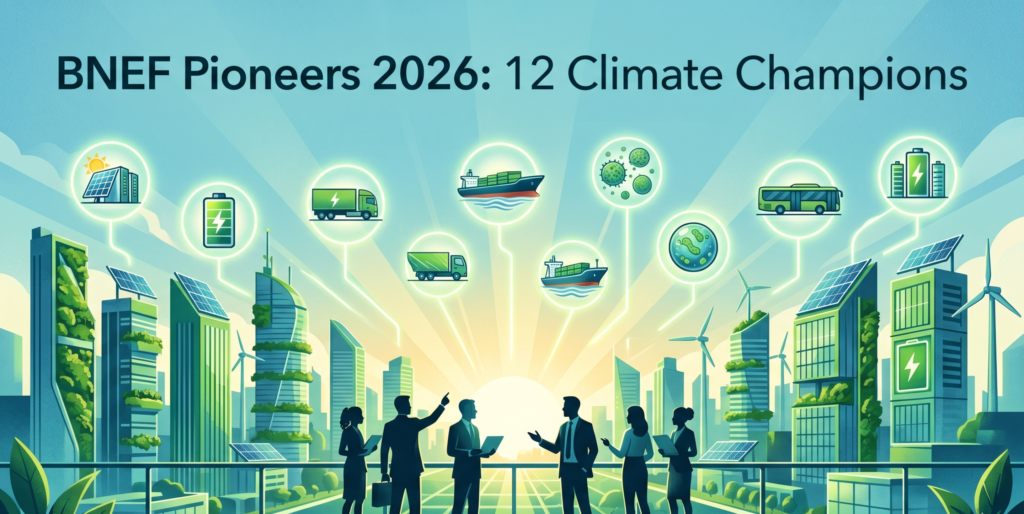
Vibrant illustration of a futuristic eco-city at dawn, featuring 12 glowing icons for BNEF Pioneers 2026 winners: solar data centers, batteries, electric trucks, ships, carbon capture orbs, and buses amid green skyscrapers, with golden sunlight and text "BNEF Pioneers 2026: 12 Climate Champions" overlay.
generated by google gemini

The global push toward a net zero future continues to gain momentum, and innovation is playing a central role in this transition. Recently, BloombergNEF announced the winners of its 2026 Pioneers Award, recognizing 12 promising climate technology startups that are shaping the future of sustainability.

Selected from more than 600 applications across 66 countries, these startups represent some of the most impactful solutions in energy, transportation, and climate innovation today.

Driving Innovation Across Key Climate Challenges

The award highlights startups working on three critical areas that are essential for reducing global emissions and building a more sustainable infrastructure.

Smarter and Greener Data Centers

As demand for data continues to rise, energy consumption in data centers has become a growing concern. Startups such as Emerald AI, HT Materials Science, and Point2 Technology are developing advanced cooling systems and efficiency solutions. Their work aims to reduce energy usage while maintaining high performance, making data infrastructure more sustainable.

Solving the Duck Curve Problem

Managing energy supply and demand remains one of the biggest challenges in renewable energy adoption. Companies like Base Power Company, Qvantum International, and XL Batteries are working on improving energy storage and stabilizing electricity grids. Their innovations help balance fluctuations in renewable energy generation, especially during peak and off-peak hours.

Decarbonizing Heavy Transport and Shipping

Heavy transport and shipping are among the most difficult sectors to decarbonize. Startups such as DeepWay BEV Truck, Silverstream Technologies, and WattEV, Inc. are tackling this issue through electric vehicle technology and advanced solutions that reduce drag in shipping. These developments are helping lower emissions while improving operational efficiency.

Wildcard Innovations Expanding Climate Impact

In addition to the main categories, three startups were recognized as wildcard innovators for their unique contributions to climate solutions.

BasiGo is working to accelerate the adoption of electric buses, making public transport cleaner and more accessible. Endolith is exploring microbial carbon capture, offering a new approach to reducing carbon dioxide levels. GRST focuses on battery recycling, addressing the growing need for sustainable battery lifecycle management.

These companies demonstrate that innovation in climate technology goes beyond traditional sectors and continues to evolve in new and unexpected ways.

Global Recognition at the New York Summit

The selected startups will present their solutions at BloombergNEF’s New York Summit, scheduled for April 21 and 22, 2026. This event brings together industry leaders, investors, and innovators from around the world.

The Pioneers program has a strong track record, with previous participants collectively raising more than 25 billion dollars. This reflects the growing investor confidence in scalable climate technologies that can support global decarbonization efforts.

A Step Forward for a Sustainable Future

The 2026 Pioneers Award highlights the importance of innovation in addressing climate challenges. From energy storage and transport to data infrastructure and carbon capture, these startups are contributing to real-world solutions that can drive meaningful change.

As the world continues its journey toward sustainability, initiatives like this play a vital role in identifying and supporting technologies that can create long-term environmental impact.

BloombergNEF Pioneers Award 2026 Highlights Emerging Climate Tech Innovators

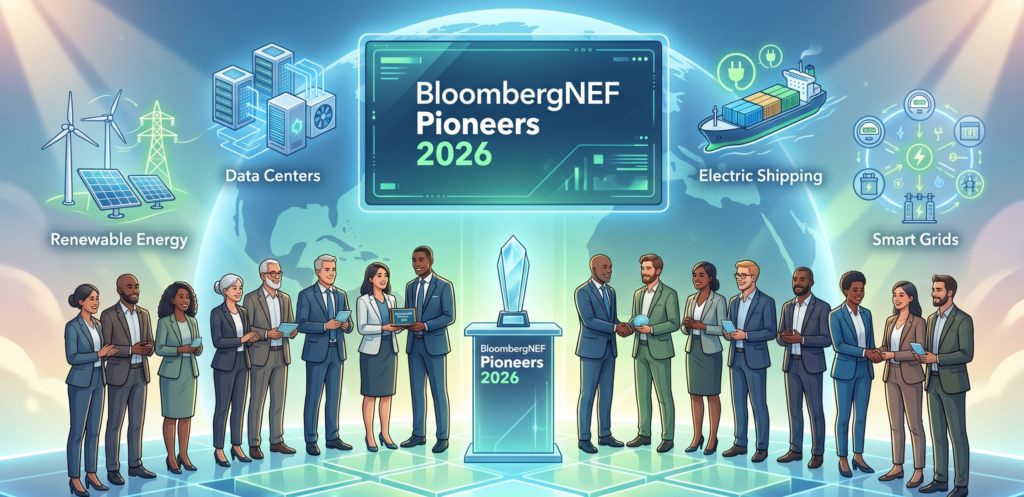
Illustration of 12 climate‑tech startups receiving the BloombergNEF Pioneers 2026 Award on a digital stage, with icons representing renewable energy, data centers, smart grids, and low‑carbon transport, styled as a modern, professional blog banner.
generated by google gemini

The push toward a net zero future depends heavily on innovation, and the latest announcement from BloombergNEF reinforces that reality. The organization has revealed 12 early stage climate tech companies and projects as winners of its 2026 Pioneers Award. These innovators represent some of the most promising solutions that can accelerate the global transition to a low carbon economy.

This year, the competition saw strong global participation, with over 600 applications submitted from more than 50 countries. From this pool, 29 finalists were shortlisted, and only the most impactful ideas were selected as winners.

What the BloombergNEF Pioneers Award Represents

The annual Pioneers program by BloombergNEF focuses on identifying breakthrough technologies and business models that can significantly reduce emissions. It highlights solutions that have the potential to reshape how energy is produced, managed, and consumed across key sectors.

Each selected winner is evaluated based on three critical factors. These include scalability, technical strength, and the capability of the team behind the innovation. This ensures that the chosen projects are not just innovative in theory but also practical and ready for real world deployment.

Key Focus Areas for 2026

For 2026, the award program concentrated on three major climate challenges that are critical for achieving long term sustainability goals.

Sustainable Data Center Infrastructure

With the rapid growth of digital services, data centers are becoming major energy consumers. The program recognized solutions that improve efficiency through advanced cooling systems and optimized hardware design, helping reduce energy use without compromising performance.

Balancing Electricity Supply and Demand

Managing fluctuations in electricity demand remains a key challenge for modern power systems. Several winning solutions focused on improving grid stability and efficiency, often referred to as flattening the duck curve. These innovations help ensure better energy distribution and reduced wastage.

Decarbonizing Transport and Shipping

Heavy duty transport and shipping contribute significantly to global emissions. The 2026 winners introduced new approaches to reduce carbon output in these sectors, including cleaner fuels, improved logistics systems, and energy efficient transport technologies.

How the Winners Benefit

Winning the BloombergNEF Pioneers Award goes beyond recognition. Selected startups gain access to valuable resources that can accelerate their growth journey.

They receive insights from BloombergNEF’s research and analytics, along with opportunities to connect with investors, utility companies, and large corporates. In addition, winners get a chance to present their innovations at global climate tech events, helping them gain visibility and scale faster.

Why This Matters for the Net Zero Transition

Programs like the BloombergNEF Pioneers Award play an important role in bridging the gap between innovation and real world impact. By supporting early stage climate tech solutions, they help bring scalable and practical technologies closer to commercial adoption.

As industries continue to shift toward sustainability, such initiatives are essential for identifying and supporting the next generation of climate leaders.

Apple Sets a New Benchmark in Sustainability with Increased Use of Recycled Materials

Apple devices including an iPhone, Apple Watch, and MacBook arranged on a light wooden table, with subtle circular arrows or recycling icons around them to represent sustainable, recycled materials, in a soft green and white eco‑friendly color palette.
generated by google gemini

Sustainability is no longer just a corporate responsibility. It has become a defining factor for global technology leaders. Apple Inc. is once again pushing the boundaries by significantly increasing the use of recycled materials across its products. In 2025, the company reached a major milestone, with 30 percent of the materials used in its shipped products coming from recycled sources. This marks the highest level the company has achieved so far and reflects its long-term commitment to reducing environmental impact while working toward its 2030 climate goals.

A Significant Leap in Recycled Material Usage

According to Apple’s latest Environmental Progress Report, the company has made steady progress in integrating recycled materials into its product ecosystem. This achievement is not limited to a single product category. It spans across iPhones, Macs, Apple Watches, and AirPods.

The 30 percent milestone highlights a thoughtful approach to product design. Apple is focusing not only on performance and innovation but also on reducing reliance on newly mined resources. This shift indicates a broader transformation in how modern devices are built and how sustainability is becoming central to product development.

Key Environmental Achievements

Apple’s sustainability progress extends beyond just recycled material usage. The company has introduced several impactful initiatives that strengthen its environmental strategy.

100 Percent Recycled Cobalt in Batteries

Apple has transitioned to using fully recycled cobalt in its batteries. This move reduces dependence on mining activities, which often have significant environmental and social consequences.

Transition to Plastic-Free Packaging

The company has removed plastic from its packaging materials and replaced it with alternatives that are easier to recycle or compost. This step plays an important role in reducing waste generated during product delivery.

Advancing Water Conservation Efforts

Apple has also made progress in water stewardship. It has successfully replenished more than half of the water used in its corporate operations through various conservation projects that support local ecosystems.

Extending the Life of Apple Devices

A key part of Apple’s sustainability strategy is increasing the lifespan of its products. In 2025, the company refurbished and resold approximately 15.6 million devices and accessories. By giving products a second life, Apple is actively reducing electronic waste and supporting a circular economy.

This approach encourages reuse and recycling rather than disposal, helping minimize the environmental footprint associated with electronic products.

Encouraging Responsible Recycling on Earth Day

As part of its Earth Day initiatives, Apple is motivating customers to take part in recycling efforts. Customers who return eligible devices at participating Apple Store locations can receive discounts on accessories.

This initiative creates awareness about responsible disposal while also offering incentives for consumers to make environmentally conscious choices.

Driving Change Through Innovation and Partnerships

Apple’s progress in sustainability is supported by continuous innovation and strong collaboration across its supply chain. By setting higher standards for recycled material usage, the company is influencing the broader technology industry to adopt similar practices.

This leadership demonstrates that environmental responsibility and business growth can go hand in hand when supported by the right strategies and partnerships.

Conclusion

Apple’s achievement of using 30 percent recycled materials across its products represents a meaningful step toward a more sustainable future. From eliminating plastic in packaging to extending product lifecycles, the company is making consistent efforts to reduce its environmental impact.

As Apple continues to innovate, it sets a practical example for the global tech industry. Its approach shows that sustainability is not just an option but an essential part of building the future of technology.

How AI Is Transforming Nature and Biodiversity in Corporate Strategy

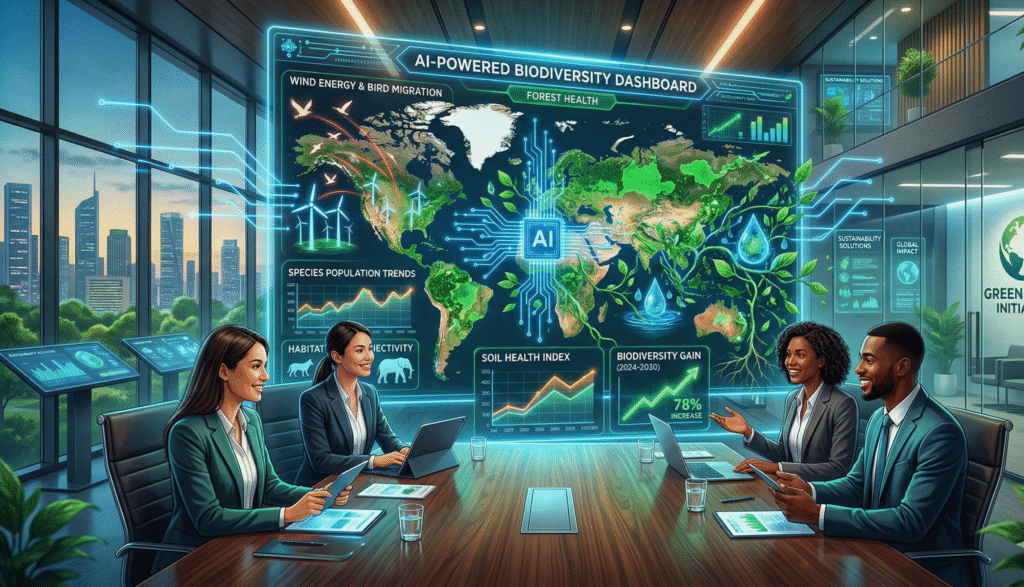
Vibrant digital illustration of executives in a modern boardroom analyzing a holographic AI dashboard with biodiversity maps, satellite imagery, wildlife icons, and soil charts, blending glowing blue tech circuits with lush green ecosystems to highlight sustainability innovation.
generated by google gemini

Artificial intelligence is no longer limited to automation or customer analytics. Today, it is playing a critical role in helping businesses understand and protect the natural environment. As sustainability becomes a core priority, companies are turning to AI to make better decisions about biodiversity, environmental impact, and long-term ecological risks.

With increasing global regulations and stakeholder expectations, organizations are now integrating environmental intelligence into their strategies. AI is making this transition faster, smarter, and more data-driven.

The Rapid Growth of Environmental Data

Over the past two decades, the amount of environmental data available to businesses has grown at an extraordinary rate. From satellite imagery to wildlife sound recordings, companies now have access to vast and complex datasets.

This surge in information presents a challenge. Human analysis alone cannot keep up with such scale. This is where AI proves valuable. It can process massive datasets quickly and identify patterns that would otherwise go unnoticed.

By using AI, businesses can better understand their ecological footprint and gain actionable insights into how their operations affect biodiversity and natural ecosystems.

Increasing Regulations Are Driving Change

Governments and global organizations are introducing stricter rules that require companies to take environmental responsibility seriously. Businesses are now expected to evaluate environmental risks with the same level of attention as financial risks.

For example, frameworks such as the Corporate Sustainability Reporting Directive in the European Union require detailed environmental disclosures. Similarly, the Taskforce on Nature-related Financial Disclosures encourages companies to assess and report their impact on nature.

In some regions, regulations go even further. In England, developers must now ensure measurable improvements in biodiversity as part of their projects. These changes are pushing organizations to adopt advanced tools like AI to stay compliant and competitive.

Key AI Tools Supporting Biodiversity Analysis

A growing number of AI-powered platforms are helping companies monitor, measure, and manage their environmental impact. These tools provide accurate and real-time insights, making sustainability efforts more effective.

Here are some notable solutions:

Biodiversity Intactness Index

Developed by the Natural History Museum, this tool compares current biodiversity levels with historical benchmarks from the 1800s. It helps businesses understand how ecosystems have changed over time.

Geoverse

Created by NatureAlpha, this platform evaluates environmental health across millions of global locations. It uses standardized frameworks to generate large volumes of data for better decision-making.

Portfolio Assessment by NatureMetrics

This tool uses technologies like environmental DNA, camera traps, and sound monitoring to analyze ecosystems. It provides detailed dashboards that highlight environmental risks across operations and supply chains.

IdentiFlight

Developed by Boulder Imaging, this system detects birds near wind farms and helps prevent collisions. It has significantly reduced bird fatalities, showing how AI can directly support conservation.

Soil Health Data Cube

This European initiative combines data on soil, climate, and vegetation. It allows farmers and businesses to simulate environmental scenarios and make informed land-use decisions.

Moving from Reporting to Prediction

One of the biggest advantages of AI is its ability to shift sustainability efforts from reactive reporting to proactive planning. Instead of relying only on past data, companies can now predict future environmental changes.

AI models can simulate the impact of weather patterns, soil conditions, and land use changes. This allows businesses to take preventive actions and design more sustainable strategies.

Managing the Environmental Impact of AI

While AI offers significant benefits for environmental protection, it also comes with its own challenges. Data centers that power AI systems consume large amounts of energy and water, and this demand is expected to grow in the coming years.

However, technology leaders are actively working on solutions. Efforts are being made to improve energy efficiency and develop systems that track and reduce the environmental impact of AI itself.

When used responsibly, the overall benefits of AI in supporting biodiversity and sustainability far outweigh its environmental costs.

Conclusion

Artificial intelligence is reshaping how businesses approach nature and biodiversity. By turning complex environmental data into clear insights, AI enables companies to make smarter and more responsible decisions.

As regulations tighten and sustainability expectations rise, adopting AI-driven solutions is becoming essential rather than optional. Organizations that embrace this shift will not only stay compliant but also contribute meaningfully to protecting the planet.

Top Sustainability Breakthroughs Shaping 2026

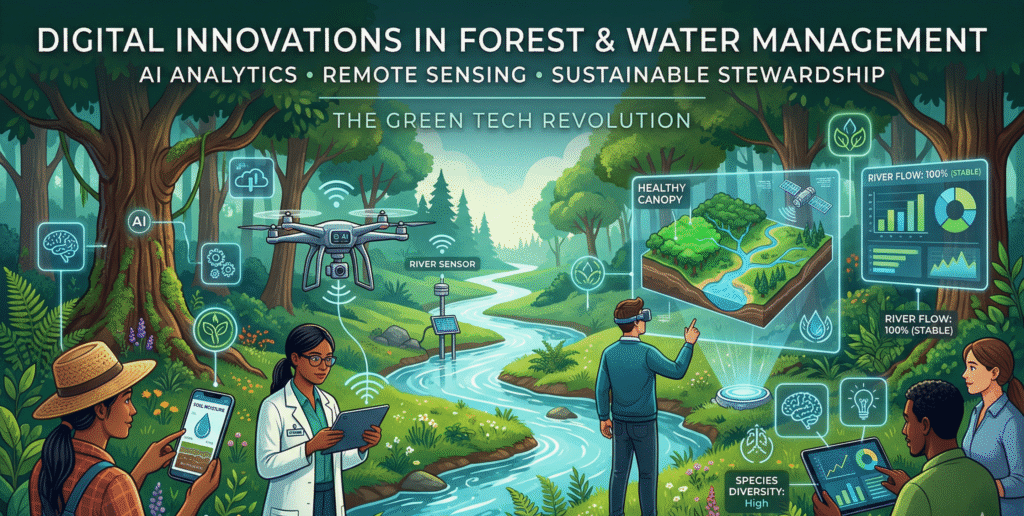
Vibrant digital illustration of a lush forest landscape with a flowing river, featuring diverse farmers, women, and tech experts using smartphones, drones, and satellite holograms to monitor tree health and water flow. Includes subtle AI analytics icons and eco-friendly elements in greens, blues, and earth tones, styled as a futuristic infographic header for sustainability innovations.
generated by google gemini

Sustainability is no longer a future concept. In 2026, it is actively reshaping how we build cities, manage resources, and generate energy. Across industries, new technologies are moving beyond theory and delivering practical, scalable solutions to real-world problems.

In this article, we explore three breakthrough innovations that are redefining energy efficiency, water management, and urban design.

Heat-Storing Building Materials for Smarter Energy Use

One of the most promising developments this year comes from researchers in Finland. They have created an advanced building material that can store and release heat, helping regulate indoor temperatures naturally.

This innovative composite combines waste wood biochar with clay. It also includes a special paraffin-based substance that absorbs heat during the day by melting and releases it at night as it solidifies. The result is a material that maintains comfortable indoor conditions without heavy reliance on air conditioning or heating systems.

Heating and cooling account for nearly 30 percent of global energy consumption. Materials like these can significantly reduce that demand by stabilizing temperatures inside buildings.

These panels are especially useful for spaces such as offices and warehouses. They can be added to existing structures without requiring major renovations. While early testing shows strong potential, large-scale production and safety standards, particularly fire resistance, will play a key role in widespread adoption.

Compact Urban Water Systems Inspired by Nature

Urban water management is another area seeing rapid transformation. Companies like Organica Water are leading the way with systems that mimic natural ecosystems.

Their approach uses plant roots and beneficial microbes to treat wastewater in compact, enclosed environments. These systems operate like artificial wetlands, breaking down pollutants efficiently while using far less space and energy than traditional treatment plants.

Compared to conventional setups, these systems require about 60 percent less space and consume around 30 percent less energy. This makes them particularly valuable in densely populated urban areas where land and resources are limited.

In regions such as South Asia, where a large portion of wastewater remains untreated, these modular units can be installed close to the source. This reduces the need for extensive pipelines and pumping infrastructure.

Beyond treatment, these systems support water reuse in industries, parks, and urban landscapes. They also contribute to local biodiversity. However, successful implementation depends on proper maintenance and skilled operation to meet safety and quality standards.

Flexible Solar Windows Transforming City Buildings

Solar energy is also evolving in exciting ways. Researchers at Hebrew University of Jerusalem have developed flexible solar cells that can be integrated directly into windows.

These advanced cells are made using perovskite materials and are produced through 3D printing. They allow light to pass through while still generating electricity. With an efficiency of around 9.2 percent and transparency of about 35 percent, they strike a balance between energy production and natural lighting.

Another advantage is their flexibility. Unlike traditional solar panels, these cells can bend without breaking, making them ideal for modern architectural designs. Their production process also avoids some of the harsh chemicals used in conventional solar manufacturing.

This technology opens the door to turning entire building facades into energy-generating surfaces. Instead of relying only on rooftops, cities can now harness solar power from vertical spaces.

There are still challenges to address, especially around long-term durability in different weather conditions. Building regulations will also influence how quickly this technology becomes mainstream.

Why These Innovations Matter in 2026

These breakthroughs highlight a clear shift in how sustainability is being approached. Instead of isolated solutions, the focus is now on integrating efficiency directly into everyday systems.

  • Smart materials are reducing energy demand at the source
  • Nature-inspired systems are making infrastructure more efficient and compact
  • Integrated solar technologies are expanding access to clean energy

For those working in sustainability, eco-tech, or even sustainable agriculture, these innovations offer valuable insights. They reflect a broader movement toward regenerative and resource-efficient systems that can be adapted across industries.

As cities continue to grow, adopting such technologies will be essential for building a more resilient and sustainable future.

Revolutionizing Sustainability Through Bold Innovation

Young woman smiling confidently while holding a small windmill model, representing hands-on renewable energy innovation and youth-led sustainable technology.
Royalty free image via pexels.

Sustainability is no longer just about reducing harm. It is about reimagining how systems work from the ground up. Today, innovation is playing a central role in building a future where environmental health, social well-being, and economic growth can coexist.

Young innovators, in particular, are driving this transformation. With fresh perspectives and fewer limitations, they are designing solutions that restore ecosystems, strengthen communities, and create long-term value.

What Is Sustainable Innovation

Sustainable innovation focuses on redesigning how we use resources, produce goods, and consume services. It aims to align human activity with the limits of the planet while ensuring fairness and economic stability.

Instead of making small improvements, this approach challenges existing systems. It asks a fundamental question: should the current model exist at all?

For example, rather than improving efficiency in traditional manufacturing, sustainable innovation promotes circular systems where materials are reused, waste is minimized, and ecosystems are supported rather than depleted.

Key Types of Sustainable Innovation

Sustainable innovation can take different forms, each contributing to long-term impact in its own way.

1. Product Innovation

This focuses on creating eco-friendly products or services. Examples include apps that reduce food waste or sustainable packaging alternatives. These innovations influence consumer behavior and encourage responsible choices.

2. Process Innovation

Process improvements aim to make production more efficient and less harmful. This could involve using renewable inputs, reducing emissions, or minimizing waste during manufacturing.

3. Technological Innovation

Advanced technologies help scale sustainability solutions. Renewable energy systems, smart grids, and energy storage technologies are examples that enable widespread impact.

4. Organizational Innovation

This involves changing how businesses operate internally. Companies adopt circular models, sustainable supply chains, and ethical practices that reshape their overall structure.

5. Market Innovation

Market-based solutions redefine value systems. Repair services, sharing economies, and carbon pricing models shift how businesses and consumers interact economically.

When these approaches are combined, their impact becomes even stronger. For instance, electric vehicles become more effective when supported by clean energy infrastructure and updated market systems.

Characteristics of Successful Sustainable Innovation

Not all innovation leads to meaningful sustainability. Successful solutions share a few important traits:

  • They focus on long-term impact rather than short-term gains
  • They address root causes instead of surface-level problems
  • They respect planetary boundaries and resource limits
  • They create value for multiple stakeholders, including communities and ecosystems

Scalability is also critical. A solution must grow without causing unintended harm elsewhere. Early evaluation helps ensure that ideas are practical, inclusive, and effective.

The Role of Youth and Diverse Teams

Young innovators bring creativity and a willingness to challenge outdated systems. They are more open to experimentation and cross-disciplinary thinking, which is essential for solving complex sustainability challenges.

Diverse teams further strengthen innovation. When people from different backgrounds collaborate, they bring unique insights into cultural, economic, and environmental factors. This helps identify hidden challenges and develop solutions that work across regions.

Collaboration across borders also improves adoption. Local knowledge ensures that solutions are practical and accepted by communities.

Challenges in Sustainable Innovation

Despite its potential, sustainable innovation faces several barriers:

Limited Funding

Many sustainable projects require long-term investment, which can be difficult to secure. Combining grants, public funding, and private investment can help bridge this gap.

Lack of Collaboration

Different sectors often have conflicting priorities. Building strong partnerships between governments, businesses, and communities is essential.

Resistance to Change

Established systems can be difficult to shift. Engaging stakeholders early helps reduce resistance and build trust.

Adoption Barriers

Solutions sometimes fail because they do not fit local needs. Co-creating with communities ensures better usability and acceptance.

Addressing these challenges early allows innovators to adapt quickly and increase their chances of success.

Why Action Is Needed Now

The need for sustainable innovation has never been greater. Climate challenges, resource scarcity, and social inequalities demand bold and immediate action.

Initiatives like the Mars Challenge are empowering young people to think systemically and develop regenerative solutions. These platforms provide the tools, mentorship, and global networks needed to turn ideas into real-world impact.

Final Thoughts

Sustainable innovation is not just a trend. It is a necessary shift in how we design systems for the future. By focusing on regeneration, collaboration, and scalability, innovators can create solutions that benefit both people and the planet.

The next wave of change will be led by those willing to rethink the status quo. Now is the time to act, experiment, and build a more sustainable world.

Tackling Australia’s Lithium Battery Waste Crisis

Australia is stepping up its response to a rapidly growing environmental challenge. With the rise of electric vehicles, renewable energy storage, and consumer electronics, lithium-ion battery use has surged. Now, researchers across the country are receiving significant funding to develop advanced recycling solutions that can manage this wave of battery waste in a sustainable way.


The Rising Challenge of Battery Waste

Lithium-ion batteries have become essential to modern life. They power everything from electric cars to solar energy storage systems. However, their relatively short lifespan means they quickly turn into waste once they reach the end of their use.

Australia is expected to generate nearly 180,000 tonnes of battery waste every year by 2036. This creates serious environmental concerns if not handled properly.

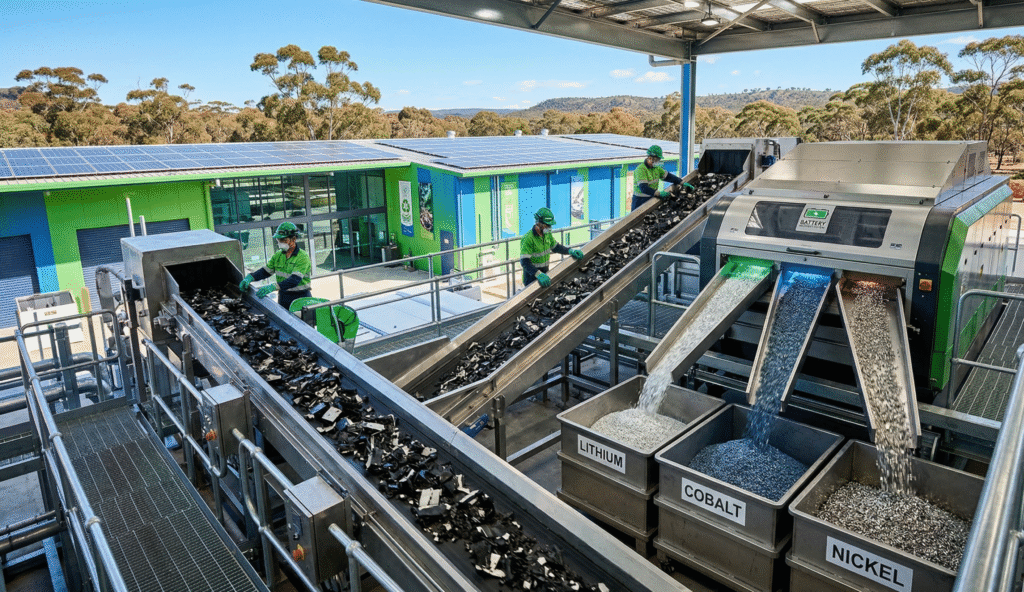
When disposed of incorrectly, these batteries can leak harmful chemicals into soil and water. At the same time, extracting fresh lithium and other metals puts pressure on natural resources and ecosystems. Recycling offers a practical solution by recovering valuable materials such as lithium, cobalt, and nickel, reducing the need for new mining.


Major Recycling Projects Driving Change

To address this issue, several research institutions and companies are working on innovative recycling technologies with the help of government funding.

At Griffith University, Dr. Zhenzhen Wu is leading a project supported by a 280,000 dollar AEA Seed Grant. The focus is on improving battery recycling technologies in collaboration with ENVIROforce.

The University of New South Wales is also playing a key role. A team led by Professor Guan Yeoh has received 2.7 million dollars to develop a micro-isolation process for extracting valuable materials from what is known as black mass. This project is being carried out in partnership with Oxleigh.

Another major initiative involves the Oxleigh CRC-P project, which has secured 2.75 million dollars to build local, sustainable recycling capabilities. This effort brings together UNSW and Envirostream to strengthen Australia’s recycling infrastructure.

Livium has also received 850,000 dollars in funding from the Western Australian Government. The company is developing a collection and sorting facility to improve how used batteries are handled and processed.

Together, these projects are helping scale up safe and efficient methods to process shredded battery materials.


Sustainability and Economic Benefits

Battery recycling is not only an environmental necessity but also an economic opportunity. By recovering critical materials, Australia can reduce its reliance on imported resources and strengthen its supply chain.

New facilities are already creating jobs in the green economy. For example, a recycling plant in Newcastle is expected to handle around 2,000 tonnes of battery waste each year while generating approximately 20 new jobs.

Advanced sorting technologies are also making a difference. They can increase material recovery rates by up to 30 percent, making recycling more efficient and cost-effective. This supports the development of a circular economy, where resources are reused instead of discarded.


The Road Ahead

Collaboration between researchers, industry leaders, and policymakers is key to solving the battery waste problem. Continued investment in technologies such as membrane separation and chemical processing will help bring these solutions to a commercial scale.

Government support through grants and funding programs is accelerating progress. With these efforts, Australia is positioning itself as a global leader in sustainable battery recycling.


Conclusion

Australia’s approach to lithium-ion battery waste shows how innovation and collaboration can tackle complex environmental challenges. As battery use continues to grow, developing efficient recycling systems will be critical for protecting the environment and ensuring long-term resource security.

Samsung’s New Eco-Friendly Display: A Step Toward Sustainable Electronics

Hyper-realistic Samsung 13-inch Color E-Paper display with phytoplankton bio-resin housing on sustainable retail shelf, showcasing eco-friendly digital signage innovation for agriculture and green tech.
generated by google gemini

Introduction

Sustainability is no longer just a trend in the tech industry. It is becoming a core priority. Samsung Electronics has taken a meaningful step in this direction by launching an innovative 13-inch color e-paper display made using bio-resin derived from phytoplankton. This development not only reduces environmental impact but also maintains high performance standards.

Designed primarily for business signage, this display reflects how technology can evolve while being mindful of the planet.


A Smarter Choice of Materials

One of the most impressive aspects of this display is its material composition. The outer body is made using 45 percent recycled plastic combined with 10 percent bio-resin sourced from phytoplankton. This eco-friendly combination has been verified through UL certification, ensuring its credibility and safety standards.

By replacing a portion of traditional petroleum-based plastics, Samsung has managed to reduce manufacturing carbon emissions by more than 40 percent. The phytoplankton-based resin offers durability and flexibility similar to conventional plastic, while also relying on renewable resources. When processed under the right conditions, it can even support biodegradability.

This shift shows how alternative materials can play a crucial role in reducing the environmental footprint of electronics.


Energy Efficiency That Makes a Difference

Beyond sustainable materials, the display also stands out for its energy-saving capabilities. The Color E-Paper, known as the EM13DX model, uses advanced digital ink technology that consumes extremely low power.

One of its most notable features is the ability to display static content without using any power at all. This makes it an excellent replacement for traditional printed signage, especially in commercial environments.

Businesses can easily control and update the display remotely using the Samsung E-Paper App or the VXT platform. Its slim and lightweight design, along with battery support, allows for flexible installation without the need for a constant power supply.


Supporting Broader Sustainability Goals

Samsung has extended its sustainability efforts beyond just the product itself. The packaging for this display is completely paper-based, reducing plastic waste even further.

While the current focus is on business signage, the potential applications of this technology are much wider. It could eventually be integrated into consumer devices, helping reduce reliance on fossil fuel-based plastics across the electronics industry.

Such innovations align with global sustainability efforts by promoting cleaner production methods and reducing pollution caused by traditional materials.


What This Means for the Future

As the production of bio-resin becomes more advanced and scalable, we can expect to see its use expand across various industries. Samsung’s initiative highlights how natural materials like phytoplankton can reshape the future of electronics manufacturing.

This move positions the company as a leader in green innovation, especially in areas like digital signage and e-readers. More importantly, it sets an example for other companies to follow in creating technology that is both efficient and environmentally responsible.


Conclusion

Samsung’s new e-paper display is more than just a product launch. It represents a shift toward responsible innovation. By combining sustainable materials with energy-efficient technology, the company is proving that environmental responsibility and performance can go hand in hand.

As industries continue to explore greener alternatives, developments like this bring us closer to a more sustainable future.

Sustainable Tech Innovations Transforming Modern Businesses

A hyper-realistic photograph shows a modern data center powered by sustainable technology. Glowing blue server racks under efficient LED lights feature AI-optimized cooling systems, with large windows revealing solar panels and wind turbines outside. Workers in green safety gear recycle smartphone components on conveyor belts, while a lush rooftop garden with native plants thrives under a clear blue sky.
generated by google gemini

Technology companies across the world are reshaping the way businesses operate by adopting sustainable innovations. These practices reduce environmental impact while improving efficiency and long term profitability. As climate concerns grow and regulations become stricter, organizations are discovering that sustainability and innovation can work together to support a greener and more resilient future.

From artificial intelligence that improves energy efficiency to circular manufacturing systems that reduce waste, several technology driven solutions are helping businesses transition toward responsible operations.

AI Helping Businesses Use Energy More Efficiently

Artificial intelligence is playing an important role in reducing energy consumption, especially in large scale data centers. Data centers require a huge amount of electricity to run servers and maintain cooling systems. With the help of AI powered tools, companies can analyze energy usage patterns and automatically adjust systems in real time.

For example, the AI system developed by Google’s DeepMind analyzes sensor data from data centers to predict cooling requirements. By making continuous adjustments, the system has reduced cooling energy costs by nearly 40 percent. This type of smart automation helps companies lower operational costs while reducing their overall energy footprint.

The success of AI driven energy optimization is also encouraging other industries to adopt similar technologies in manufacturing, logistics, and infrastructure management.

Renewable Energy Is Powering the Future of Cloud Services

Cloud computing companies manage massive data infrastructure that requires a constant supply of electricity. To reduce reliance on fossil fuels, many technology leaders are investing heavily in renewable energy sources.

Microsoft, for example, has announced plans to operate its facilities using 100 percent renewable energy by 2025. The company is also investing in carbon removal initiatives that help offset emissions produced by its operations. These initiatives include partnerships with clean energy providers and the development of sustainable energy infrastructure.

The shift toward renewable powered cloud services not only reduces environmental impact but also creates more reliable and stable energy systems for the digital economy.

Circular Manufacturing Reducing Electronic Waste

Another important sustainability trend in the technology sector is the move toward circular manufacturing. Instead of relying entirely on newly mined raw materials, companies are developing systems that recover and reuse valuable components from old devices.

Apple has introduced a specialized recycling robot called Daisy that disassembles old iPhones and extracts reusable materials such as rare metals. By recovering these resources, companies can reduce the need for new mining activities while also addressing the growing problem of electronic waste.

Circular production models extend the life of valuable resources and reduce the environmental footprint associated with device manufacturing.

Why Businesses Are Investing in Green Technology

Sustainable technology strategies are becoming a priority for businesses for several reasons. Companies that invest in green innovation often experience lower operational costs due to improved energy efficiency. At the same time, environmentally responsible practices help build stronger trust with customers and stakeholders.

Investors are also increasingly supporting organizations that demonstrate clear environmental commitments. In addition, governments and regulatory bodies are introducing incentives and funding opportunities that reward sustainable initiatives.

Businesses that adopt these strategies early position themselves for long term success in a rapidly evolving global market.

The Future of Sustainable Technology

The integration of sustainability and technology will continue to influence how businesses grow and compete. Innovations in artificial intelligence, renewable energy, and circular manufacturing are already proving that responsible practices can deliver both environmental and economic benefits.

As more companies embrace green technologies, sustainable innovation will become a core element of modern business strategy.

Green Technology Innovations Driving Sustainable Growth in 2026

Futuristic 2026 green tech city blending advanced batteries, carbon capture towers, and AI-driven sustainable farms for a cleaner planet.
generated by google gemini

Sustainability is no longer just a social responsibility. In 2026, green technology innovations are transforming environmental challenges into practical business opportunities. Companies across the world are adopting cleaner technologies not only to protect the environment but also to improve efficiency and reduce operational costs.

Research institutions and technology developers are introducing solutions that help industries move toward a low carbon future. From energy storage to intelligent farming tools, these innovations are making sustainability more accessible and profitable for businesses.

Key Green Technology Innovations in 2026

Several technological developments are playing a major role in accelerating sustainability this year. Three innovations stand out for their strong impact on industries and global environmental goals.

Advanced Energy Storage Systems

Energy storage has become a critical part of the renewable energy ecosystem. Modern battery systems are helping businesses and households store power generated from renewable sources such as solar and wind.

Improved battery designs now offer higher efficiency, longer life cycles, and faster charging capabilities. These systems allow organizations to use renewable energy more reliably, even when the sun is not shining or the wind is not blowing.

Carbon Capture Technologies

Another breakthrough comes from carbon capture solutions designed to remove carbon dioxide from the atmosphere. These systems capture CO2 emissions from industrial processes and store or reuse them in various products.

Captured carbon can be used in manufacturing materials like concrete, reducing the need for new raw resources. This approach supports global net zero targets while helping companies lower their carbon footprint.

AI Optimized Agriculture

Technology is also reshaping agriculture. Artificial intelligence based farming tools help farmers monitor soil conditions, crop health, and weather patterns in real time.

These systems analyze large amounts of data to recommend the right amount of water, fertilizer, and pesticides. As a result, farmers can improve crop yields while using fewer natural resources. This method supports more resilient and sustainable food production systems.

Business Benefits of Green Technology

Green innovations are changing the way businesses view sustainability. Instead of treating environmental initiatives as a cost, companies now see them as an investment that can generate long term value.

Organizations that adopt sustainable technologies often experience lower energy expenses, improved operational efficiency, and stronger brand credibility. Customers and investors increasingly prefer companies that demonstrate responsible environmental practices.

In addition, governments around the world are introducing stricter environmental regulations. Businesses that integrate green solutions early can stay ahead of compliance requirements and avoid future penalties.

A good example is the growing use of Green hydrogen in heavy industries. Steel manufacturing and other energy intensive sectors are beginning to use this cleaner fuel alternative to reduce emissions while maintaining productivity.

The Future of Sustainable Innovation

The pace of green technology development is expected to increase in the coming years. Governments, investors, and private companies are expanding funding for sustainable research and infrastructure.

As adoption grows, these innovations will continue to reshape industries such as energy, manufacturing, agriculture, and transportation. Businesses that invest in sustainable technology today will likely play a major role in building a cleaner and more resilient global economy.

Looking ahead to 2027 and beyond, green innovation will not only help address environmental challenges but also create new markets, jobs, and economic opportunities worldwide.

Conclusion

Green technology innovations are proving that sustainability and profitability can work together. From advanced batteries to carbon capture systems and AI driven agriculture, these solutions are helping businesses operate more efficiently while protecting the planet.

Companies that embrace these technologies early will gain both environmental and competitive advantages in the years ahead.