Tag Archives: net zero

12 Climate Tech Startups Leading the Net Zero Future in 2026

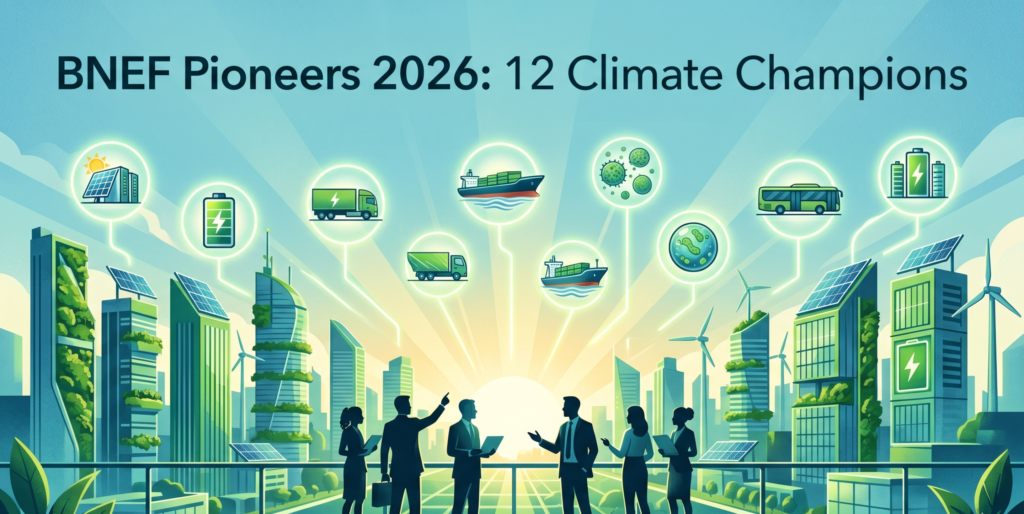
Vibrant illustration of a futuristic eco-city at dawn, featuring 12 glowing icons for BNEF Pioneers 2026 winners: solar data centers, batteries, electric trucks, ships, carbon capture orbs, and buses amid green skyscrapers, with golden sunlight and text "BNEF Pioneers 2026: 12 Climate Champions" overlay.
generated by google gemini

The global push toward a net zero future continues to gain momentum, and innovation is playing a central role in this transition. Recently, BloombergNEF announced the winners of its 2026 Pioneers Award, recognizing 12 promising climate technology startups that are shaping the future of sustainability.

Selected from more than 600 applications across 66 countries, these startups represent some of the most impactful solutions in energy, transportation, and climate innovation today.

Driving Innovation Across Key Climate Challenges

The award highlights startups working on three critical areas that are essential for reducing global emissions and building a more sustainable infrastructure.

Smarter and Greener Data Centers

As demand for data continues to rise, energy consumption in data centers has become a growing concern. Startups such as Emerald AI, HT Materials Science, and Point2 Technology are developing advanced cooling systems and efficiency solutions. Their work aims to reduce energy usage while maintaining high performance, making data infrastructure more sustainable.

Solving the Duck Curve Problem

Managing energy supply and demand remains one of the biggest challenges in renewable energy adoption. Companies like Base Power Company, Qvantum International, and XL Batteries are working on improving energy storage and stabilizing electricity grids. Their innovations help balance fluctuations in renewable energy generation, especially during peak and off-peak hours.

Decarbonizing Heavy Transport and Shipping

Heavy transport and shipping are among the most difficult sectors to decarbonize. Startups such as DeepWay BEV Truck, Silverstream Technologies, and WattEV, Inc. are tackling this issue through electric vehicle technology and advanced solutions that reduce drag in shipping. These developments are helping lower emissions while improving operational efficiency.

Wildcard Innovations Expanding Climate Impact

In addition to the main categories, three startups were recognized as wildcard innovators for their unique contributions to climate solutions.

BasiGo is working to accelerate the adoption of electric buses, making public transport cleaner and more accessible. Endolith is exploring microbial carbon capture, offering a new approach to reducing carbon dioxide levels. GRST focuses on battery recycling, addressing the growing need for sustainable battery lifecycle management.

These companies demonstrate that innovation in climate technology goes beyond traditional sectors and continues to evolve in new and unexpected ways.

Global Recognition at the New York Summit

The selected startups will present their solutions at BloombergNEF’s New York Summit, scheduled for April 21 and 22, 2026. This event brings together industry leaders, investors, and innovators from around the world.

The Pioneers program has a strong track record, with previous participants collectively raising more than 25 billion dollars. This reflects the growing investor confidence in scalable climate technologies that can support global decarbonization efforts.

A Step Forward for a Sustainable Future

The 2026 Pioneers Award highlights the importance of innovation in addressing climate challenges. From energy storage and transport to data infrastructure and carbon capture, these startups are contributing to real-world solutions that can drive meaningful change.

As the world continues its journey toward sustainability, initiatives like this play a vital role in identifying and supporting technologies that can create long-term environmental impact.
BloombergNEF Pioneers Award 2026 Highlights Emerging Climate Tech Innovators

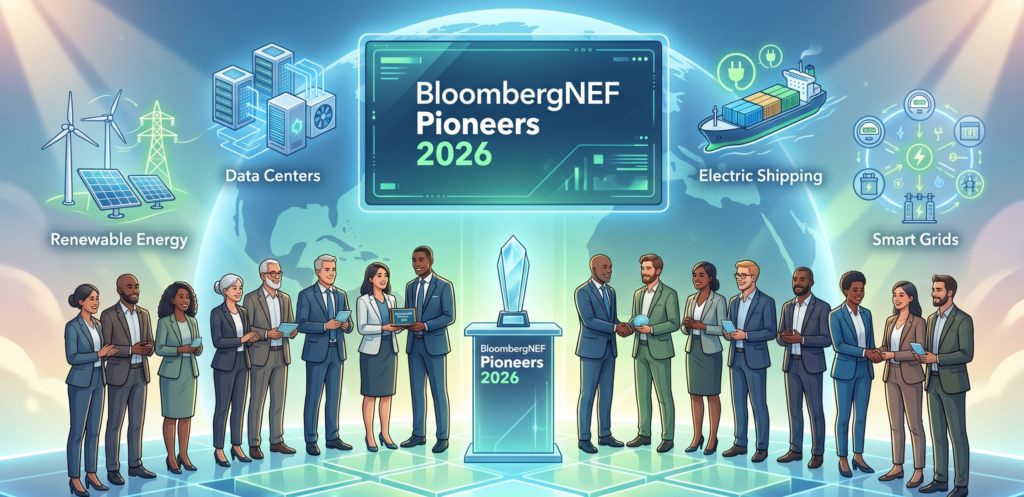
Illustration of 12 climate‑tech startups receiving the BloombergNEF Pioneers 2026 Award on a digital stage, with icons representing renewable energy, data centers, smart grids, and low‑carbon transport, styled as a modern, professional blog banner.
generated by google gemini

The push toward a net zero future depends heavily on innovation, and the latest announcement from BloombergNEF reinforces that reality. The organization has revealed 12 early stage climate tech companies and projects as winners of its 2026 Pioneers Award. These innovators represent some of the most promising solutions that can accelerate the global transition to a low carbon economy.

This year, the competition saw strong global participation, with over 600 applications submitted from more than 50 countries. From this pool, 29 finalists were shortlisted, and only the most impactful ideas were selected as winners.

What the BloombergNEF Pioneers Award Represents

The annual Pioneers program by BloombergNEF focuses on identifying breakthrough technologies and business models that can significantly reduce emissions. It highlights solutions that have the potential to reshape how energy is produced, managed, and consumed across key sectors.

Each selected winner is evaluated based on three critical factors. These include scalability, technical strength, and the capability of the team behind the innovation. This ensures that the chosen projects are not just innovative in theory but also practical and ready for real world deployment.

Key Focus Areas for 2026

For 2026, the award program concentrated on three major climate challenges that are critical for achieving long term sustainability goals.

Sustainable Data Center Infrastructure

With the rapid growth of digital services, data centers are becoming major energy consumers. The program recognized solutions that improve efficiency through advanced cooling systems and optimized hardware design, helping reduce energy use without compromising performance.

Balancing Electricity Supply and Demand

Managing fluctuations in electricity demand remains a key challenge for modern power systems. Several winning solutions focused on improving grid stability and efficiency, often referred to as flattening the duck curve. These innovations help ensure better energy distribution and reduced wastage.

Decarbonizing Transport and Shipping

Heavy duty transport and shipping contribute significantly to global emissions. The 2026 winners introduced new approaches to reduce carbon output in these sectors, including cleaner fuels, improved logistics systems, and energy efficient transport technologies.

How the Winners Benefit

Winning the BloombergNEF Pioneers Award goes beyond recognition. Selected startups gain access to valuable resources that can accelerate their growth journey.

They receive insights from BloombergNEF’s research and analytics, along with opportunities to connect with investors, utility companies, and large corporates. In addition, winners get a chance to present their innovations at global climate tech events, helping them gain visibility and scale faster.

Why This Matters for the Net Zero Transition

Programs like the BloombergNEF Pioneers Award play an important role in bridging the gap between innovation and real world impact. By supporting early stage climate tech solutions, they help bring scalable and practical technologies closer to commercial adoption.

As industries continue to shift toward sustainability, such initiatives are essential for identifying and supporting the next generation of climate leaders.

Tata Steel Sets Benchmark with Ninth Sustainability Recognition

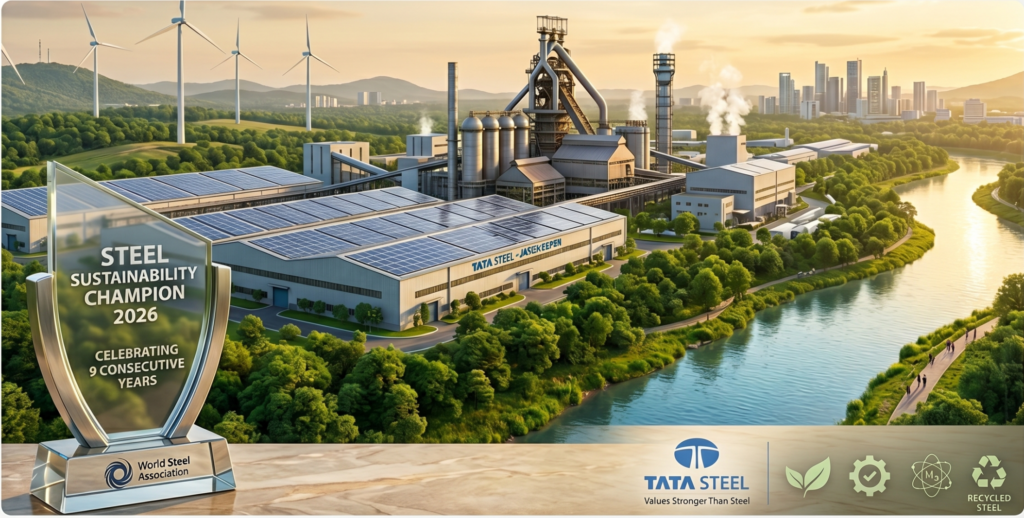
Illustrative image of Tata Steel's 2026 Sustainability Champion trophy amid a modern eco-friendly steel plant with solar panels, wind turbines, lush forests, and golden hour sunlight, highlighting industry-nature harmony.
generated by google gemini

A Decade of Commitment to Sustainable Steel

Tata Steel has once again strengthened its position as a global leader in responsible manufacturing. The company has been recognized for its continuous efforts to integrate sustainability into large-scale industrial operations, proving that growth and environmental responsibility can go hand in hand.

This recognition reflects more than just performance metrics. It highlights a long-term vision focused on reducing environmental impact while maintaining operational excellence in one of the world’s most resource-intensive industries.

Ninth Consecutive Sustainability Achievement

In 2026, Tata Steel was awarded the Steel Sustainability Champion title by the World Steel Association for the ninth consecutive year. This rare achievement places the company among a very small group of global steel producers that have maintained such consistency since the program began.

The award recognizes companies that demonstrate measurable progress in sustainability. This includes lowering carbon emissions, improving energy efficiency, and optimizing the use of natural resources. Maintaining this standard over nearly a decade shows a deep-rooted commitment rather than short-term efforts.

What Makes Tata Steel a Global Leader

Tata Steel’s approach to sustainability goes beyond compliance. The company actively participates in global initiatives aimed at transforming the steel industry. Its operations focus on:

  • Energy-efficient production systems
  • Adoption of circular economy practices
  • Responsible resource management
  • Continuous innovation in low-emission technologies

The recognition was announced at a major global industry gathering in Sydney, further reinforcing Tata Steel’s standing among the world’s most forward-thinking steel manufacturers.

Driving Change Across the Steel Industry

The global steel sector plays a crucial role in infrastructure and development, but it also contributes significantly to carbon emissions. Companies like Tata Steel are helping reshape this narrative by investing in cleaner production methods.

Their progress offers a practical roadmap for other heavy industries aiming to transition toward sustainability. As climate concerns continue to influence policy and business decisions, such leadership becomes increasingly important.

Moving Toward a Net-Zero Future

Tata Steel’s continued recognition signals steady progress toward long-term climate goals. For investors, policymakers, and sustainability advocates, this milestone represents trust, consistency, and actionable change.

As industries worldwide move toward net-zero targets, Tata Steel’s journey demonstrates that meaningful transformation is not only possible but already underway.

Top Corporate Sustainability Trends to Watch in 2026

Professional woman presenting corporate sustainability trends in modern office meeting.
Royalty free image via pexels.

Corporate sustainability is no longer about making ambitious promises. In 2026, it is about delivering measurable outcomes. Investors, regulators, and customers are increasingly expecting companies to demonstrate real progress, especially in areas such as emissions reduction, climate risk management, and transparent reporting.

Organizations that focus on practical implementation rather than just strategy are emerging as leaders in this evolving landscape.


Changing Global Sustainability Reporting Standards

Sustainability reporting is undergoing significant transformation across the globe. In Europe, frameworks like the Corporate Sustainability Reporting Directive are being refined to make compliance more practical for businesses. However, expectations for reliable and high-quality ESG data continue to grow.

At the same time, Asian markets are taking a strong lead. Countries such as China and Singapore are introducing mandatory ESG disclosure requirements starting in 2026. These regulations will not only impact domestic companies but also global supply chains connected to these markets.

In addition, carbon border taxes from regions like the European Union and the United Kingdom are increasing pressure on exporters. Businesses must now improve their data accuracy and transparency, regardless of local regulatory requirements.


Renewable Energy Becomes a Cost Advantage

Renewable energy is no longer just an environmental choice. It has become a strong financial decision. Sources like solar and wind energy are now leading new power installations due to their declining costs.

Corporate renewable energy agreements have reached record levels in recent years, showing a clear shift toward clean energy adoption. Companies are also exploring demand flexibility strategies, which allow them to reduce energy usage during peak times and even generate revenue through grid participation programs.

Improving energy efficiency in buildings and industrial processes remains one of the fastest ways to reduce both costs and emissions.


Rising Importance of Nature and Biodiversity Risks

Businesses are starting to recognize that environmental risks go beyond carbon emissions. Biodiversity loss and land use changes are becoming central to corporate strategy.

Frameworks such as the Taskforce on Nature-related Financial Disclosures are helping organizations identify and manage financial risks linked to nature degradation. Industries that rely heavily on land and natural resources must adopt targeted approaches, including insetting and ecosystem restoration investments.

Investors are increasingly viewing nature-related risks as direct threats to long-term value, which is encouraging companies to act early.


Climate Risks Directly Impact Financial Performance

Climate change is no longer a distant concern. Physical risks such as floods, extreme heat, and storms are already disrupting operations and increasing costs for many businesses.

At the same time, policy changes and the transition to a low-carbon economy are creating new financial uncertainties. Companies that integrate climate scenario planning into their financial strategies and investment decisions are better positioned to manage these challenges.


Growing Focus on Climate Adaptation

Adaptation is becoming just as important as mitigation. Industries like agriculture, manufacturing, and energy are investing in resilience measures to protect their operations and profitability.

Examples include improved water management systems, climate-resilient infrastructure, and early warning technologies. These initiatives often provide immediate benefits by reducing operational risks and improving efficiency.


Smarter and More Reliable Carbon Markets

Carbon markets are evolving rapidly, with a stronger focus on quality and transparency. Businesses are securing long-term agreements for high-quality carbon credits and using advanced technologies for verification and tracking.

As standards for net-zero commitments become stricter, companies are planning to increase their use of carbon markets by 2030. This approach helps manage risks and strengthen supply chain resilience.


Artificial Intelligence Enhances Sustainability Efforts

Artificial intelligence is playing a growing role in sustainability management. AI tools can automate data collection, validation, and analysis, allowing sustainability teams to focus more on strategic decision-making.

However, companies are also mindful of the energy consumption associated with AI systems. Leading organizations are balancing technology adoption with responsible usage and human oversight to maintain credibility.


Stronger Supply Chain Collaboration

Addressing Scope 3 emissions requires close collaboration with suppliers. Companies are moving beyond basic compliance and building long-term partnerships that include shared tools, data systems, and financial support for sustainability initiatives.

Successful organizations understand that meaningful change comes from continuous collaboration rather than isolated efforts.


Action-Oriented Leadership Will Define Success

In 2026, the companies that stand out will be those that can adapt quickly to changing regulations, manage complex risks, and align stakeholder expectations effectively.

Sustainability leadership is no longer defined by ambition alone. It is defined by action, execution, and the ability to deliver real impact.