Tag Archives: climate technology

12 Climate Tech Startups Leading the Net Zero Future in 2026

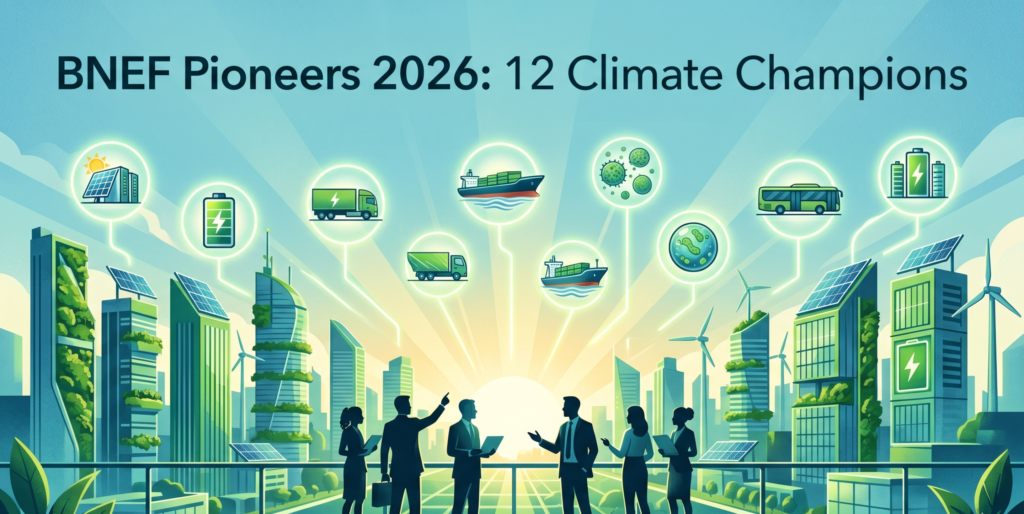
Vibrant illustration of a futuristic eco-city at dawn, featuring 12 glowing icons for BNEF Pioneers 2026 winners: solar data centers, batteries, electric trucks, ships, carbon capture orbs, and buses amid green skyscrapers, with golden sunlight and text "BNEF Pioneers 2026: 12 Climate Champions" overlay.
generated by google gemini

The global push toward a net zero future continues to gain momentum, and innovation is playing a central role in this transition. Recently, BloombergNEF announced the winners of its 2026 Pioneers Award, recognizing 12 promising climate technology startups that are shaping the future of sustainability.

Selected from more than 600 applications across 66 countries, these startups represent some of the most impactful solutions in energy, transportation, and climate innovation today.

Driving Innovation Across Key Climate Challenges

The award highlights startups working on three critical areas that are essential for reducing global emissions and building a more sustainable infrastructure.

Smarter and Greener Data Centers

As demand for data continues to rise, energy consumption in data centers has become a growing concern. Startups such as Emerald AI, HT Materials Science, and Point2 Technology are developing advanced cooling systems and efficiency solutions. Their work aims to reduce energy usage while maintaining high performance, making data infrastructure more sustainable.

Solving the Duck Curve Problem

Managing energy supply and demand remains one of the biggest challenges in renewable energy adoption. Companies like Base Power Company, Qvantum International, and XL Batteries are working on improving energy storage and stabilizing electricity grids. Their innovations help balance fluctuations in renewable energy generation, especially during peak and off-peak hours.

Decarbonizing Heavy Transport and Shipping

Heavy transport and shipping are among the most difficult sectors to decarbonize. Startups such as DeepWay BEV Truck, Silverstream Technologies, and WattEV, Inc. are tackling this issue through electric vehicle technology and advanced solutions that reduce drag in shipping. These developments are helping lower emissions while improving operational efficiency.

Wildcard Innovations Expanding Climate Impact

In addition to the main categories, three startups were recognized as wildcard innovators for their unique contributions to climate solutions.

BasiGo is working to accelerate the adoption of electric buses, making public transport cleaner and more accessible. Endolith is exploring microbial carbon capture, offering a new approach to reducing carbon dioxide levels. GRST focuses on battery recycling, addressing the growing need for sustainable battery lifecycle management.

These companies demonstrate that innovation in climate technology goes beyond traditional sectors and continues to evolve in new and unexpected ways.

Global Recognition at the New York Summit

The selected startups will present their solutions at BloombergNEF’s New York Summit, scheduled for April 21 and 22, 2026. This event brings together industry leaders, investors, and innovators from around the world.

The Pioneers program has a strong track record, with previous participants collectively raising more than 25 billion dollars. This reflects the growing investor confidence in scalable climate technologies that can support global decarbonization efforts.

A Step Forward for a Sustainable Future

The 2026 Pioneers Award highlights the importance of innovation in addressing climate challenges. From energy storage and transport to data infrastructure and carbon capture, these startups are contributing to real-world solutions that can drive meaningful change.

As the world continues its journey toward sustainability, initiatives like this play a vital role in identifying and supporting technologies that can create long-term environmental impact.

How AI Is Bringing Nature into Corporate Decision Making

Modern corporate boardroom with executives around a conference table looking at a transparent holographic screen that shows real-time environmental data, including satellite maps of land use, soil health layers, biodiversity hotspots, and bird-flight paths, highlighting the role of AI sustainability in blending nature and technology within a professional, eco-conscious setting.
generated by google gemini

Introduction

Sustainability is no longer limited to tracking carbon emissions. Today, businesses are expected to understand how their operations influence land, water resources, and biodiversity. This shift is pushing companies to rethink how they measure environmental impact.

Artificial intelligence is playing a key role in this transformation. It is helping organizations convert complex environmental data into clear and actionable insights. As a result, sustainability is moving beyond annual reports and becoming part of everyday strategic discussions in boardrooms.


Why Nature Is Becoming a Business Priority

Across the globe, governments and regulatory bodies are strengthening rules around biodiversity and environmental reporting. Companies are now required to go beyond carbon accounting and consider their broader ecological footprint.

For example, the International Sustainability Standards Board is working to include nature-related disclosures in global reporting standards. At the same time, policies like biodiversity net gain in England require businesses to actively improve ecosystems through their projects.

Despite these developments, many organizations still struggle to measure their impact on nature. This gap leaves decision makers without a complete understanding of environmental risks.


Making Sense of Complex Environmental Data

Today, companies have access to an enormous amount of environmental data. This includes satellite imagery, soil health metrics, bioacoustic recordings, and even DNA samples collected from ecosystems.

Experts like Drew Purves have highlighted how modern technology allows us to process far more data than ever before.

Artificial intelligence helps by analyzing this data and identifying patterns. Instead of dealing with raw information, businesses can now understand trends related to land use, habitat conditions, and species presence. This makes it easier for leaders to make informed decisions.


Moving from Reporting to Prediction

Traditional sustainability reports often focus on past performance. However, AI is changing this approach by enabling companies to look ahead.

With AI-powered tools, organizations can simulate future scenarios. They can evaluate how changes in climate, farming practices, or conservation efforts might affect soil quality, water availability, and biodiversity.

This predictive capability allows businesses to plan for long-term environmental resilience rather than just meeting short-term compliance requirements.


Tools That Reveal a Company’s Nature Footprint

New digital platforms are making it easier for companies to understand their environmental impact. These tools combine multiple data sources into simple dashboards that provide a clear overview of risks and opportunities.

One example is NatureMetrics, which offers AI-driven assessments using environmental DNA, camera monitoring, and acoustic data. These insights help organizations identify biodiversity risks across their operations and supply chains.

By highlighting trends and detecting potential threats, such tools support better investment decisions in conservation and restoration.


Understanding Soil and Land Health

For industries like agriculture, soil health is a critical factor. Advanced data platforms are now helping businesses analyze how land use practices affect soil quality over time.

Initiatives such as the EU Soil Health Data Cube allow users to combine soil, climate, and vegetation data. This helps companies understand whether their practices are improving or degrading land resources.

Such insights are essential for businesses that need to support their sustainability claims with credible data.


Protecting Wildlife with Smart Technology

AI is also improving how infrastructure projects interact with wildlife. For instance, Boulder Imaging developed the IdentiFlight system, which is used near wind farms.

This system uses sensors and AI to detect birds, track their movement, and temporarily stop turbines when there is a risk of collision. It has significantly reduced bird fatalities while maintaining energy efficiency.

This example shows how technology can balance environmental protection with operational performance.


Bringing Biodiversity Metrics into Strategy

Scientific tools are now being adapted to support corporate decision making. The Natural History Museum has developed the Biodiversity Intactness Index, which compares current species levels to historical baselines.

When companies integrate such metrics into their internal systems, they gain a clearer understanding of biodiversity loss. This makes it easier to incorporate environmental considerations into investment and operational strategies.


Addressing the Environmental Cost of AI

While AI offers many benefits, it also has its own environmental impact. Large models and data centers consume significant energy and resources.

Organizations like Google DeepMind are working to improve efficiency and reduce this footprint. They are also developing tools to help businesses measure the environmental cost of their AI systems.

This ensures that technology supports sustainability goals rather than creating new challenges.


What This Means for the Future of Business

Artificial intelligence is quickly becoming an essential part of environmental strategy. It is helping companies move from fragmented reporting to continuous monitoring of natural resources.

By combining data from satellites, sensors, and field observations, businesses can make more informed decisions about land, water, and biodiversity.

For sustainability professionals and agri-tech leaders, this shift represents a major opportunity. AI is bringing nature into the center of business strategy, where it is treated as a valuable asset rather than an external concern.

AI Adoption in 2025: Transforming Agriculture and Sustainability Worldwide

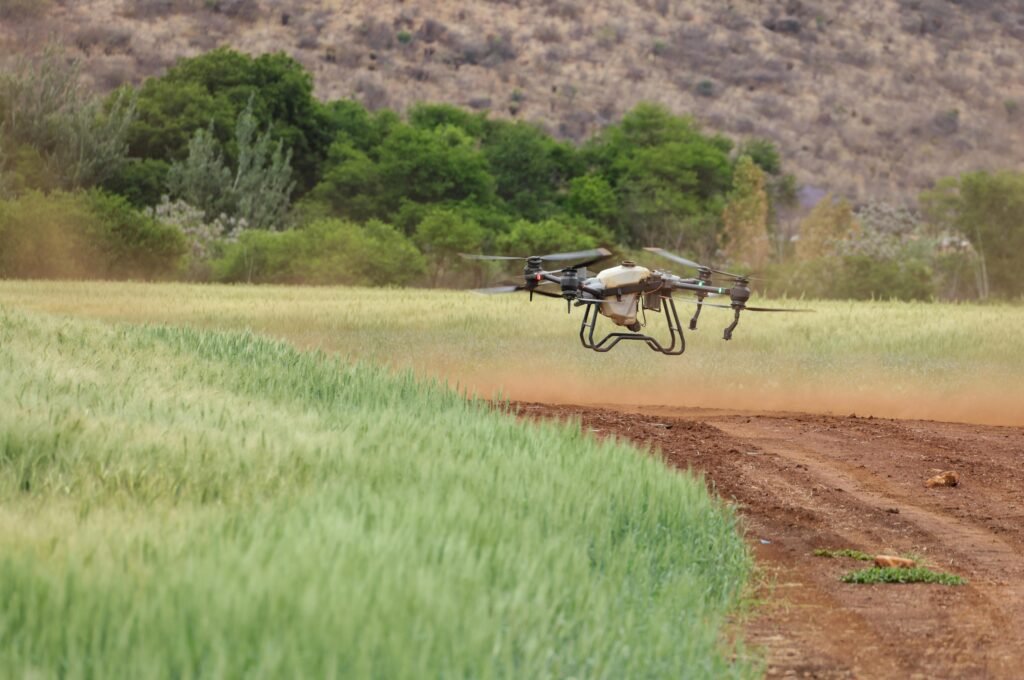
Aerial drone surveying vast green agricultural fields in a rural landscape under a clear blue sky.
Royalty free image, Pexels

Artificial Intelligence is no longer a futuristic concept. As we move deeper into 2025, AI adoption is accelerating across industries worldwide. Businesses are integrating intelligent systems into their daily operations to improve efficiency, reduce costs, and support long-term sustainability goals.

One of the most promising developments is the growing connection between AI technology and net zero emission targets. From precision farming to renewable energy optimization, AI is becoming a powerful tool for environmental progress.

In particular, the agriculture and environmental sectors are seeing major transformation through smart automation and data-driven decision-making.


Why AI Adoption Is Growing Rapidly in 2025

The surge in AI adoption is largely driven by advancements in generative AI and machine learning tools. These technologies help organizations scale operations quickly while maintaining accuracy.

In agriculture, AI tools are now used for:

  • Crop yield prediction
  • Soil health monitoring
  • Carbon tracking
  • Climate modeling
  • Farm resource optimization

Farmers and agribusinesses can generate detailed analytics reports within minutes. What once required extensive manual effort can now be done with intelligent automation.

Countries such as Singapore and the United Arab Emirates are leading in AI implementation. Their strong digital infrastructure, supportive government policies, and investment in localized AI models have accelerated adoption.

This global momentum signals that AI is not just a trend but a structural shift in how industries operate.


Key Challenges Slowing Widespread AI Implementation

Despite rapid growth, AI adoption still faces practical challenges.

1. Data Quality Issues

AI systems depend heavily on accurate and structured data. In agriculture, poor sensor inputs or incomplete weather data can produce unreliable predictions. When the data foundation is weak, the results cannot be trusted.

2. Integration with Legacy Systems

Many farms still rely on traditional machinery and older software systems. Integrating modern AI tools with legacy infrastructure often slows implementation. This creates technical and financial barriers for small and medium-scale farmers.

3. Ethical and Governance Concerns

Bias in algorithms, intellectual property disputes, and data privacy risks require clear regulatory frameworks. Without transparent governance, AI deployment can create more problems than it solves.

Developing regions also face a digital divide. While adoption is increasing in parts of Africa and other emerging markets, limited internet access and technical training restrict full participation in the AI ecosystem.


How AI Supports Net Zero and Sustainability Goals

The relationship between AI and sustainability is becoming stronger each year. Intelligent systems help organizations measure, manage, and reduce environmental impact more efficiently.

AI supports net zero strategies by:

  • Optimizing solar-powered irrigation systems
  • Managing wind-integrated supply chains
  • Reducing fertilizer waste through precision farming
  • Tracking carbon emissions in real time

In countries like India, the AI ecosystem is expanding rapidly. Local startups and technology providers are building practical AI tools designed specifically for agricultural needs. Partnerships between government bodies, agritech firms, and sustainability organizations are accelerating innovation.

However, responsible adoption remains essential. AI governance frameworks must ensure equitable access, fair data usage, and compliance with emerging global regulations.


Strategic Steps for AI Adoption in 2026

Organizations planning to adopt AI in agriculture and sustainability should follow a structured approach.

Start with Pilot Projects

Begin with high-impact areas such as precision farming or drought forecasting. Small pilot programs allow businesses to test effectiveness before scaling.

Customize AI Models

Off-the-shelf AI tools are useful, but combining them with custom adjustments ensures better performance for specific regional needs.

Invest in Ethical AI Training

Training teams on responsible AI use builds trust and reduces regulatory risks. Ethical awareness is particularly important when handling environmental data and sustainability reporting.


The Road Ahead

AI adoption in 2025 marks a significant turning point for agriculture and environmental management. While challenges remain, the opportunities outweigh the risks when implementation is thoughtful and well-governed.

As industries continue to align technology with sustainability goals, AI will play a central role in building efficient, resilient, and climate-conscious systems worldwide.

The future of smart agriculture is not just digital. It is intelligent, data-driven, and sustainability-focused.