Tag Archives: precision agriculture

Soil Carbon Measurement Technology Is Transforming Regenerative Agriculture

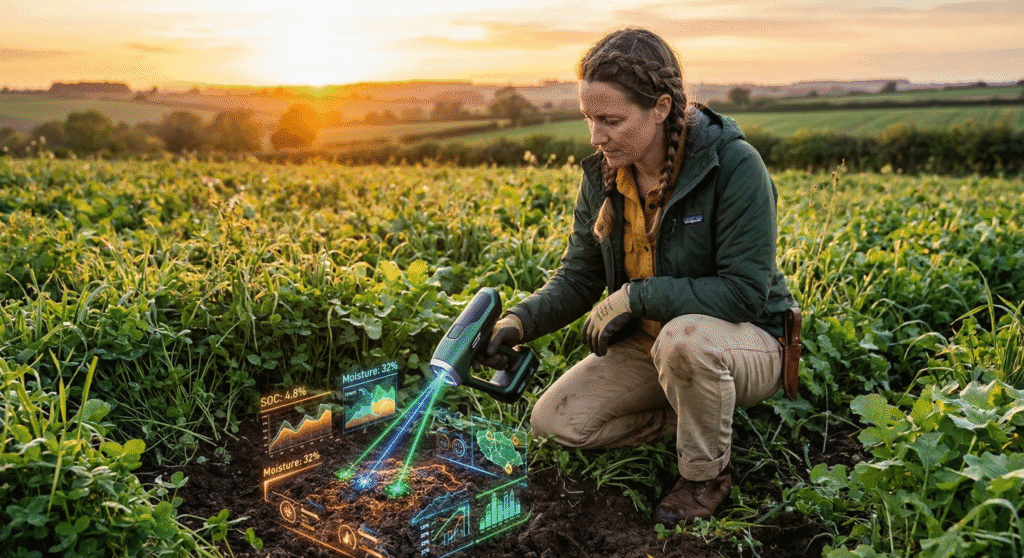
Farmer using portable laser scanner to measure soil carbon in lush regenerative field at sunset, with holographic data visualization overlays.
generated by google gemini

Introduction

Understanding how much carbon is stored in soil has become one of the most important challenges in modern agriculture. Soil plays a major role in reducing greenhouse gases, yet measuring soil carbon has traditionally been slow, expensive, and dependent on laboratory testing.

A new innovation from the Finnish company Cense Analytics is changing that process. Their portable laser-based device allows farmers and agricultural companies to measure soil organic carbon directly in the field with accuracy comparable to laboratory results. This breakthrough technology provides quick and affordable data that supports regenerative agriculture and helps tackle climate change.

Why Soil Carbon Matters in Agriculture

Soil is not just a medium for growing crops. It also acts as a natural storage system for carbon. When soil contains higher levels of organic carbon, it becomes healthier, more fertile, and better able to support plant growth.

Regenerative agriculture focuses on restoring soil health while improving farm productivity. Practices such as cover cropping, reduced tillage, and crop rotation help capture carbon from the atmosphere and store it in the soil.

However, verifying how much carbon is actually stored has always been difficult. Farmers and organizations often need reliable data to prove that these practices are working.

The Challenge With Traditional Soil Testing

Until recently, measuring soil carbon required a long and expensive process. Farmers had to collect soil samples and send them to laboratories for analysis. The results could take weeks to arrive and the testing costs were often too high for frequent monitoring.

This system created a barrier for farmers who wanted to adopt regenerative practices but needed proof of their environmental impact. Without fast and affordable testing, tracking soil carbon at scale remained a challenge.

A New On-Site Soil Carbon Measurement Tool

Cense Analytics has introduced a laser-based measurement device that can analyze soil organic carbon directly in the field. The tool uses advanced photonics technology to deliver precise measurements without the need for laboratory testing.

Farmers can now obtain accurate data about carbon storage and carbon dioxide emissions within minutes. This makes soil monitoring much easier and more practical for everyday agricultural use.

By removing the need for shipping samples and waiting for lab reports, the technology significantly reduces both time and cost.

From University Research to a Commercial Innovation

The technology behind this device was originally developed at Tampere University in Finland. Researchers were working with photonics tools designed to detect chemicals in mine water.

Around 2019, the research team recognized that the same technology could be adapted for agricultural use. With support from grants and collaborative projects such as the Carbon Action Project led by the Baltic Sea Action Group, the research moved toward real-world applications.

In 2024, the spin-off company Cense Analytics was officially launched. The company was founded by researchers Juha Toivonen and Jan Viljanen, who brought the technology from the laboratory to the agricultural market.

Today, the company is already working with major organizations in the food and agriculture sector, including Nestlé and Valio.

Real-World Benefits for Farmers and Companies

The new soil carbon measurement technology offers several practical benefits for agriculture and sustainability efforts.

Faster Carbon Monitoring

Farmers can measure soil carbon instantly in the field instead of waiting for lab analysis. This allows more frequent monitoring and better decision making.

Support for Carbon Credit Programs

Accurate soil carbon data helps farmers participate in carbon credit markets. Verified measurements make it easier to prove carbon sequestration and earn environmental incentives.

Reduced Costs

By eliminating laboratory testing and sample transportation, the technology significantly lowers the cost of soil carbon analysis.

Improved Soil Health and Productivity

Better monitoring encourages farming practices that restore soil health. Healthier soil improves crop yields, water retention, and resilience against climate stress.

A Major Step Forward for Carbon Farming

Experts believe that reliable soil carbon measurement is essential for scaling carbon farming worldwide. Governments, food companies, and environmental organizations increasingly require verified data to support climate commitments.

By making soil carbon data accessible and affordable, this technology could accelerate the adoption of regenerative agriculture on a global scale. It allows farmers to clearly see the environmental impact of their practices while helping companies verify sustainability claims.

Company Snapshot

AspectDetails
FoundersJuha Toivonen, Jan Viljanen, Tuomas Siltala
TeamAround 10 employees, mostly alumni from Tampere University
LocationRusko Industrial District, Tampere, Finland
FundingSupport from Tiina and Antti Herlin Foundation, Research Council of Finland and other programs between 2019 and 2023

Conclusion

The ability to measure soil carbon quickly and accurately is becoming a critical tool in the fight against climate change. Innovations like the laser-based soil carbon analyzer developed by Cense Analytics are making this process simpler and more accessible for farmers.

As regenerative agriculture continues to grow, technologies that provide reliable environmental data will play an important role in building a more sustainable food system. By giving farmers practical tools to track soil health, this breakthrough could help unlock the full potential of carbon farming around the world.
AI Adoption in 2025: Transforming Agriculture and Sustainability Worldwide

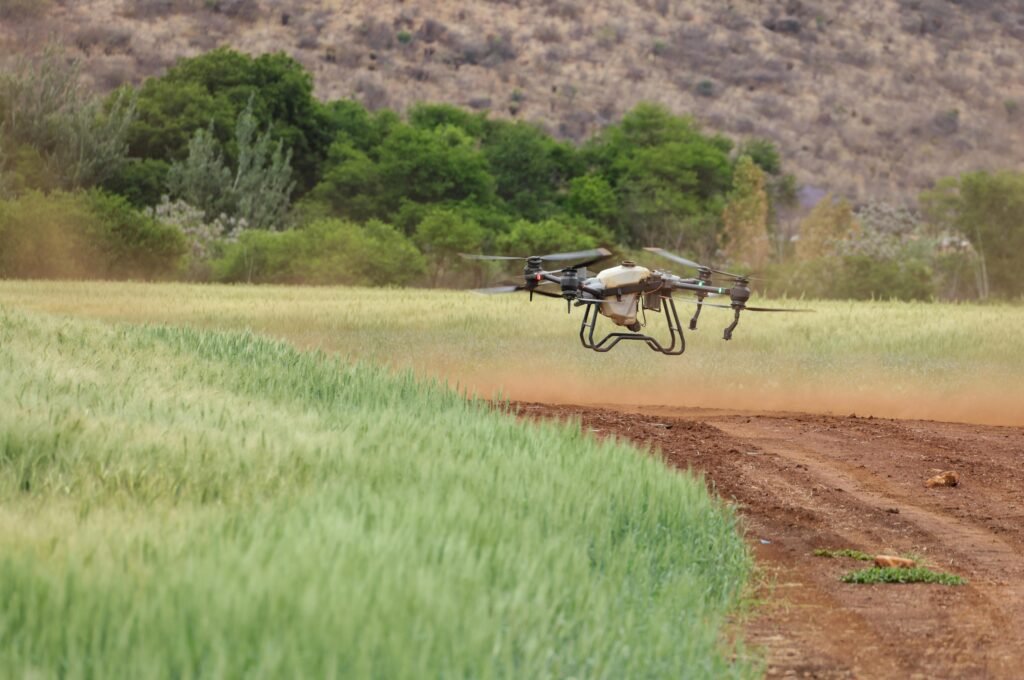
Aerial drone surveying vast green agricultural fields in a rural landscape under a clear blue sky.
Royalty free image, Pexels

Artificial Intelligence is no longer a futuristic concept. As we move deeper into 2025, AI adoption is accelerating across industries worldwide. Businesses are integrating intelligent systems into their daily operations to improve efficiency, reduce costs, and support long-term sustainability goals.

One of the most promising developments is the growing connection between AI technology and net zero emission targets. From precision farming to renewable energy optimization, AI is becoming a powerful tool for environmental progress.

In particular, the agriculture and environmental sectors are seeing major transformation through smart automation and data-driven decision-making.


Why AI Adoption Is Growing Rapidly in 2025

The surge in AI adoption is largely driven by advancements in generative AI and machine learning tools. These technologies help organizations scale operations quickly while maintaining accuracy.

In agriculture, AI tools are now used for:

  • Crop yield prediction
  • Soil health monitoring
  • Carbon tracking
  • Climate modeling
  • Farm resource optimization

Farmers and agribusinesses can generate detailed analytics reports within minutes. What once required extensive manual effort can now be done with intelligent automation.

Countries such as Singapore and the United Arab Emirates are leading in AI implementation. Their strong digital infrastructure, supportive government policies, and investment in localized AI models have accelerated adoption.

This global momentum signals that AI is not just a trend but a structural shift in how industries operate.


Key Challenges Slowing Widespread AI Implementation

Despite rapid growth, AI adoption still faces practical challenges.

1. Data Quality Issues

AI systems depend heavily on accurate and structured data. In agriculture, poor sensor inputs or incomplete weather data can produce unreliable predictions. When the data foundation is weak, the results cannot be trusted.

2. Integration with Legacy Systems

Many farms still rely on traditional machinery and older software systems. Integrating modern AI tools with legacy infrastructure often slows implementation. This creates technical and financial barriers for small and medium-scale farmers.

3. Ethical and Governance Concerns

Bias in algorithms, intellectual property disputes, and data privacy risks require clear regulatory frameworks. Without transparent governance, AI deployment can create more problems than it solves.

Developing regions also face a digital divide. While adoption is increasing in parts of Africa and other emerging markets, limited internet access and technical training restrict full participation in the AI ecosystem.


How AI Supports Net Zero and Sustainability Goals

The relationship between AI and sustainability is becoming stronger each year. Intelligent systems help organizations measure, manage, and reduce environmental impact more efficiently.

AI supports net zero strategies by:

  • Optimizing solar-powered irrigation systems
  • Managing wind-integrated supply chains
  • Reducing fertilizer waste through precision farming
  • Tracking carbon emissions in real time

In countries like India, the AI ecosystem is expanding rapidly. Local startups and technology providers are building practical AI tools designed specifically for agricultural needs. Partnerships between government bodies, agritech firms, and sustainability organizations are accelerating innovation.

However, responsible adoption remains essential. AI governance frameworks must ensure equitable access, fair data usage, and compliance with emerging global regulations.


Strategic Steps for AI Adoption in 2026

Organizations planning to adopt AI in agriculture and sustainability should follow a structured approach.

Start with Pilot Projects

Begin with high-impact areas such as precision farming or drought forecasting. Small pilot programs allow businesses to test effectiveness before scaling.

Customize AI Models

Off-the-shelf AI tools are useful, but combining them with custom adjustments ensures better performance for specific regional needs.

Invest in Ethical AI Training

Training teams on responsible AI use builds trust and reduces regulatory risks. Ethical awareness is particularly important when handling environmental data and sustainability reporting.


The Road Ahead

AI adoption in 2025 marks a significant turning point for agriculture and environmental management. While challenges remain, the opportunities outweigh the risks when implementation is thoughtful and well-governed.

As industries continue to align technology with sustainability goals, AI will play a central role in building efficient, resilient, and climate-conscious systems worldwide.

The future of smart agriculture is not just digital. It is intelligent, data-driven, and sustainability-focused.

The Future of Agricultural Research: Key Innovations Shaping Sustainable Farming

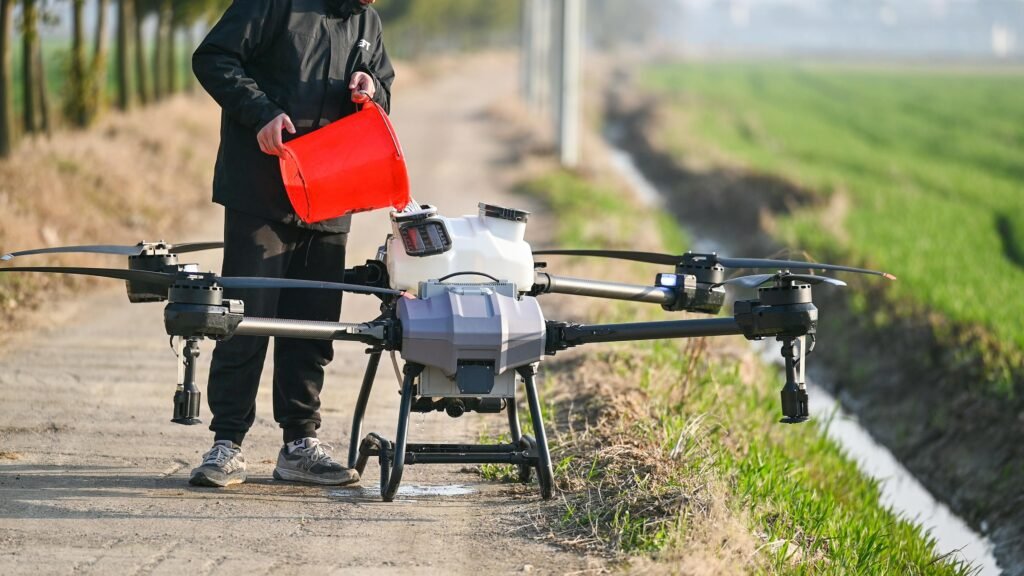
Farmer preparing large agricultural drone with liquid pesticide in sunny field.
Royalty free image via pexels

Agricultural research is advancing at a rapid pace as the world faces increasing pressure from climate change, population growth, and food security concerns. Scientists, agribusinesses, and policymakers are working together to develop smarter, more sustainable farming systems that can deliver higher yields while protecting natural resources. Several emerging trends are now reshaping how food is grown and managed across the globe.

Emerging Trends in Modern Agriculture

Today’s agricultural research places strong emphasis on improving efficiency and long-term sustainability. Bioengineering has become a major focus, with researchers using advanced genetic tools to strengthen crops against drought, pests, and disease. Techniques such as targeted gene editing allow improvements without altering the overall structure of the plant, making crops more resilient to changing environmental conditions.

At the same time, robotics and automation are transforming farm operations. Technologies such as drones, automated sprayers, and AI-driven machinery help farmers address labor shortages while improving accuracy in planting, irrigation, and crop protection. These tools reduce input waste and allow farms to operate more efficiently.

Sustainable Farming Practices Gain Momentum

Sustainability has moved from a niche concept to a core research priority. Regenerative farming practices are gaining attention for their ability to rebuild soil health and improve ecosystem balance. Methods like cover cropping, crop rotation, and reduced tillage help retain soil nutrients, improve water retention, and lower erosion.

Indoor farming systems are also expanding, particularly in regions facing water scarcity or limited arable land. Vertical farming and hydroponic systems use significantly less water than traditional agriculture while enabling year-round food production close to urban centers.

Technology Driving Smarter Farm Decisions

Artificial intelligence is playing a growing role in agricultural planning and management. Predictive analytics tools analyze weather patterns, soil conditions, and crop data to forecast yields, pest risks, and equipment maintenance needs. Many large-scale farms now rely on these systems to improve decision-making and reduce unexpected losses.

Another emerging innovation is the use of digital twins. These virtual models replicate real-world farming conditions, allowing researchers and growers to test scenarios and optimize resource use before making changes in the field. This approach supports more precise planning as global food demand continues to rise.

Precision Agriculture and Supply Chain Transparency

Precision agriculture continues to expand through the use of geospatial mapping and sensor-based technologies. These tools monitor soil health, track crop performance, and estimate future yields with greater accuracy. As adoption grows, precision farming is becoming a key driver of productivity and cost control.

Beyond the farm, traceability technologies are improving transparency across agricultural supply chains. Blockchain systems combined with Internet of Things devices help verify product origins, reduce food fraud, and minimize waste. These solutions also build trust with consumers who want greater visibility into how their food is produced.

Future Outlook for Agricultural Research

Looking ahead, agricultural research is expected to focus heavily on reducing environmental impact while maintaining productivity. Advanced biofertilizers are being developed to improve nutrient absorption and cut reliance on synthetic chemicals. Carbon farming initiatives are also gaining traction by rewarding farmers for practices that capture and store carbon in soil.

As agriculture remains a significant contributor to global greenhouse gas emissions, these innovations will play a crucial role in building resilient food systems. With continued investment and research, the sector is well positioned to support sustainable and productive farming for the future.