Tag Archives: sustainable farming

Spider Venom Could Become a Game Changer in Protecting Honeybees from Varroa Mites

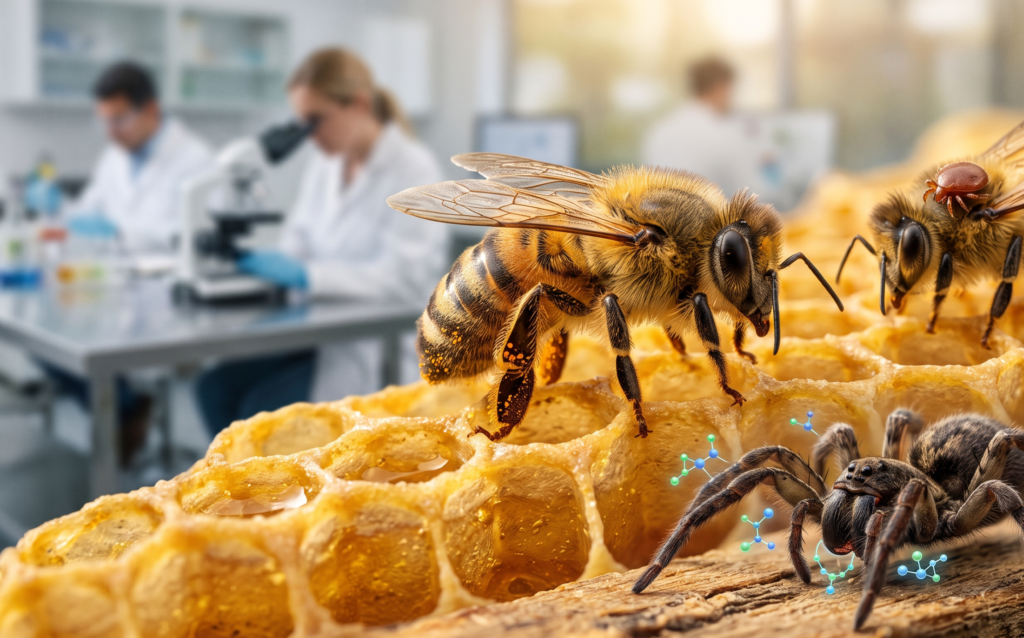
Healthy honeybee on a honeycomb with a Varroa mite and a spider representing venom-based research for sustainable bee protection and pollinator conservation.
generated by google gemini

Honeybees are among the most important pollinators in the world, yet their populations continue to face serious threats from disease, habitat loss, pesticides, and harmful parasites. One of the biggest challenges for beekeepers is the Varroa mite, a tiny parasite that has devastated bee colonies worldwide.

Now, Australian scientists have made an exciting discovery that could help change the future of beekeeping. Researchers have found that compounds extracted from spider venom may offer a safe and environmentally friendly way to eliminate Varroa mites without harming honeybees.

Scientists Turn to Spider Venom for a New Solution

The research was carried out by a team at the University of the Sunshine Coast in Australia. Scientists examined venom collected from dozens of spiders and scorpions to identify natural compounds that could target Varroa destructor, the parasitic mite responsible for weakening honeybee colonies.

Their investigation involved testing approximately 50 venom samples. During the study, two spider species stood out because their venom showed remarkable effectiveness against the destructive mites.

After further analysis, researchers isolated tiny protein fragments known as peptides. Laboratory tests showed these peptides successfully killed Varroa mites while leaving honeybees unaffected.

Why This Discovery Is Important

Finding a treatment that targets parasites without harming bees has been a long-standing challenge for researchers and beekeepers.

Many of the chemical products currently used to control Varroa mites have become less effective over time because the parasites have gradually developed resistance. In addition, some treatments may have unwanted effects on the environment or beneficial insects.

The newly discovered venom-derived peptides appear to work differently. They naturally break down in the environment and specifically attack the mites rather than the bees. This makes them a promising alternative for sustainable pest management.

The Growing Threat of Varroa Mites

Varroa destructor is widely recognized as one of the most damaging parasites affecting honeybee populations. These mites feed on developing and adult bees, weakening their immune systems and increasing the spread of harmful viruses.

Infested colonies often become less productive and may eventually collapse if left untreated.

The decline of honeybee populations has become a global concern because bees play an essential role in pollinating crops that produce fruits, vegetables, nuts, and many other foods. Protecting bees is therefore important not only for biodiversity but also for global food security.

What Happens Next?

Although the results are highly encouraging, researchers say more work is needed before the treatment becomes available for commercial use.

The next phase of the project will involve testing the peptide compounds inside active beehives to determine how well they perform under real beekeeping conditions. Scientists will also evaluate the long-term safety, effectiveness, and practicality of using these compounds on a larger scale.

The research team has secured additional funding to continue developing this promising technology.

A Step Toward Sustainable Beekeeping

Natural, targeted pest control methods are becoming increasingly important as agriculture looks for safer alternatives to conventional chemicals.

If future trials are successful, spider venom-derived peptides could provide beekeepers with a powerful new tool for controlling Varroa mites while reducing environmental impact. Such an innovation could improve colony health, strengthen pollinator populations, and support more sustainable farming practices around the world.

Final Thoughts

The discovery that spider venom contains compounds capable of controlling Varroa mites represents an exciting development in agricultural and environmental research. While commercial use is still some years away, the early findings offer hope for protecting honeybees from one of their greatest threats.

Healthy bee populations are essential for ecosystems and food production. Advances like this demonstrate how studying natural compounds can lead to innovative solutions for some of the world’s most pressing environmental challenges.
The Future of Agricultural Research: Key Innovations Shaping Sustainable Farming

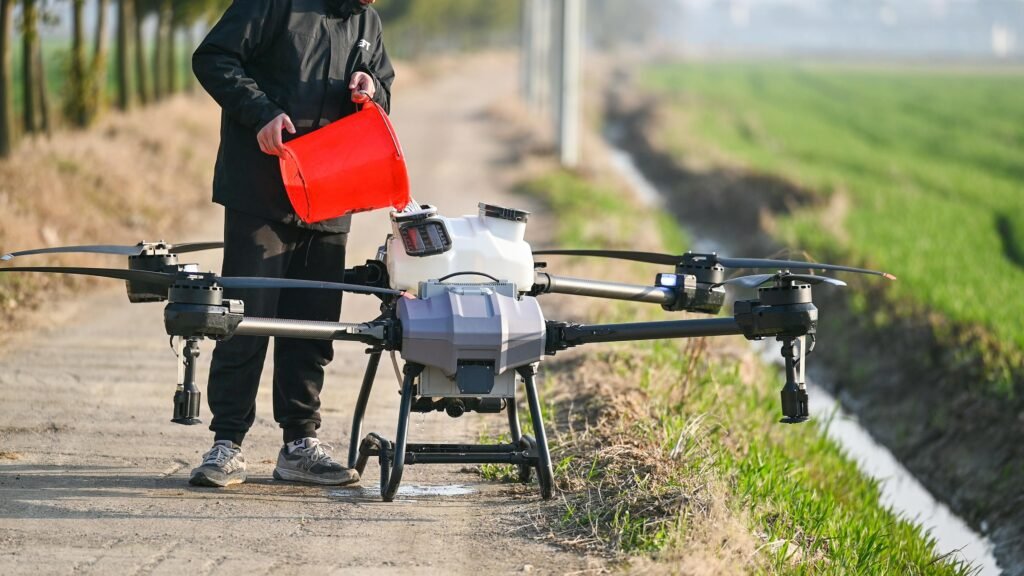
Farmer preparing large agricultural drone with liquid pesticide in sunny field.
Royalty free image via pexels

Agricultural research is advancing at a rapid pace as the world faces increasing pressure from climate change, population growth, and food security concerns. Scientists, agribusinesses, and policymakers are working together to develop smarter, more sustainable farming systems that can deliver higher yields while protecting natural resources. Several emerging trends are now reshaping how food is grown and managed across the globe.

Emerging Trends in Modern Agriculture

Today’s agricultural research places strong emphasis on improving efficiency and long-term sustainability. Bioengineering has become a major focus, with researchers using advanced genetic tools to strengthen crops against drought, pests, and disease. Techniques such as targeted gene editing allow improvements without altering the overall structure of the plant, making crops more resilient to changing environmental conditions.

At the same time, robotics and automation are transforming farm operations. Technologies such as drones, automated sprayers, and AI-driven machinery help farmers address labor shortages while improving accuracy in planting, irrigation, and crop protection. These tools reduce input waste and allow farms to operate more efficiently.

Sustainable Farming Practices Gain Momentum

Sustainability has moved from a niche concept to a core research priority. Regenerative farming practices are gaining attention for their ability to rebuild soil health and improve ecosystem balance. Methods like cover cropping, crop rotation, and reduced tillage help retain soil nutrients, improve water retention, and lower erosion.

Indoor farming systems are also expanding, particularly in regions facing water scarcity or limited arable land. Vertical farming and hydroponic systems use significantly less water than traditional agriculture while enabling year-round food production close to urban centers.

Technology Driving Smarter Farm Decisions

Artificial intelligence is playing a growing role in agricultural planning and management. Predictive analytics tools analyze weather patterns, soil conditions, and crop data to forecast yields, pest risks, and equipment maintenance needs. Many large-scale farms now rely on these systems to improve decision-making and reduce unexpected losses.

Another emerging innovation is the use of digital twins. These virtual models replicate real-world farming conditions, allowing researchers and growers to test scenarios and optimize resource use before making changes in the field. This approach supports more precise planning as global food demand continues to rise.

Precision Agriculture and Supply Chain Transparency

Precision agriculture continues to expand through the use of geospatial mapping and sensor-based technologies. These tools monitor soil health, track crop performance, and estimate future yields with greater accuracy. As adoption grows, precision farming is becoming a key driver of productivity and cost control.

Beyond the farm, traceability technologies are improving transparency across agricultural supply chains. Blockchain systems combined with Internet of Things devices help verify product origins, reduce food fraud, and minimize waste. These solutions also build trust with consumers who want greater visibility into how their food is produced.

Future Outlook for Agricultural Research

Looking ahead, agricultural research is expected to focus heavily on reducing environmental impact while maintaining productivity. Advanced biofertilizers are being developed to improve nutrient absorption and cut reliance on synthetic chemicals. Carbon farming initiatives are also gaining traction by rewarding farmers for practices that capture and store carbon in soil.

As agriculture remains a significant contributor to global greenhouse gas emissions, these innovations will play a crucial role in building resilient food systems. With continued investment and research, the sector is well positioned to support sustainable and productive farming for the future.

Global Agriculture in 2025: Major Innovations and Ongoing Challenges

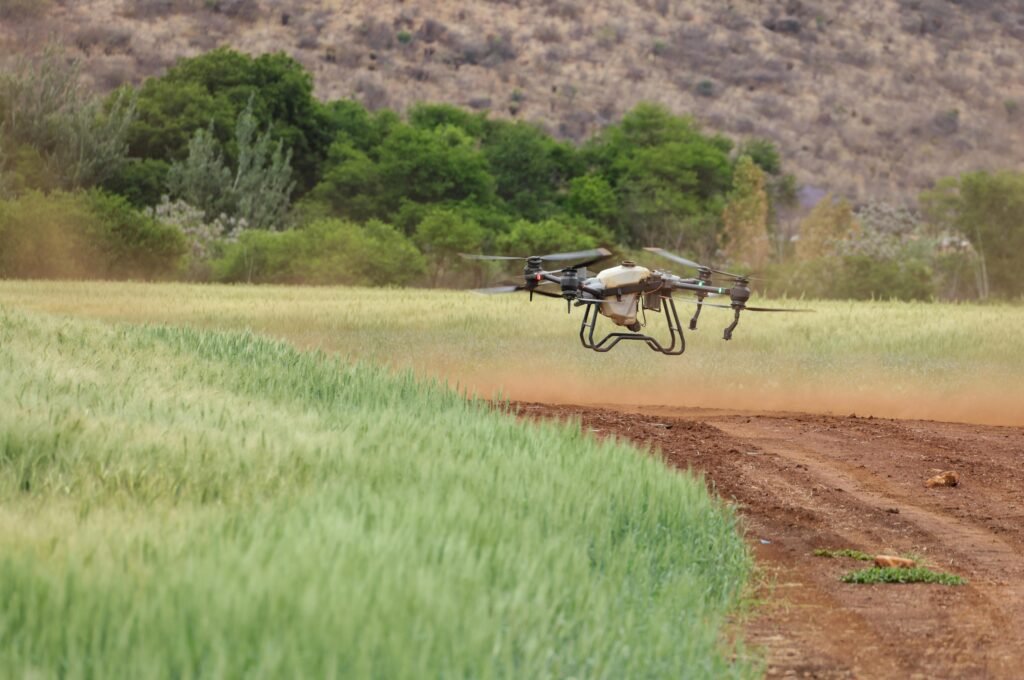
Aerial drone surveying vast green agricultural fields in a rural landscape under a clear blue sky.
Royalty free image, Pexels

Agriculture in 2025 experienced significant transformation as technology became central to how food is produced worldwide. Farmers across regions increasingly relied on advanced tools to improve productivity, manage costs, and address food security concerns. At the same time, climate pressures and economic uncertainty continued to test global agricultural systems.

This article explores the most important agricultural innovations of 2025, along with the key challenges shaping the future of farming.

Technological Innovations Shaping Agriculture

AI and Precision Farming

Artificial intelligence and precision farming played a leading role in modern agriculture during 2025. Farmers used data collected from sensors, drones, and satellite imagery to make more accurate decisions about irrigation, fertilization, and pest control. These technologies reduced unnecessary resource use while improving crop yields.

Precision farming also supported sustainable approaches such as regenerative agriculture by improving soil health and reducing environmental impact.

Robotics and Automation in Farming

Robotics continued to advance, with AI-powered machines handling complex agricultural tasks. Automated harvesters, pruning robots, and planting systems improved accuracy and reduced dependency on manual labor. These technologies helped farmers manage labor shortages while maintaining consistent output quality.

Growth of Vertical and Controlled Environment Farming

Vertical farming and controlled environment agriculture expanded rapidly, particularly in urban areas. These systems enabled year-round food production using less land and water. By growing crops closer to consumers, farmers reduced transportation costs and improved supply chain efficiency.

Biotechnology and Emerging Agrotech

Biotechnology and agrotech innovations focused on long-term sustainability. Solutions such as carbon utilization, remote sensing, and soil restoration techniques helped farms adapt to climate change. Agentic AI also emerged as a breakthrough, allowing farms to make autonomous, real-time decisions based on environmental and operational data.

Key Challenges Facing Global Agriculture

Climate and Environmental Pressures

Climate change remained one of the biggest threats to agriculture in 2025. Extreme weather events, rising input costs, and soil degradation reduced productivity in many regions. Agricultural expansion also contributed to deforestation, accelerating biodiversity loss and greenhouse gas emissions.

Economic and Geopolitical Uncertainty

Geopolitical tensions and economic instability affected global food systems. Many farmers faced fluctuating markets, rising operational costs, and limited access to financing. Rural poverty increased in several regions, making it harder for small farmers to invest in new technologies.

Labor Shortages and Market Volatility

Labor shortages persisted, pushing farms to rely more heavily on automation. However, concerns around return on investment slowed adoption for some producers. Unpredictable market prices further complicated long-term planning for farmers.

The Path Forward for Sustainable Agriculture

The future of agriculture depends on combining technological innovation with supportive policies. Integrating AI-driven solutions with government incentives can help create resilient and inclusive food systems. Innovations such as agrivoltaics, which combine solar energy generation with farming, offer farmers additional income while improving land use efficiency.

Global efforts now focus on science, technology, and innovation to meet rising food demand without compromising environmental sustainability.