Author Archives: connect.vanshjain@gmail.com

12 Climate Tech Startups Leading the Net Zero Future in 2026

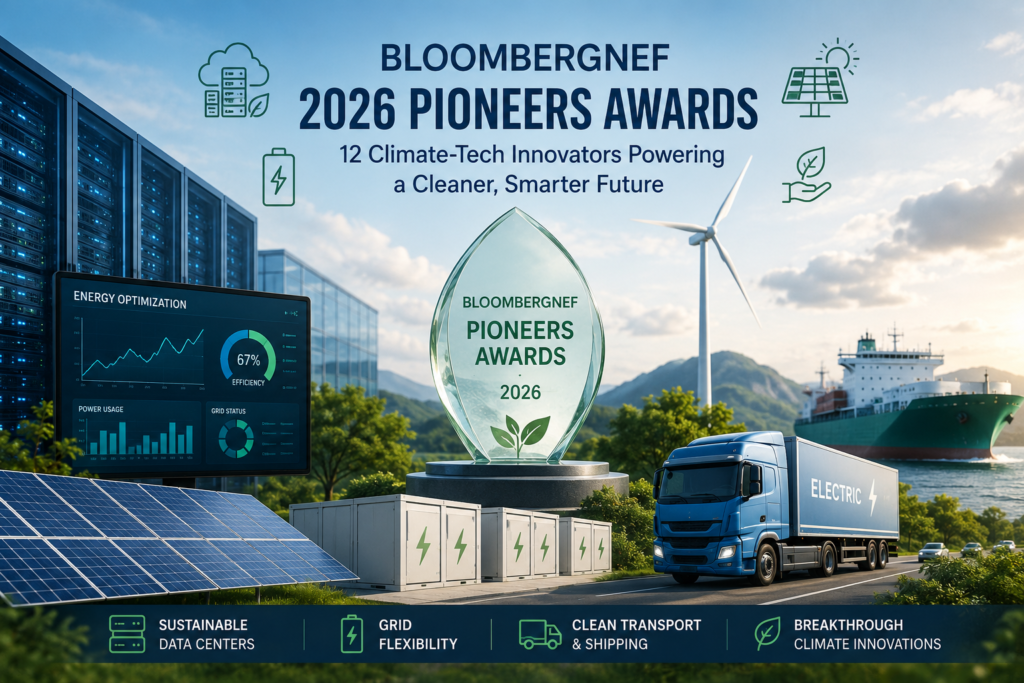
Vibrant illustration of a futuristic eco-city at dawn, featuring 12 glowing icons for BNEF Pioneers 2026 winners: solar data centers, batteries, electric trucks, ships, carbon capture orbs, and buses amid green skyscrapers, with golden sunlight and text "BNEF Pioneers 2026: 12 Climate Champions" overlay.
generated by google gemini

The global push toward a net zero future continues to gain momentum, and innovation is playing a central role in this transition. Recently, BloombergNEF announced the winners of its 2026 Pioneers Award, recognizing 12 promising climate technology startups that are shaping the future of sustainability.

Selected from more than 600 applications across 66 countries, these startups represent some of the most impactful solutions in energy, transportation, and climate innovation today.

Driving Innovation Across Key Climate Challenges

The award highlights startups working on three critical areas that are essential for reducing global emissions and building a more sustainable infrastructure.

Smarter and Greener Data Centers

As demand for data continues to rise, energy consumption in data centers has become a growing concern. Startups such as Emerald AI, HT Materials Science, and Point2 Technology are developing advanced cooling systems and efficiency solutions. Their work aims to reduce energy usage while maintaining high performance, making data infrastructure more sustainable.

Solving the Duck Curve Problem

Managing energy supply and demand remains one of the biggest challenges in renewable energy adoption. Companies like Base Power Company, Qvantum International, and XL Batteries are working on improving energy storage and stabilizing electricity grids. Their innovations help balance fluctuations in renewable energy generation, especially during peak and off-peak hours.

Decarbonizing Heavy Transport and Shipping

Heavy transport and shipping are among the most difficult sectors to decarbonize. Startups such as DeepWay BEV Truck, Silverstream Technologies, and WattEV, Inc. are tackling this issue through electric vehicle technology and advanced solutions that reduce drag in shipping. These developments are helping lower emissions while improving operational efficiency.

Wildcard Innovations Expanding Climate Impact

In addition to the main categories, three startups were recognized as wildcard innovators for their unique contributions to climate solutions.

BasiGo is working to accelerate the adoption of electric buses, making public transport cleaner and more accessible. Endolith is exploring microbial carbon capture, offering a new approach to reducing carbon dioxide levels. GRST focuses on battery recycling, addressing the growing need for sustainable battery lifecycle management.

These companies demonstrate that innovation in climate technology goes beyond traditional sectors and continues to evolve in new and unexpected ways.

Global Recognition at the New York Summit

The selected startups will present their solutions at BloombergNEF’s New York Summit, scheduled for April 21 and 22, 2026. This event brings together industry leaders, investors, and innovators from around the world.

The Pioneers program has a strong track record, with previous participants collectively raising more than 25 billion dollars. This reflects the growing investor confidence in scalable climate technologies that can support global decarbonization efforts.

A Step Forward for a Sustainable Future

The 2026 Pioneers Award highlights the importance of innovation in addressing climate challenges. From energy storage and transport to data infrastructure and carbon capture, these startups are contributing to real-world solutions that can drive meaningful change.

As the world continues its journey toward sustainability, initiatives like this play a vital role in identifying and supporting technologies that can create long-term environmental impact.

Bosch Accelerates AI and EV Push, Positions India as Key Growth Hub

A futuristic scene of an electric car driving on a smart urban road in India, representing Bosch AI strategy, connected to a network of AI and data streams overhead, with a high-tech Bosch-style campus and Indian flag in the background, symbolising innovation, electrification, and advanced mobility technology.
generated by google gemini

Amid global economic uncertainty and shifting geopolitical conditions, Bosch is moving ahead with a strong focus on innovation. The company is prioritising artificial intelligence, electrification, and software to strengthen its position in mobility and industrial technology. India is emerging as a key hub in this strategy.

Adapting to a challenging global environment

Bosch faces rising trade barriers, supply chain disruptions, and changing price trends. These pressures are especially visible in the automotive sector. To stay competitive, the company has introduced structural changes and workforce adjustments. It has also launched a major restructuring plan in Germany.

These steps aim to improve efficiency while maintaining high-quality, technology-driven solutions. Bosch started 2026 on a stable note. First-quarter revenue remained close to last year’s levels, with slight growth after currency adjustments.

The company expects uncertainty to continue. However, it sees innovation as the main driver of long-term growth and profitability.

Strategy 2030 focuses on innovation

Bosch’s Strategy 2030 aims to place the company among the top three suppliers in its core markets. Cost control remains important, but innovation will define its competitive edge.

The company is investing heavily in automotive software, advanced driver-assistance systems, and vehicle computing. The automotive software market is expected to grow rapidly in the coming years. Bosch is positioning itself to capture a strong share.

Demand already looks strong. The company has secured major orders for ADAS components, sensors, and onboard systems.

Electrification and smarter mobility

Electrification remains central to Bosch’s mobility plans. The company expects to deliver millions of components for electric vehicles this year. This strengthens its role in powertrain and drivetrain systems.

Bosch is also developing AI-powered features to improve driving experiences. Some systems can recognise drivers and adjust seating, climate, and infotainment settings automatically.

These innovations make vehicles smarter and easier to use. They also help automakers stand out in a competitive market.

India becomes a strategic hub

India is gaining importance in Bosch’s global network. The country is not just a manufacturing base. It is also becoming a centre for research and software development.

Bosch has partnered with Tata AutoComp Systems to develop electric mobility solutions for the Indian market. This reflects its localised approach.

The company is also investing heavily in India. It aims to expand its capabilities in AI, mobility services, and connected technologies. India’s strong engineering talent and growing market make it an ideal hub.

AI expands beyond mobility

Bosch is extending AI into consumer products and services. It is introducing smart appliances with voice control and advanced power tools with safety features.

These technologies improve efficiency and user experience. They also enable services like remote diagnostics and predictive maintenance.

Bosch is also strengthening its service platforms. It uses AI to optimise fleet operations, logistics, and energy usage. This helps reduce costs for businesses.

Balancing present challenges with future growth

Bosch has reported moderate growth across its business segments. Some divisions are growing steadily, while others face margin pressure due to temporary costs.

This reflects a broader challenge. The company must balance current profitability with long-term investments.

Despite this, Bosch remains confident about its future. It continues to invest in AI, electrification, and software. With strong localisation in markets like India, Bosch aims to lead the next phase of mobility and industrial transformation.

Global Sustainability and ESG Insights: March 2026

give me the alt text for this image A professional digital illustration of a glowing globe encircled by icons for ESG themes: wind turbines and forests for environment, diverse hands linking for social responsibility, and scales with charts for governance. Blue-green gradient background with faint world map and upward arrows, conveying global sustainability compliance and growth.
generated by google gemini

Sustainability and ESG regulations are evolving at a rapid pace, and March 2026 stands out as a month of significant global movement. Businesses across industries are being pushed to rethink how they approach environmental, social, and governance frameworks. Staying compliant is no longer enough. Companies now need to adapt quickly and strategically to remain competitive in a changing regulatory landscape.

A Snapshot of Recent Developments

According to the latest insights from Eversheds Sutherland, the March 2026 report marks two years of tracking more than 590 sustainability regulations worldwide. This milestone highlights just how quickly ESG expectations are expanding across regions.

Recent updates show a strong focus on energy policy reforms, climate disclosures, and cross-border environmental accountability. In the United Kingdom, consultations around energy infrastructure are shaping future investment decisions. At the same time, Europe is moving forward with mechanisms that directly impact global trade emissions.

Major Regional ESG Updates

The UK is actively consulting on energy infrastructure policies. These discussions are expected to influence how large-scale energy projects are approved and financed, especially those tied to renewable energy expansion.

European Union

The European Union has reinforced its commitment to the Carbon Border Adjustment Mechanism. This policy will affect import costs by factoring in carbon emissions, pushing global suppliers to align with stricter environmental standards.

United States

In the United States, the House of Representatives has advanced major climate legislation. This signals a move toward stronger federal oversight and more structured climate disclosure requirements for businesses.

Hong Kong

Hong Kong has launched consultations on its biodiversity strategy. Businesses operating in the region will need to consider nature-related risks and integrate environmental protection into their long-term planning.

Emerging Global ESG Trends

Several global patterns are becoming clear:

  • The Global Reporting Initiative has introduced updates to labor disclosure standards, encouraging companies to provide deeper insights into workforce practices and conditions.
  • China is setting a strong example in Asia with its national climate reporting standard, raising expectations for transparency across the region.
  • The UAE has taken steps to address human rights concerns by ratifying protocols aimed at eliminating forced labor.
  • Europe has finalized stricter corporate sustainability reporting and due diligence rules, requiring companies to conduct detailed audits of their supply chains.

These developments reflect a global shift toward accountability, transparency, and measurable ESG performance.

What This Means for Businesses

For companies, the message is clear. ESG is no longer a side initiative. It is becoming a core part of business strategy.

Organizations should focus on:

  • Building robust compliance systems that adapt to changing regulations
  • Strengthening internal processes for climate and labor disclosures
  • Using scenario planning to manage risks related to sustainability claims and human rights
  • Exploring innovation opportunities created by new regulations

With emerging leadership in regions like China and parts of Africa, businesses that act early can gain a competitive advantage. The key is to move beyond basic compliance and develop resilient ESG frameworks that support long-term growth.

Conclusion

March 2026 highlights how quickly sustainability regulations are transforming the global business environment. Companies that stay informed and proactive will be better positioned to navigate these changes. By aligning strategy with evolving ESG standards, businesses can not only reduce risk but also unlock new opportunities for innovation and responsible growth.

BloombergNEF Pioneers Award 2026 Highlights Emerging Climate Tech Innovators

Illustration of 12 climate‑tech startups receiving the BloombergNEF Pioneers 2026 Award on a digital stage, with icons representing renewable energy, data centers, smart grids, and low‑carbon transport, styled as a modern, professional blog banner.
generated by google gemini

The push toward a net zero future depends heavily on innovation, and the latest announcement from BloombergNEF reinforces that reality. The organization has revealed 12 early stage climate tech companies and projects as winners of its 2026 Pioneers Award. These innovators represent some of the most promising solutions that can accelerate the global transition to a low carbon economy.

This year, the competition saw strong global participation, with over 600 applications submitted from more than 50 countries. From this pool, 29 finalists were shortlisted, and only the most impactful ideas were selected as winners.

What the BloombergNEF Pioneers Award Represents

The annual Pioneers program by BloombergNEF focuses on identifying breakthrough technologies and business models that can significantly reduce emissions. It highlights solutions that have the potential to reshape how energy is produced, managed, and consumed across key sectors.

Each selected winner is evaluated based on three critical factors. These include scalability, technical strength, and the capability of the team behind the innovation. This ensures that the chosen projects are not just innovative in theory but also practical and ready for real world deployment.

Key Focus Areas for 2026

For 2026, the award program concentrated on three major climate challenges that are critical for achieving long term sustainability goals.

Sustainable Data Center Infrastructure

With the rapid growth of digital services, data centers are becoming major energy consumers. The program recognized solutions that improve efficiency through advanced cooling systems and optimized hardware design, helping reduce energy use without compromising performance.

Balancing Electricity Supply and Demand

Managing fluctuations in electricity demand remains a key challenge for modern power systems. Several winning solutions focused on improving grid stability and efficiency, often referred to as flattening the duck curve. These innovations help ensure better energy distribution and reduced wastage.

Decarbonizing Transport and Shipping

Heavy duty transport and shipping contribute significantly to global emissions. The 2026 winners introduced new approaches to reduce carbon output in these sectors, including cleaner fuels, improved logistics systems, and energy efficient transport technologies.

How the Winners Benefit

Winning the BloombergNEF Pioneers Award goes beyond recognition. Selected startups gain access to valuable resources that can accelerate their growth journey.

They receive insights from BloombergNEF’s research and analytics, along with opportunities to connect with investors, utility companies, and large corporates. In addition, winners get a chance to present their innovations at global climate tech events, helping them gain visibility and scale faster.

Why This Matters for the Net Zero Transition

Programs like the BloombergNEF Pioneers Award play an important role in bridging the gap between innovation and real world impact. By supporting early stage climate tech solutions, they help bring scalable and practical technologies closer to commercial adoption.

As industries continue to shift toward sustainability, such initiatives are essential for identifying and supporting the next generation of climate leaders.

BloombergNEF Pioneers 2026: Climate Innovators Driving a Net Zero Future

Vibrant 16:9 header illustration for BloombergNEF 2026 Pioneers Award blog, showing 12 glowing green tech icons orbiting Earth: solar panels, wind turbines, efficient data centers, electric trucks, wind-sail ships, batteries, and sustainable crops, in futuristic blue-green tones with light rays and subtle trophy.
generated by google gemini

The global push toward a net zero future is gaining momentum, and innovation continues to lead the way. In 2026, BloombergNEF recognized a group of forward-thinking companies through its Pioneers Award. These early-stage innovators are developing practical solutions to some of the most pressing climate challenges, from rising energy demand to cleaner transportation systems.

This year’s winners reflect how technology is shaping the next phase of sustainable growth across industries.

Understanding the BloombergNEF Pioneers Award

The BloombergNEF Pioneers Award highlights emerging companies that are building scalable technologies for decarbonization. The focus is not just on innovation, but on real-world impact and the ability to transform existing systems.

In 2026, the award concentrated on three key areas:

  • Sustainable data center operations
  • Managing fluctuations in renewable energy supply
  • Low-emission solutions for shipping and heavy transport

Winning companies receive global recognition, access to industry experts, and support from BloombergNEF’s extensive research network, helping them scale faster and reach wider markets.

Advancing Data Center Efficiency

As artificial intelligence and cloud computing continue to expand, data centers are consuming increasing amounts of energy. Improving their efficiency has become a priority for both sustainability and cost management.

Several innovators are addressing this challenge:

  • Amperesand is developing advanced cooling systems that reduce energy consumption
  • EMCOOL Inc. is focusing on liquid cooling solutions for high-density servers
  • Emerald AI is using intelligent algorithms to optimize energy usage
  • HT Materials Science is creating materials that enhance heat dissipation
  • Point2 Technology is improving power delivery systems
  • SkyCool Systems is applying passive cooling techniques
  • WATTER is introducing water-efficient infrastructure designs
  • ZutaCore is advancing two-phase cooling technologies

These solutions are helping data centers operate more efficiently while reducing their environmental footprint.

Improving Grid Stability

The rapid growth of renewable energy has introduced new challenges in balancing supply and demand. Solar and wind power can fluctuate throughout the day, creating pressure on energy systems.

To address this, several companies are working on improving grid reliability:

  • Base Power Company is building flexible energy systems
  • Granular Energy is developing demand response tools
  • GridBeyond is offering software solutions to balance energy loads
  • GridX is providing energy management platforms
  • Qvantum Sverige is enhancing thermal energy storage
  • We Drive Solar is improving solar forecasting capabilities
  • XL Batteries is scaling long-duration energy storage solutions
  • Zenobē is supporting fleet electrification with battery technology

These innovations play a critical role in making renewable energy more reliable and easier to integrate into existing grids.

Transforming Low Emission Transport

Reducing emissions in heavy transport remains one of the biggest challenges in the transition to sustainability. The 2026 Pioneers are tackling this issue with a range of practical solutions.

Key developments include:

  • DeepWay BEV Truck is enabling long-haul electric trucking
  • Emvolon is retrofitting engines to run on hydrogen
  • EV Realty is expanding charging infrastructure for commercial fleets
  • Norsepower is introducing wind-assisted propulsion for ships
  • Seabound is capturing carbon emissions directly from ship exhaust
  • Silverstream Technologies is reducing drag to improve fuel efficiency
  • WattEV is building large-scale charging networks for trucks
  • Xos Trucks is manufacturing electric vehicles for fleet operations

These efforts are helping reduce emissions across logistics and transportation sectors.

Emerging Innovations Across Sectors

In addition to the main categories, several companies were recognized for their unique contributions to sustainability across different industries.

These include:

  • BasiGo is promoting electric buses in emerging markets
  • Endolith is extracting lithium from geothermal resources
  • GigaCrop is improving crop productivity in a sustainable way
  • GRST is advancing low-carbon steel production
  • SiTration is improving water purification technologies

These companies highlight how innovation is expanding into new areas, supporting a broader transition to sustainable systems.

Why These Innovations Matter

The companies recognized in the 2026 Pioneers Award demonstrate that climate technology is moving beyond early experimentation and into practical application. As industries face increasing pressure to reduce emissions, these solutions are becoming essential.

From energy-intensive digital infrastructure to global transportation networks, these innovations are helping reshape how industries operate. They also show that sustainable growth is not only possible but increasingly achievable.

Conclusion

The 2026 BloombergNEF Pioneers showcase the power of innovation in addressing global climate challenges. By focusing on efficiency, reliability, and clean energy solutions, these companies are contributing to a more sustainable and resilient future.

As demand for energy and digital services continues to rise, the role of such technologies will become even more important in achieving long-term climate goals.

The Growing Concern of Undisclosed AI Use in Scientific Research

Infographic-style illustration split into two panels: left side depicts a researcher typing on a laptop with glowing AI chatbot icons merging into journal papers; right side shows a red warning sign over blurred scientific charts in blue-gray tones with orange accents.
generated by google gemini

Artificial intelligence is transforming how research gets written and published. However, its silent use in academic papers is now creating serious concerns. Recently, researchers discovered that tools like ChatGPT are being used without proper disclosure. As a result, this trend is starting to affect the credibility of scientific work.

AI Is Quietly Entering Academic Writing

In recent investigations, researchers identified a rising number of papers that show clear signs of AI assistance. For example, many of these papers include repetitive sentence patterns and predictable phrasing.

Moreover, several of these studies appeared in high-ranking journals. Despite this, authors did not mention any use of AI tools. Because of this lack of transparency, questions are now emerging about how widespread this issue has become.

Why This Matters for Peer Review

The peer-review process plays a critical role in maintaining research quality. It ensures that findings remain accurate, reliable, and trustworthy. However, undisclosed AI use makes this process less effective.

For instance, reviewers cannot properly evaluate originality if they do not know how the content was generated. In addition, hidden AI involvement can influence how results are presented. Therefore, this lack of disclosure weakens the foundation of scientific validation.

Research Highlighting the Issue

Several researchers have already started investigating this problem. In particular, Artur Strzelecki has highlighted the presence of AI-generated patterns in top-tier journals.

Furthermore, his findings show that even respected publications face this challenge. In some cases, AI tools can generate nearly identical versions of research papers. As a result, these “copycat” papers may bypass standard plagiarism detection systems.

The Need for Transparency and Ethical Standards

Clearly, the academic community must respond to this growing challenge. First, journals should introduce stronger AI detection systems alongside traditional checks. At the same time, institutions must update their publishing guidelines.

Equally important, researchers should openly disclose any use of AI tools. By doing so, they can maintain ethical standards while still benefiting from new technologies. In contrast, hiding AI involvement only creates more doubt.

Moving Forward

Artificial intelligence will continue to shape the future of research. However, responsible use is essential. Therefore, the focus should remain on transparency, accountability, and trust.

In the long run, clear guidelines will help balance innovation with integrity. Ultimately, this approach will protect the credibility of scientific publishing and ensure that research remains dependable.

Apple Sets a New Benchmark in Sustainability with Increased Use of Recycled Materials

Apple devices including an iPhone, Apple Watch, and MacBook arranged on a light wooden table, with subtle circular arrows or recycling icons around them to represent sustainable, recycled materials, in a soft green and white eco‑friendly color palette.
generated by google gemini

Sustainability is no longer just a corporate responsibility. It has become a defining factor for global technology leaders. Apple Inc. is once again pushing the boundaries by significantly increasing the use of recycled materials across its products. In 2025, the company reached a major milestone, with 30 percent of the materials used in its shipped products coming from recycled sources. This marks the highest level the company has achieved so far and reflects its long-term commitment to reducing environmental impact while working toward its 2030 climate goals.

A Significant Leap in Recycled Material Usage

According to Apple’s latest Environmental Progress Report, the company has made steady progress in integrating recycled materials into its product ecosystem. This achievement is not limited to a single product category. It spans across iPhones, Macs, Apple Watches, and AirPods.

The 30 percent milestone highlights a thoughtful approach to product design. Apple is focusing not only on performance and innovation but also on reducing reliance on newly mined resources. This shift indicates a broader transformation in how modern devices are built and how sustainability is becoming central to product development.

Key Environmental Achievements

Apple’s sustainability progress extends beyond just recycled material usage. The company has introduced several impactful initiatives that strengthen its environmental strategy.

100 Percent Recycled Cobalt in Batteries

Apple has transitioned to using fully recycled cobalt in its batteries. This move reduces dependence on mining activities, which often have significant environmental and social consequences.

Transition to Plastic-Free Packaging

The company has removed plastic from its packaging materials and replaced it with alternatives that are easier to recycle or compost. This step plays an important role in reducing waste generated during product delivery.

Advancing Water Conservation Efforts

Apple has also made progress in water stewardship. It has successfully replenished more than half of the water used in its corporate operations through various conservation projects that support local ecosystems.

Extending the Life of Apple Devices

A key part of Apple’s sustainability strategy is increasing the lifespan of its products. In 2025, the company refurbished and resold approximately 15.6 million devices and accessories. By giving products a second life, Apple is actively reducing electronic waste and supporting a circular economy.

This approach encourages reuse and recycling rather than disposal, helping minimize the environmental footprint associated with electronic products.

Encouraging Responsible Recycling on Earth Day

As part of its Earth Day initiatives, Apple is motivating customers to take part in recycling efforts. Customers who return eligible devices at participating Apple Store locations can receive discounts on accessories.

This initiative creates awareness about responsible disposal while also offering incentives for consumers to make environmentally conscious choices.

Driving Change Through Innovation and Partnerships

Apple’s progress in sustainability is supported by continuous innovation and strong collaboration across its supply chain. By setting higher standards for recycled material usage, the company is influencing the broader technology industry to adopt similar practices.

This leadership demonstrates that environmental responsibility and business growth can go hand in hand when supported by the right strategies and partnerships.

Conclusion

Apple’s achievement of using 30 percent recycled materials across its products represents a meaningful step toward a more sustainable future. From eliminating plastic in packaging to extending product lifecycles, the company is making consistent efforts to reduce its environmental impact.

As Apple continues to innovate, it sets a practical example for the global tech industry. Its approach shows that sustainability is not just an option but an essential part of building the future of technology.

Tata Steel Sets Benchmark with Ninth Sustainability Recognition

Illustrative image of Tata Steel's 2026 Sustainability Champion trophy amid a modern eco-friendly steel plant with solar panels, wind turbines, lush forests, and golden hour sunlight, highlighting industry-nature harmony.
generated by google gemini

A Decade of Commitment to Sustainable Steel

Tata Steel has once again strengthened its position as a global leader in responsible manufacturing. The company has been recognized for its continuous efforts to integrate sustainability into large-scale industrial operations, proving that growth and environmental responsibility can go hand in hand.

This recognition reflects more than just performance metrics. It highlights a long-term vision focused on reducing environmental impact while maintaining operational excellence in one of the world’s most resource-intensive industries.

Ninth Consecutive Sustainability Achievement

In 2026, Tata Steel was awarded the Steel Sustainability Champion title by the World Steel Association for the ninth consecutive year. This rare achievement places the company among a very small group of global steel producers that have maintained such consistency since the program began.

The award recognizes companies that demonstrate measurable progress in sustainability. This includes lowering carbon emissions, improving energy efficiency, and optimizing the use of natural resources. Maintaining this standard over nearly a decade shows a deep-rooted commitment rather than short-term efforts.

What Makes Tata Steel a Global Leader

Tata Steel’s approach to sustainability goes beyond compliance. The company actively participates in global initiatives aimed at transforming the steel industry. Its operations focus on:

  • Energy-efficient production systems
  • Adoption of circular economy practices
  • Responsible resource management
  • Continuous innovation in low-emission technologies

The recognition was announced at a major global industry gathering in Sydney, further reinforcing Tata Steel’s standing among the world’s most forward-thinking steel manufacturers.

Driving Change Across the Steel Industry

The global steel sector plays a crucial role in infrastructure and development, but it also contributes significantly to carbon emissions. Companies like Tata Steel are helping reshape this narrative by investing in cleaner production methods.

Their progress offers a practical roadmap for other heavy industries aiming to transition toward sustainability. As climate concerns continue to influence policy and business decisions, such leadership becomes increasingly important.

Moving Toward a Net-Zero Future

Tata Steel’s continued recognition signals steady progress toward long-term climate goals. For investors, policymakers, and sustainability advocates, this milestone represents trust, consistency, and actionable change.

As industries worldwide move toward net-zero targets, Tata Steel’s journey demonstrates that meaningful transformation is not only possible but already underway.

India Pharma 2026: Driving India’s Transition to an Innovation-Led Pharma Ecosystem

A professional conference scene for “India Pharma 2026” in New Delhi, showing a modern hall with a sleek stage backdrop featuring the event title “India Pharma 2026 – Discover in India: Leapfrogging Life‑Sciences Innovation.” Diverse delegates, scientists, and industry executives converse in the foreground, with subtle visual elements of innovation such as glowing DNA strands, molecular structures, and digital dashboards in the background, alongside a prominent Indian flag and generic medicine bottles and vials to represent the pharmaceutical sector.
generated by google gemini

Introduction

India is steadily moving toward becoming a global leader in pharmaceutical innovation. India Pharma 2026, currently taking place in New Delhi, clearly reflects this shift. Instead of focusing only on large-scale production, the country is now prioritizing research, innovation, and high-value drug development.

The Department of Pharmaceuticals, under the Ministry of Chemicals and Fertilizers, is organizing the event in collaboration with Federation of Indian Chambers of Commerce and Industry and the Indian Pharmaceutical Alliance. As a result, the conference has brought together policymakers, scientists, industry leaders, and startups on a single platform.

Event Overview and Theme

The 9th edition of India Pharma is being held on April 13 and 14, 2026, at Federation House. This year’s theme, “Discover in India: Leapfrogging Life Sciences Innovation,” highlights a clear strategic shift.

Earlier, the industry mainly focused on volume-driven growth. However, it is now moving toward innovation-led development. Therefore, the event emphasizes advanced drug discovery, biosimilars, complex generics, and modern manufacturing capabilities. At the same time, it strengthens India’s position in global healthcare systems.

Key Focus Areas

India Pharma 2026 covers several critical areas that directly influence the future of the pharmaceutical sector.

First, policymakers are discussing reforms that can accelerate research and development. In addition, experts are working on creating a faster and more efficient regulatory environment. This will help companies bring safe medicines to market more quickly.

Moreover, technology plays a major role in this transformation. For example, artificial intelligence and digital tools are improving drug discovery and reducing development timelines.

At the same time, the conference highlights the importance of strengthening India’s CRDMO ecosystem. Furthermore, it focuses on building better funding systems for startups and biotech companies. These steps will support long-term innovation and growth.

Policy and Government Leadership

Government leadership is actively guiding the direction of India Pharma 2026. Senior officials and Union Ministers from the Ministry of Chemicals and Fertilizers are participating in key discussions.

In addition, representatives from the Ministry of Health and Family Welfare and NITI Aayog are contributing to policy dialogues.

Together, they are working to align national strategies with India’s goal of becoming a global hub for pharmaceutical innovation. Consequently, the focus remains on improving regulations, encouraging investment, and ensuring access to high-quality medicines.

Industry and Expert Participation

The event features strong participation from industry leaders and global experts. Executives from companies such as Sun Pharmaceutical Industries and Zydus Lifesciences are sharing valuable insights.

Meanwhile, regulatory experts are also contributing to the discussion. Officials from the Central Drugs Standard Control Organization and the U.S. Food and Drug Administration are exploring ways to align global standards. As a result, this collaboration can speed up innovation while maintaining safety.

Innovation, Startups, and R&D

One of the most engaging parts of the event is the Startup Showcase. It highlights emerging companies that are working on new therapies, diagnostics, and digital health solutions.

In addition, the conference encourages stronger collaboration between academic institutions and industry players. This approach helps reduce the time required to move from discovery to commercialization.

Furthermore, discussions are focusing on improving clinical trial infrastructure and promoting data-driven research. These improvements will allow India to contribute more effectively to global drug development.

India’s Growing Role in Global Pharma

India already plays a significant role in supplying affordable medicines worldwide. However, the country is now aiming for something bigger.

Instead of being known only as the pharmacy of the world, India wants to become a global innovation partner. Therefore, the focus is shifting toward developing new drugs and advanced technologies.

By combining strong policies, financial support, modern technology, and skilled talent, India is positioning itself as a preferred destination for global pharmaceutical partnerships.

Conclusion

India Pharma 2026 represents an important milestone in the country’s pharmaceutical journey. It clearly shows a transition from scale-based manufacturing to innovation-driven growth.

With continuous support from the government, active participation from industry leaders, and a growing startup ecosystem, India is well prepared to lead the next phase of life sciences innovation.

Gabriela Hearst Reinforces Sustainable Luxury at New York Summit

Elderly people in a South Asian city endure a deadly heatwave, struggling under blazing sun and high humidity that exceeds human survival limits, with some collapsing even in partial shade amid hazy urban landscapes.
generated by google gemini

Sustainable fashion is no longer a niche concept. It is becoming a defining standard for the future of the industry. At a recent eco-focused event in New York City, Gabriela Hearst shared her vision for combining high-end fashion with environmental responsibility. During a panel discussion, she explained how luxury and sustainability can work together without compromise.

Summit Overview

At the Ecoscious Living Summit, Hearst brought together experts from multiple fields, including green design, plant-based nutrition, and water conservation. The goal was simple: encourage practical solutions for a more sustainable lifestyle.

In conversation with Lynette Nylander, Executive Digital Director at Harper’s Bazaar, Hearst spoke about the urgent need to rethink how fashion operates. According to her, true luxury is not defined by excess. Instead, it lies in creating timeless, well-crafted pieces designed to last for generations.

Personal Background

Hearst’s approach to sustainability is deeply personal. She grew up on a ranch in Uruguay, where respect for natural resources was a part of everyday life. This early exposure shaped her philosophy as a designer.

She later carried these values into her brand and her role as creative director at Chloé from 2020 to 2023. Her recent collections reflect a forward-thinking mindset, drawing inspiration from nuclear fusion. This concept represents a future powered by clean and limitless energy. To bring authenticity to her work, Hearst even visited fusion research facilities around the world.

A New Approach to Sustainable Fashion

Hearst strongly believes that sustainability should not be treated as separate from luxury. Instead of following fast-changing trends, she encourages a shift toward mindful consumption and long-lasting design.

For her Spring/Summer 2026 collection, her team used around 90 percent deadstock fabrics. By avoiding the creation of new materials, she demonstrated that large-scale brands can adopt more sustainable practices without sacrificing quality or creativity.

She also supports the use of existing resources such as vintage garments and surplus fabrics. This approach reduces waste and extends the lifecycle of materials that would otherwise go unused.

Practical Tips for Consumers

While industry leaders play a key role, Hearst emphasizes that consumers also have the power to drive change. One of her strongest recommendations is to buy secondhand or vintage clothing.

This simple shift can significantly reduce demand for new production. At the same time, it encourages a return to meaningful traditions, such as passing down clothing through generations.

Today, there are more options than ever when it comes to pre-owned fashion. By choosing these alternatives, individuals can contribute to a more sustainable future without compromising on style.

The Future of Fashion

Gabriela Hearst’s message is clear. Sustainability is not a limitation but an opportunity to redefine what luxury truly means. By focusing on quality, longevity, and responsible sourcing, the fashion industry can move toward a more balanced and conscious future.