Tag Archives: clean energy

Google’s Latest Sustainability Report Shows AI Is Driving Both Climate Progress and Environmental Challenges

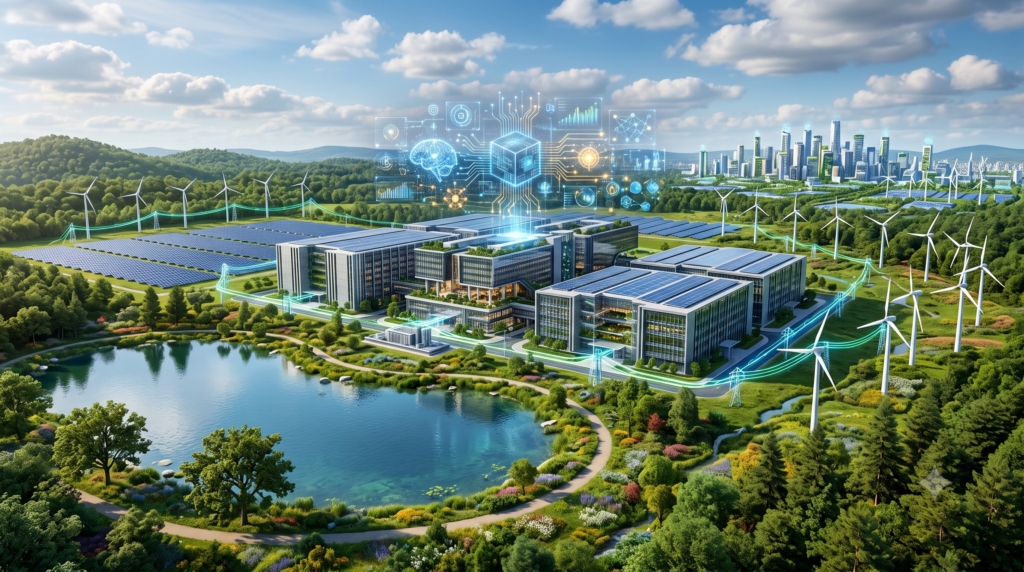
Google Sustainability Report 2026 showing a hyper realistic AI data center powered by solar and wind energy, representing renewable electricity, sustainable technology, and the environmental impact of artificial intelligence.
generated by google gemini

Artificial intelligence is transforming the technology industry at an unprecedented pace. While AI is creating new opportunities for innovation, it is also increasing the demand for electricity, computing power, and natural resources. Google’s latest Environmental Report highlights this growing reality by showing how the company is expanding its clean energy investments while managing the environmental impact of its rapidly growing AI infrastructure.

The report outlines Google’s sustainability performance during 2025, showcasing meaningful progress in renewable energy and operational efficiency. At the same time, it recognizes that scaling AI technologies presents new environmental challenges that require long term solutions.

Google Records Its Largest Clean Energy Investment

One of the biggest milestones in the report is Google’s commitment to clean electricity. During 2025, the company secured agreements for more than 12 gigawatts of additional clean energy capacity. This represents Google’s largest annual investment in renewable electricity so far.

These projects are expected to provide cleaner power for Google’s expanding network of data centers while also supporting local electricity grids. As AI services continue to grow worldwide, access to reliable clean energy is becoming increasingly important for maintaining sustainable digital infrastructure.

AI Growth Continues to Increase Energy Demand

The report explains that the rapid expansion of AI has significantly increased electricity consumption across Google’s operations. Training advanced AI models and operating large scale data centers require enormous computing resources, making energy efficiency a critical priority.

Despite higher electricity demand, Google reported a slight reduction in its operational greenhouse gas emissions compared with the previous year. The company attributes this improvement to better data center efficiency, advances in hardware, software optimization, and greater use of renewable electricity throughout its operations.

These improvements demonstrate that technological innovation can help reduce emissions even as computing requirements continue to rise.

Supply Chain Emissions Remain a Major Challenge

Although operational emissions showed improvement, Google’s supply chain continues to present one of its biggest sustainability challenges.

The report notes that emissions associated with manufacturing servers, semiconductors, and other technology equipment increased during 2025. As demand for AI infrastructure accelerates, suppliers must produce larger quantities of hardware, many of which are manufactured using electricity generated from fossil fuels.

Google acknowledges that reducing these indirect emissions will require closer collaboration with suppliers and greater adoption of clean energy across global manufacturing networks.

Water Conservation Continues to Be a Priority

Alongside climate action, water stewardship remains an important part of Google’s sustainability strategy.

According to the report, the company expanded several water restoration projects during 2025, helping replenish billions of gallons of freshwater in regions experiencing water stress. These initiatives are designed to improve local water resources while supporting Google’s long term goal of becoming more water positive.

As data centers consume significant amounts of water for cooling, investing in water restoration projects is becoming increasingly important for technology companies operating at a global scale.

AI Is Also Supporting Environmental Solutions

While AI creates environmental challenges, Google believes it can also become an important tool for sustainability.

The report highlights several Google technologies that are helping governments, businesses, and communities reduce environmental impacts. Services such as Google Maps, Google Earth, Nest smart home devices, flood forecasting systems, and wildlife monitoring tools are supporting energy efficiency, disaster preparedness, renewable energy planning, and biodiversity conservation.

Google says these technologies helped users and organizations avoid millions of tonnes of carbon emissions during 2025 by improving efficiency and encouraging more sustainable decisions.

Long Term Climate Goals Face New Obstacles

Google remains committed to its long term sustainability objectives, but the company acknowledges that reaching those goals is becoming more challenging.

Several factors continue to slow progress, including the pace of electricity grid decarbonization, supply chain limitations, regulatory requirements, and the global expansion of AI infrastructure. These challenges demonstrate that reducing emissions is becoming more complex as digital technologies continue to evolve.

The company says continued investment in clean electricity, energy efficient technologies, and responsible infrastructure development will be essential for maintaining progress in the coming years.

The Bigger Picture for the Technology Industry

Google’s latest Environmental Report reflects a challenge that extends beyond a single company. Across the technology industry, businesses are investing heavily in artificial intelligence while facing growing expectations to reduce their environmental impact.

As AI becomes an essential part of modern digital services, balancing innovation with sustainability will remain one of the industry’s biggest priorities. Future success will depend not only on creating more efficient AI systems but also on expanding renewable energy infrastructure, improving supply chain sustainability, and developing technologies that support a lower carbon economy.

Conclusion

Google’s latest sustainability report shows that progress and challenges can exist at the same time. The company has made significant investments in renewable energy and improved the efficiency of its operations, yet the rapid growth of artificial intelligence continues to increase pressure on energy systems, supply chains, and natural resources.

The report highlights an important message for the entire technology sector. Building the future with AI will require equal attention to environmental responsibility, ensuring that innovation and sustainability move forward together.
Climate-Tech Startups Shine at BloombergNEF 2026 Pioneers Awards for Clean Energy Innovation

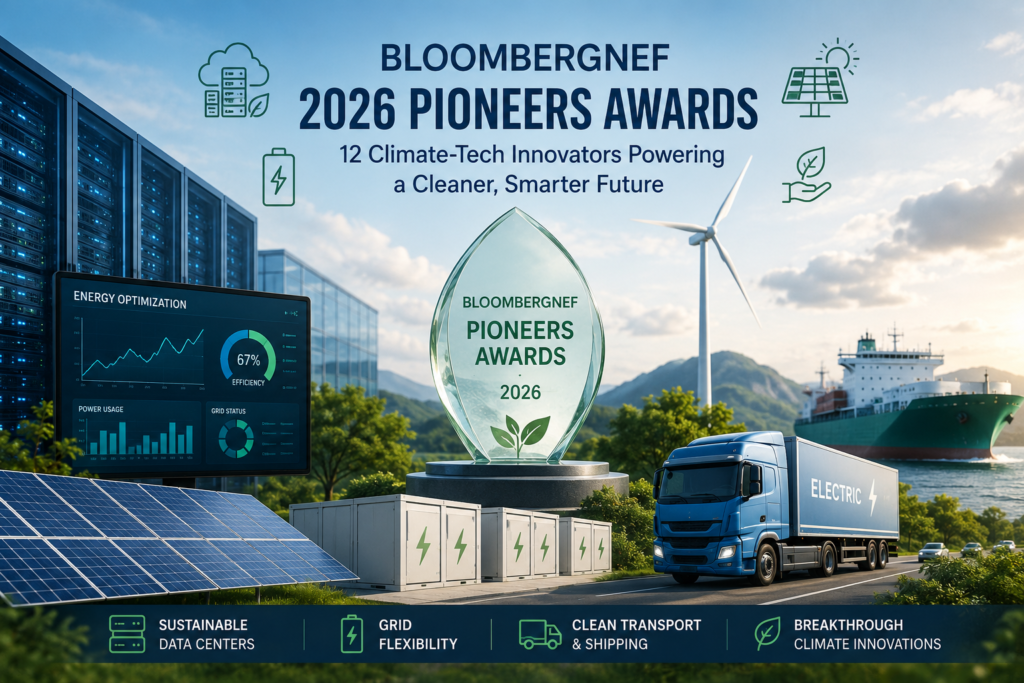
Illustrated editorial infographic showing BloombergNEF 2026 Pioneers Awards centered around a glowing green energy trophy in front of a digital Earth, surrounded by icons representing clean energy innovations such as solar panels, wind turbines, electric trucks, shipping decarbonization, energy storage, grid flexibility, data center sustainability, and AI-driven technologies, highlighting global climate-tech solutions for a cleaner future.
generated by ChatGPT

Introduction

BloombergNEF has officially announced the winners of its 2026 Pioneers Awards, recognizing 12 emerging climate-tech companies that are working on solutions for a cleaner energy future.

These startups are focused on building practical technologies that improve energy efficiency and reduce carbon emissions. Their work supports the ongoing global transition toward more sustainable energy systems.

At the same time, global electricity demand is increasing at a rapid pace. This surge is largely driven by artificial intelligence, cloud computing, and expanding digital infrastructure. Because of this, the need for innovative climate solutions has become more urgent than ever.

Why the 2026 Pioneers Awards Are Important

The Pioneers Awards are designed to highlight early-stage companies with strong potential for real-world impact. BloombergNEF evaluates these startups based on scalability, environmental benefit, and practical implementation.

Earlier, the focus was mainly on renewable energy production. However, the scope has now expanded significantly.

Today, the energy transition also includes digital systems, transport networks, and industrial processes. As a result, climate innovation is becoming more interconnected across multiple sectors.

Key Focus Areas for 2026

This year, BloombergNEF identified three major challenges shaping the global energy landscape.

The first is the growing energy demand from data centers. AI-driven workloads are increasing electricity consumption at a fast pace.

The second challenge is grid stability. Since solar and wind energy are variable, balancing supply and demand has become more complex.

The third area involves hard-to-decarbonize industries such as shipping and heavy transport. These sectors still depend heavily on fossil fuels and require new technological solutions.

Additionally, the program also included wildcard innovations that deliver climate benefits across different industries.

Making Data Centers Smarter and More Efficient

Several winning startups are working to improve how data centers use energy.

Some are building intelligent software systems that adjust electricity consumption in real time based on grid conditions. This helps reduce pressure during peak demand hours.

Others are focusing on hardware improvements. These include advanced cooling technologies and energy-efficient semiconductor designs. Together, these innovations help reduce overall power usage in computing systems.

Improving Stability in Renewable Energy Grids

Another group of innovators is focused on strengthening power grids.

As renewable energy expands, electricity generation becomes more unpredictable. Because of this, storage and balancing solutions are becoming essential.

Some companies are developing distributed battery storage systems that store excess energy and release it when demand increases.

In addition, smart energy systems for homes and buildings are gaining popularity. These systems automatically adjust consumption during peak hours to improve efficiency.

Long-duration energy storage technologies are also emerging as a key solution for ensuring reliable power supply during periods of low solar or wind generation.

Decarbonizing Transport and Shipping

Heavy transport remains one of the most difficult sectors to decarbonize. However, several startups are making steady progress.

Many winners are working on electric freight systems and cleaner logistics platforms that help reduce fuel consumption.

In addition, integrated solutions are being developed that combine charging networks, fleet management, and route optimization. This makes large-scale electric freight more practical and cost-effective.

Wildcard Innovations Driving New Possibilities

Beyond the main categories, BloombergNEF also recognized several unique innovations.

These include electric bus networks expanding in developing regions, biotechnology solutions for recovering critical minerals from low-grade sources, and new battery materials designed to be safer and more recyclable.

Together, these developments show that climate technology is expanding beyond energy generation into materials science and sustainable infrastructure.

The Growing Importance of Climate Innovation

BloombergNEF has supported climate innovation for nearly 20 years. Many previous winners have gone on to scale successfully and attract significant investment.

This year’s selection reflects a broader global shift. Climate technology is no longer just about reducing emissions. It is also becoming central to economic growth, energy security, and industrial transformation.

Conclusion

The 12 winners of the BloombergNEF 2026 Pioneers Awards represent a new wave of climate innovation.

Their work spans energy systems, transportation, digital infrastructure, and advanced materials. Together, these sectors highlight how deeply connected the clean energy transition has become.

As global energy demand continues to rise, these innovations will play a vital role in shaping a cleaner, more resilient future.

BloombergNEF Pioneers Award 2026 Highlights Emerging Climate Tech Innovators

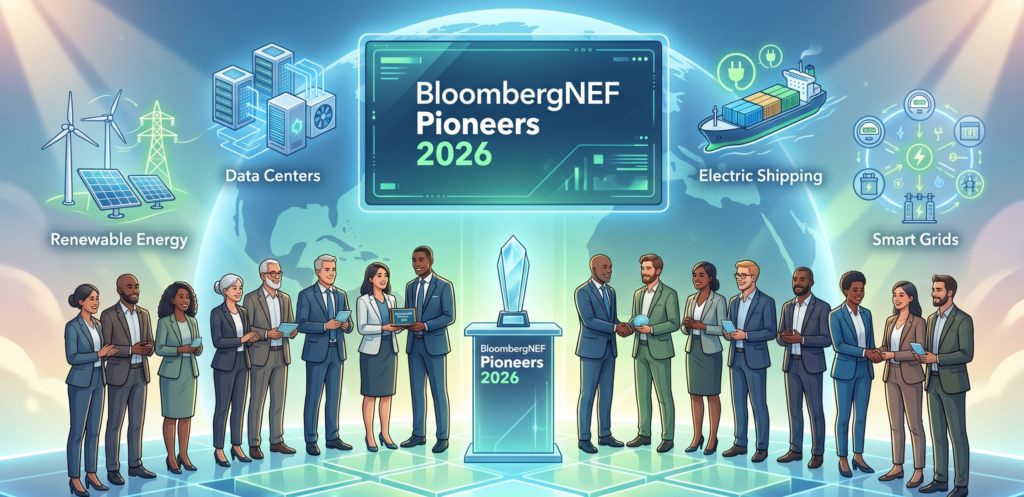
Illustration of 12 climate‑tech startups receiving the BloombergNEF Pioneers 2026 Award on a digital stage, with icons representing renewable energy, data centers, smart grids, and low‑carbon transport, styled as a modern, professional blog banner.
generated by google gemini

The push toward a net zero future depends heavily on innovation, and the latest announcement from BloombergNEF reinforces that reality. The organization has revealed 12 early stage climate tech companies and projects as winners of its 2026 Pioneers Award. These innovators represent some of the most promising solutions that can accelerate the global transition to a low carbon economy.

This year, the competition saw strong global participation, with over 600 applications submitted from more than 50 countries. From this pool, 29 finalists were shortlisted, and only the most impactful ideas were selected as winners.

What the BloombergNEF Pioneers Award Represents

The annual Pioneers program by BloombergNEF focuses on identifying breakthrough technologies and business models that can significantly reduce emissions. It highlights solutions that have the potential to reshape how energy is produced, managed, and consumed across key sectors.

Each selected winner is evaluated based on three critical factors. These include scalability, technical strength, and the capability of the team behind the innovation. This ensures that the chosen projects are not just innovative in theory but also practical and ready for real world deployment.

Key Focus Areas for 2026

For 2026, the award program concentrated on three major climate challenges that are critical for achieving long term sustainability goals.

Sustainable Data Center Infrastructure

With the rapid growth of digital services, data centers are becoming major energy consumers. The program recognized solutions that improve efficiency through advanced cooling systems and optimized hardware design, helping reduce energy use without compromising performance.

Balancing Electricity Supply and Demand

Managing fluctuations in electricity demand remains a key challenge for modern power systems. Several winning solutions focused on improving grid stability and efficiency, often referred to as flattening the duck curve. These innovations help ensure better energy distribution and reduced wastage.

Decarbonizing Transport and Shipping

Heavy duty transport and shipping contribute significantly to global emissions. The 2026 winners introduced new approaches to reduce carbon output in these sectors, including cleaner fuels, improved logistics systems, and energy efficient transport technologies.

How the Winners Benefit

Winning the BloombergNEF Pioneers Award goes beyond recognition. Selected startups gain access to valuable resources that can accelerate their growth journey.

They receive insights from BloombergNEF’s research and analytics, along with opportunities to connect with investors, utility companies, and large corporates. In addition, winners get a chance to present their innovations at global climate tech events, helping them gain visibility and scale faster.

Why This Matters for the Net Zero Transition

Programs like the BloombergNEF Pioneers Award play an important role in bridging the gap between innovation and real world impact. By supporting early stage climate tech solutions, they help bring scalable and practical technologies closer to commercial adoption.

As industries continue to shift toward sustainability, such initiatives are essential for identifying and supporting the next generation of climate leaders.