Tag Archives: climate action

Hope for the Planet: Encouraging Environmental Progress in 2026

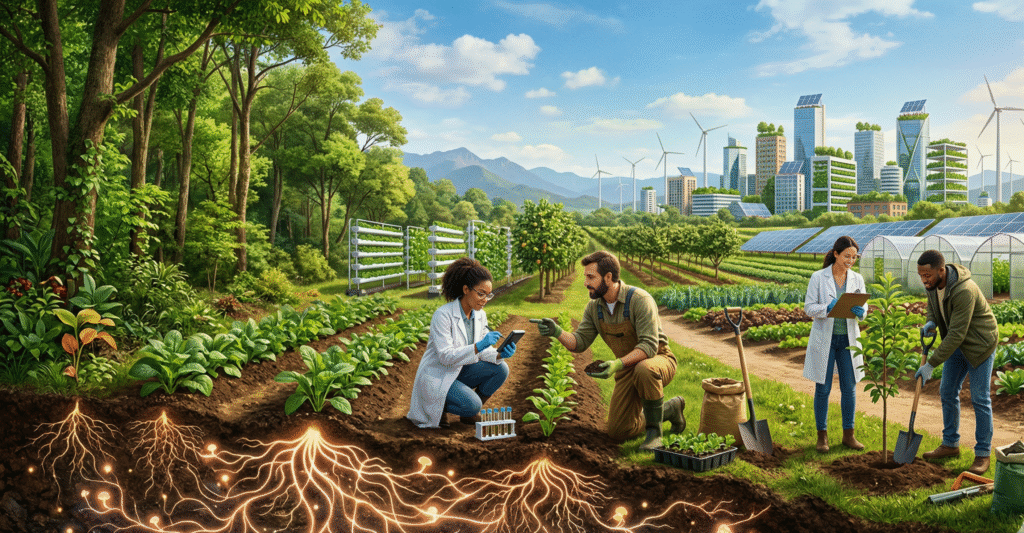
A hopeful environmental scene showing a lush green forest merging into a sustainable farm landscape, with glowing underground fungal networks in the soil symbolizing carbon capture and **environment 2026** progress. In the background, a clean city skyline with solar panels and wind turbines sits under a bright blue sky, while farmers and scientists work together in the foreground, planting trees and examining soil, conveying collaboration, innovation, and a healthy planet.
generated by google gemini

Climate concerns continue to shape global conversations, but 2026 is offering a refreshing shift in perspective. Alongside the challenges, there are meaningful signs of progress that show real change is possible. From scientific breakthroughs to community-driven initiatives, these developments highlight how collective action can create a more sustainable future.

This article explores some of the most promising environmental advancements of the year and explains how they can inspire individuals, communities, and policymakers to take practical steps toward sustainability.


Natural Climate Solutions: The Rising Role of Soil and Fungi

One of the most fascinating areas of research in 2026 focuses on the hidden power of soil ecosystems. Scientists are increasingly studying how certain types of fungi help absorb and store carbon beneath the ground. This process reduces the amount of carbon dioxide in the atmosphere and strengthens the soil at the same time.

For agriculture, this discovery has practical benefits. Farming practices such as cover cropping, reduced tillage, and the use of organic compost can work in harmony with these fungal systems. The result is healthier soil that retains nutrients and carbon more effectively.

In countries like India, where agriculture plays a vital role in livelihoods, these methods present a cost-effective and sustainable opportunity. Farmers can improve productivity while also contributing to climate solutions without relying heavily on expensive technologies.


Stronger Action Against Harmful “Forever Chemicals”

Another important step forward in 2026 is the growing global effort to regulate harmful industrial chemicals known as PFAS, commonly referred to as “forever chemicals.” These substances are widely used in everyday products such as non-stick cookware, food packaging, and firefighting materials, but they persist in the environment for years.

Governments and regulatory bodies are now introducing stricter controls on the production and use of these chemicals. Measures include tighter safety standards, improved water monitoring systems, and dedicated programs to clean up contaminated areas.

While implementation will take time, this shift reflects increasing awareness and accountability. It also shows that public demand for safer environments is influencing policy decisions in a meaningful way.


Community-Led Sustainability Initiatives Making a Difference

Not all progress comes from large-scale policies or advanced technologies. Some of the most impactful changes are happening at the local level through community participation.

Across different regions, small initiatives are creating visible results. These include tree plantation drives, urban green space development, and campaigns to reduce plastic waste. Although these efforts may seem modest, they demonstrate how consistent local action can lead to broader environmental benefits.

In many parts of India, communities are adopting practical solutions such as waste segregation, rainwater harvesting, and planting native species. These initiatives are not only improving environmental conditions but also raising awareness and encouraging long-term behavioral change.

For bloggers and sustainability advocates, these grassroots efforts provide valuable insights and real-world examples that can be shared to inspire others.


Why Climate Optimism Matters More Than Ever

The way environmental issues are communicated is also evolving. In 2026, there is a growing emphasis on highlighting solutions alongside challenges. This balanced approach helps people stay informed without feeling overwhelmed.

Focusing on positive developments does not ignore the seriousness of climate change. Instead, it encourages action by showing that progress is achievable. When people see real examples of success, they are more likely to participate and support sustainable practices.

For content creators, this approach offers an opportunity to present meaningful stories that combine awareness with actionable ideas. Whether it is adopting eco-friendly habits, supporting green businesses, or advocating for policy change, every effort contributes to a larger impact.


Conclusion: Turning Progress into Momentum

The environmental progress seen in 2026 proves that change is not only necessary but also possible. Scientific innovation, stronger regulations, and community efforts are all working together to shape a more sustainable future.

The key now is to build on this momentum. By learning from these developments and applying them in everyday life, individuals and organizations can play an active role in protecting the planet.

Pioneering Sustainability Through Innovation and Global Collaboration

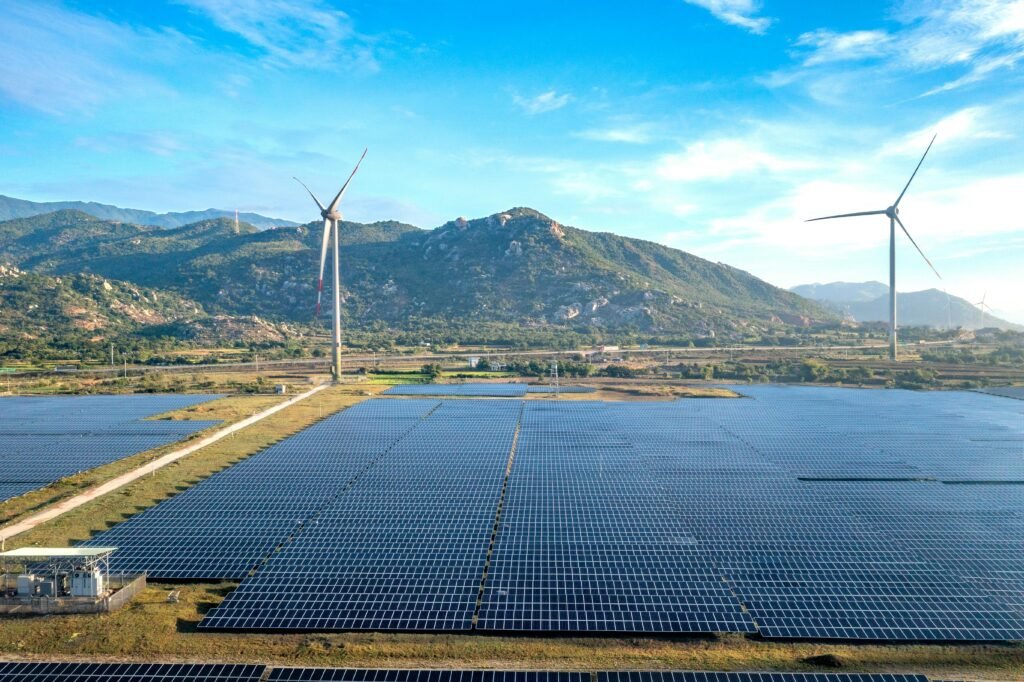
A hyper-realistic aerial view captures wind turbines and solar panels spanning arid hills in Vietnam's Ninh Thuan province, a leading renewable energy hub.
​
Royalty free image via pexels.

Sustainability has moved beyond long term promises and policy statements. Companies, institutions, and communities across the world now drive measurable climate action through innovation and collaboration. Recent updates from Green Sustainability Magazine show how organizations actively reduce emissions, strengthen circular economies, and accelerate renewable energy adoption.

These initiatives highlight a clear trend. Environmental responsibility and business growth can advance together when leaders invest in practical solutions.


Industry Leaders Accelerating Sustainable Change

The December 2025 edition highlights organizations that actively reshape sustainability across key industries.

Kemvera leads the transition toward carbon negative chemical production by using bio based feedstocks and carbon dioxide derived processes. This model cuts emissions while delivering scalable alternatives to traditional chemicals.

In agriculture, TIMAC AGRO Deutschland GmbH supports resilient farming through bio innovative tools that improve soil health and help farmers adapt to climate stress.

FluoroFusion addresses emissions from cooling systems by advancing refrigerant recycling and materials innovation, which reduces high impact greenhouse gases.

The edition also highlights global sustainable chemistry leadership from the American Chemical Society, low carbon energy development by Sizewell C, and low carbon engineering solutions from ANDRITZ. Forward looking architecture from RODE Architects further reinforces the role of design in climate resilience.


Sustainable Innovation From Earlier Editions

The October 2025 edition focused on progress in materials, manufacturing, and circular systems.

Brenntag continues to improve greener chemical distribution through optimized logistics and responsible sourcing. At the same time, BEWI Group expands polystyrene recycling infrastructure across Europe.

Manufacturers such as Midas Pattern Company now deliver carbon neutral polyurethane tooling without sacrificing performance.

Additional contributions from Zest Associates, Thinking Adrenaline, Capsum, and MAJOR FLEX-MAT show how sustainability strategies can strengthen brand value.

Circular economy leadership also comes from North American Mattress Upcycling, Whitefox Technologies, and Wind Harvest, all of which link environmental impact with commercial success.


Global Events and Strategic Partnerships

International collaboration continues to play a central role in climate progress.

The European Congress on Climate Change and Environmental Sustainability, held on November 6–7, 2025 in Vienna, brings together experts to address carbon strategies, sustainable agriculture, resilient infrastructure, environmental justice, and climate focused technologies.

Green Sustainability Magazine works with Better Planet Education to provide climate and biodiversity learning resources for young audiences.

Community focused action also remains a priority. Support for Project Apis CIC in Norfolk strengthens pollinator protection while improving mental wellbeing and social inclusion through accessible beekeeping programs.

The magazine also supports the 3rd World Congress on Recycling and Waste Management in Singapore from April 13–15, 2026, along with initiatives from The Rivers Trust, which leads river restoration through nature based solutions.


Sustainability Progress Across Key Industries

Major industries continue to integrate sustainability into core operations.

The Mærsk Mc-Kinney Møller Center advances zero carbon shipping by developing green corridors, multi fuel modeling, and cross sector partnerships.

Hunt’s Food Group achieved B Corp certification by investing in solar energy, optimizing delivery routes, and redistributing surplus food to reduce waste.

Vermeer UK & Ireland expands its sustainable infrastructure portfolio through electric drilling equipment and low emission fleet transitions.

Technology driven energy solutions from RJ Power integrate artificial intelligence monitoring and advanced battery systems.

In hospitality, The Wellbeing Farm delivers certified B Corp events using off grid power and reusable decor. Meanwhile, Blooming Color transforms printing through on demand digital production and closed loop recycling.


Energy and Agriculture Innovations Shaping the Future

Transport, renewable energy, and industrial heating continue to evolve rapidly.

Volvo Trucks targets net zero emissions by 2040 through electric urban trucks, hydrogen powered long haul vehicles, green steel adoption, biogas, and circular battery reuse.

Eurowind Energy expands wind, solar, and green hydrogen projects across Southern Europe while strengthening local partnerships and digital optimization.

In industrial heating, ACME Engineering Products leads electrode boiler deployment to support clean energy transitions, particularly in China and the Middle East.


A Clear Path Forward for Global Sustainability

These developments point to a shared global direction. Organizations now treat sustainability as a driver of innovation, resilience, and long term value. As these solutions scale, they strengthen both environmental protection and economic stability.

Pioneering Projects That Are Shaping a More Sustainable Planet

Business executives in suits stand at a rainforest edge, pointing toward a monkey on a branch and birds flying away as smoke rises from factories amid overgrown trucks and polluted water, captured in dramatic golden-hour light.
Royalty free image via pexels.

Across the world, innovative projects are turning environmental challenges into meaningful opportunities for long-term progress. These real-world initiatives demonstrate how sustainability can move beyond theory and into practical action. By addressing climate risks, protecting ecosystems, and strengthening communities, such projects are helping build a future that balances development with environmental responsibility.

From cities to coastlines, sustainability-driven solutions are proving that economic growth and environmental protection can move forward together.

Innovative Projects Driving Environmental Progress

Several groundbreaking initiatives are already delivering measurable environmental and social benefits. Urban farming systems are improving food security in densely populated cities while reducing transportation emissions and land pressure. These projects also create local jobs and encourage community participation in sustainable food production.

Marine conservation efforts are equally impactful. Coral reef restoration programs are helping revive damaged marine ecosystems, protecting biodiversity while supporting fisheries and tourism-based livelihoods. On land, wildlife crossings built over highways are reducing animal fatalities, preserving migration routes, and maintaining healthy ecosystems without disrupting transportation networks.

Together, these innovations show how thoughtful project design can solve complex environmental problems while delivering economic and social value.

Supporting Global Sustainability Goals

Many of these initiatives are closely aligned with the United Nations Sustainable Development Goals. They directly contribute to climate action, ecosystem protection, and responsible resource use. Strong project management plays a critical role in turning these goals into measurable outcomes.

By using data-driven monitoring systems, project leaders can track progress, assess environmental impact, and refine strategies over time. Successful models are then scaled across regions, allowing sustainability solutions to expand globally without losing effectiveness.

Practical Guidance for Project Leaders

For sustainability projects to succeed, environmental and social considerations must be integrated from the very beginning. Project leaders are increasingly embedding environmental, social, and governance principles into planning and decision-making processes.

Setting clear, internationally recognized targets helps measure long-term benefits and ensures accountability. Investing in climate-resilient infrastructure also reduces future risks, lowers maintenance costs, and strengthens project durability in the face of changing environmental conditions.

When sustainability is built into the foundation of a project, both financial and environmental performance improve over time.

Resources to Begin Your Sustainability Journey

Organizations looking to adopt sustainable practices can start by exploring ESG goal-setting templates that support structured planning. Climate-resilient project guides offer practical insights into managing risks linked to extreme weather and environmental change.

Learning from experienced project teams can also help balance innovation with environmental responsibility. These resources provide valuable direction for achieving strong results while protecting planetary health.