Tag Archives: sustainable development

How a Green Digital Economy Can Reduce Energy Use and Improve Public Health by 2030

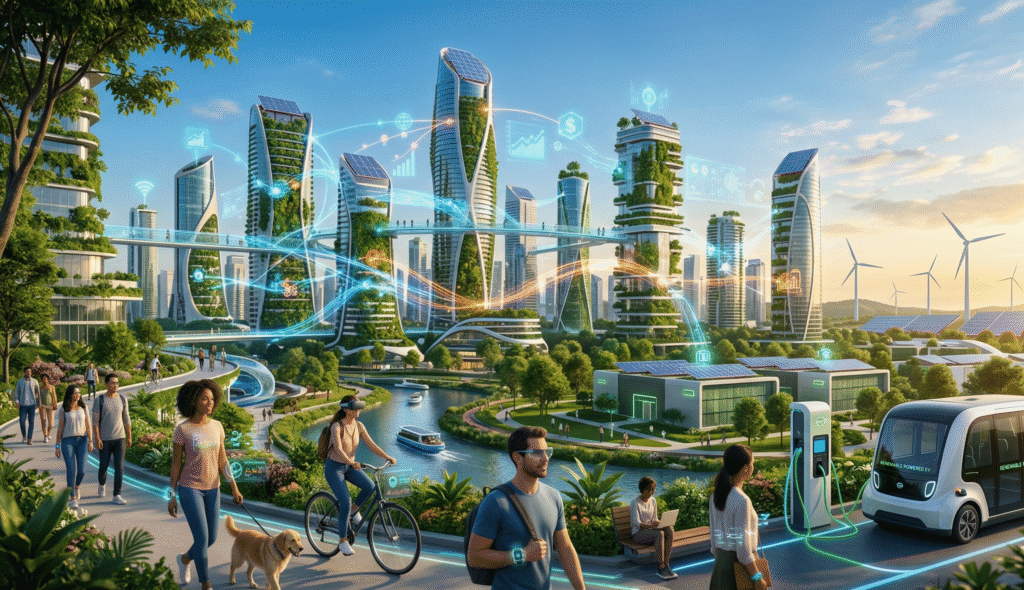
A photorealistic view of a futuristic sustainable city in 2030, highlighting the green digital economy with skyscrapers featuring vertical gardens and solar panels, glowing data streams linking smart buildings, people using wearable health tech in clean air, wind turbines, EV stations, and green data centers amid parks, all under golden hour lighting.
generated by google gemini

The transition toward a green digital economy is quickly becoming a practical solution for countries aiming to balance economic growth with environmental responsibility. By combining digital innovation with sustainable practices, it is possible to reduce energy consumption while improving public health and overall environmental quality.

Recent research focusing on China’s economic future shows that this transformation can deliver measurable benefits without slowing down development. Instead, it may even accelerate growth in a cleaner and more efficient way.

Understanding the Study Behind the Shift

A research team from Henan University of Urban Construction explored how digital technologies can work alongside green energy systems to shape future economic outcomes. They used a Dynamic Energy Computable General Equilibrium model to simulate different scenarios up to 2030.

This advanced modeling approach allowed researchers to examine how economic growth, digital infrastructure, and energy transitions interact with each other. The findings clearly show that digital tools can play a major role in building a sustainable and resilient economy.

Significant Energy Savings Through Digital Integration

One of the most important outcomes of this study is the potential reduction in energy consumption. With a green digital transition, total energy use could drop to nearly 250 million tons of standard coal equivalent by 2030.

This represents a reduction of about 20 percent compared to conventional projections. The decrease is largely driven by smarter systems, improved efficiency, and increased reliance on renewable energy sources. Technologies such as smart grids, automated systems, and data-driven energy management help minimize waste and optimize usage.

Cleaner Air and Better Public Health

Improved air quality is another major benefit of this transformation. The study suggests that PM2.5 levels could fall to approximately 22.36 micrograms per cubic meter. This is about 11.5 percent lower than expected under standard conditions.

Lower pollution levels directly contribute to better respiratory health and longer life expectancy. Cleaner air reduces the burden on healthcare systems and improves the quality of life for communities. In simple terms, a greener digital economy does not just protect the environment, it also protects people.

Economic Growth Without Environmental Trade-Offs

A common concern is that sustainability may slow down economic progress. However, the findings suggest the opposite. The green digital model shows stronger GDP growth compared to traditional approaches.

This proves that environmental responsibility and economic expansion can go hand in hand. By investing in digital infrastructure and clean energy, governments can create new opportunities, improve productivity, and build a competitive advantage in the global market.

A Practical Policy Roadmap for the Future

To unlock these benefits, policymakers need to focus on building infrastructure that connects digital systems with low-carbon energy sources. High-speed internet, cloud computing, and renewable energy must work together as part of a unified strategy.

Global trends support this direction. The rise of digital healthcare, remote services, and virtual operations is already helping reduce emissions in many sectors. Cities and countries around the world can adapt these insights to design their own low-emission and high-growth futures.

Conclusion

The shift to a green digital economy is not just an environmental necessity, it is a strategic opportunity. By embracing digital innovation and clean energy together, nations can reduce energy use, improve public health, and achieve sustainable economic growth.

As the world moves closer to 2030, adopting this integrated approach could define which economies thrive in a future shaped by sustainability and technology.

Sustainable Architecture: Building the Future with Smart and Green Design

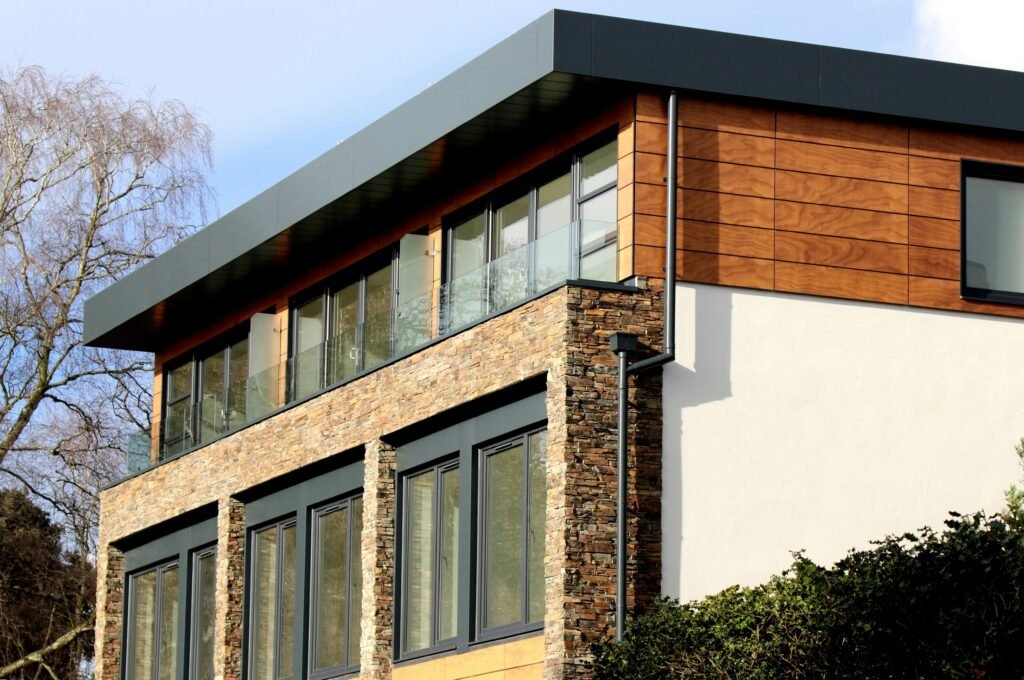
A modern multi-story building facade with reflective glass panels and clean geometric lines stands prominently against a clear blue sky.
Royalty free image via pexels.

Sustainable architecture is no longer a niche concept. It has become a practical and necessary approach to modern construction. As climate concerns grow and cities expand rapidly, architects and developers are rethinking how buildings are designed, constructed, and operated.

Today’s sustainable architecture focuses on reducing environmental impact, improving energy efficiency, and creating healthier spaces for people. With new materials, renewable energy systems, and intelligent technologies, the construction industry is moving toward a more responsible future.

Why Sustainable Architecture Matters

Buildings account for a significant share of global energy consumption and carbon emissions. Traditional construction methods rely heavily on resource-intensive materials and fossil fuels. As a result, the environmental footprint of buildings has become a major concern.

Sustainable architecture addresses these challenges by prioritizing efficiency, durability, and environmental balance. It also enhances occupant comfort by improving indoor air quality, natural lighting, and thermal performance.

Eco-Friendly Building Materials

The foundation of sustainable architecture begins with the right materials.

Recycled steel is widely used because it reduces the demand for newly mined resources. Bamboo is another popular option due to its rapid growth and strength. Insulated concrete forms improve thermal performance while lowering long-term energy consumption.

One of the most promising innovations is cross-laminated timber. This engineered wood product offers impressive structural strength while generating fewer emissions compared to traditional concrete. As a result, it is gaining popularity in large-scale residential and commercial projects.

By choosing environmentally responsible materials, builders can significantly reduce the carbon footprint of a project from the start.

Renewable Energy Integration

Energy efficiency is at the heart of green building design. Modern sustainable buildings often generate their own clean energy.

Solar panels are now a common feature in residential and commercial developments. In addition, photovoltaic glass allows windows to produce electricity while still letting in natural light. These technologies reduce reliance on fossil fuels and lower long-term energy costs.

Geothermal systems are another effective solution. By tapping into the earth’s stable underground temperature, these systems provide efficient heating and cooling throughout the year. This approach reduces energy consumption while maintaining indoor comfort.

Together, these renewable energy systems help buildings operate more independently and sustainably.

Smart Technologies for Efficient Performance

Technology plays a critical role in sustainable architecture.

Internet of Things sensors monitor lighting, temperature, and occupancy in real time. This data allows automated systems to adjust heating, cooling, and lighting only when needed. As a result, energy waste is minimized.

Dynamic facades and electrochromic glass further enhance efficiency. These systems adapt to changing sunlight conditions, reducing heat gain and improving insulation. In turn, buildings require less artificial cooling and lighting.

Smart technologies not only improve performance but also create a more comfortable environment for occupants.

Biophilic Design and Urban Well-Being

Sustainable architecture also focuses on reconnecting people with nature.

Green roofs and living walls are increasingly common in urban developments. They provide natural insulation, improve air quality, and support biodiversity. At the same time, they help reduce the urban heat island effect.

Biophilic design elements such as natural light, indoor plants, and organic materials create calming spaces that promote well-being. Research shows that nature-inspired environments can improve productivity and reduce stress.

By integrating natural elements, sustainable buildings become healthier places to live and work.

Reuse and Adaptive Renovation

Sustainability does not always mean building something new. In many cases, repurposing existing structures is the most responsible option.

Adaptive renovation upgrades older buildings with modern energy-efficient systems. This approach preserves cultural heritage while avoiding demolition waste. It also reduces the need for new raw materials.

Reusing existing infrastructure is often more environmentally friendly than starting from scratch. It demonstrates how sustainable architecture can balance innovation with preservation.

The Future of Sustainable Architecture

The future of sustainable architecture looks promising. As technology advances and costs continue to decline, green construction methods are becoming more accessible.

Governments and developers are increasingly adopting environmentally responsible building standards. In the coming years, sustainable design principles are expected to become standard practice rather than optional features.

Ultimately, sustainable architecture offers scalable solutions to global challenges such as climate change and resource depletion. By combining smart technology, renewable energy, and eco-friendly materials, the construction industry is building a future that supports both people and the planet.

Pioneering Projects That Are Shaping a More Sustainable Planet

Business executives in suits stand at a rainforest edge, pointing toward a monkey on a branch and birds flying away as smoke rises from factories amid overgrown trucks and polluted water, captured in dramatic golden-hour light.
Royalty free image via pexels.

Across the world, innovative projects are turning environmental challenges into meaningful opportunities for long-term progress. These real-world initiatives demonstrate how sustainability can move beyond theory and into practical action. By addressing climate risks, protecting ecosystems, and strengthening communities, such projects are helping build a future that balances development with environmental responsibility.

From cities to coastlines, sustainability-driven solutions are proving that economic growth and environmental protection can move forward together.

Innovative Projects Driving Environmental Progress

Several groundbreaking initiatives are already delivering measurable environmental and social benefits. Urban farming systems are improving food security in densely populated cities while reducing transportation emissions and land pressure. These projects also create local jobs and encourage community participation in sustainable food production.

Marine conservation efforts are equally impactful. Coral reef restoration programs are helping revive damaged marine ecosystems, protecting biodiversity while supporting fisheries and tourism-based livelihoods. On land, wildlife crossings built over highways are reducing animal fatalities, preserving migration routes, and maintaining healthy ecosystems without disrupting transportation networks.

Together, these innovations show how thoughtful project design can solve complex environmental problems while delivering economic and social value.

Supporting Global Sustainability Goals

Many of these initiatives are closely aligned with the United Nations Sustainable Development Goals. They directly contribute to climate action, ecosystem protection, and responsible resource use. Strong project management plays a critical role in turning these goals into measurable outcomes.

By using data-driven monitoring systems, project leaders can track progress, assess environmental impact, and refine strategies over time. Successful models are then scaled across regions, allowing sustainability solutions to expand globally without losing effectiveness.

Practical Guidance for Project Leaders

For sustainability projects to succeed, environmental and social considerations must be integrated from the very beginning. Project leaders are increasingly embedding environmental, social, and governance principles into planning and decision-making processes.

Setting clear, internationally recognized targets helps measure long-term benefits and ensures accountability. Investing in climate-resilient infrastructure also reduces future risks, lowers maintenance costs, and strengthens project durability in the face of changing environmental conditions.

When sustainability is built into the foundation of a project, both financial and environmental performance improve over time.

Resources to Begin Your Sustainability Journey

Organizations looking to adopt sustainable practices can start by exploring ESG goal-setting templates that support structured planning. Climate-resilient project guides offer practical insights into managing risks linked to extreme weather and environmental change.

Learning from experienced project teams can also help balance innovation with environmental responsibility. These resources provide valuable direction for achieving strong results while protecting planetary health.