Tag Archives: extreme weather

Global Climate Pressure Is Increasing Worldwide

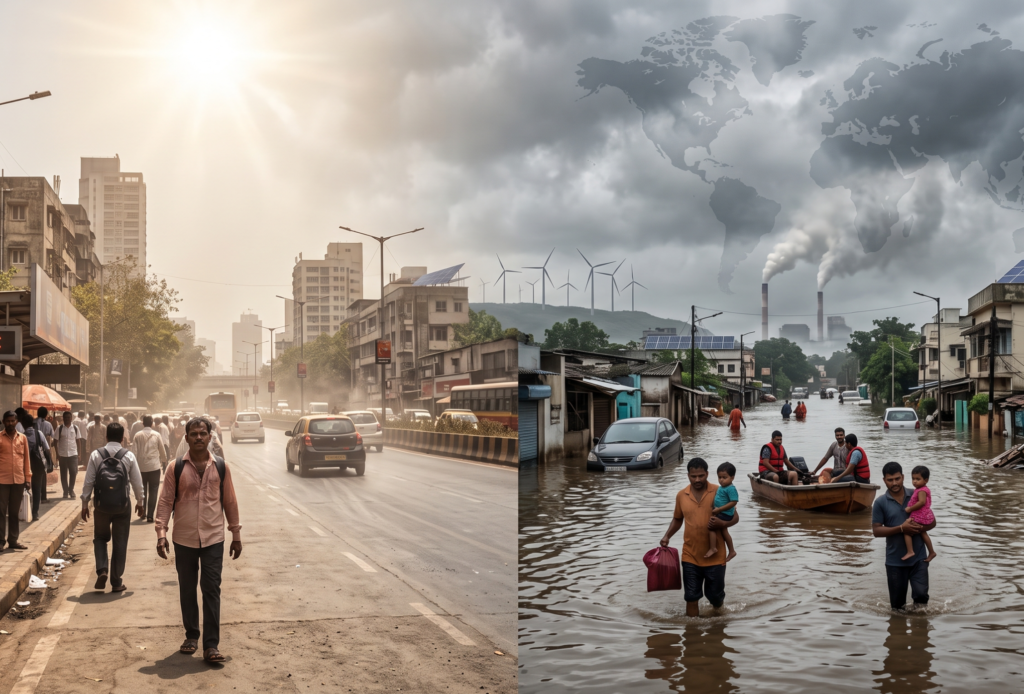
Split-scene illustration showing the impact of global climate change, with a heatwave-affected city on one side and flooded coastal areas on the other, symbolizing extreme weather, environmental disruption, and the global climate crisis. Wind turbines and solar panels appear in the background representing renewable energy transition.
generated by google gemini

Rising Environmental Risks Across the Globe

The world is facing a steady increase in climate-related challenges. Experts from scientific communities, governments, and international organizations are warning that environmental risks are growing faster than expected. These changes are being driven by extreme weather, industrial activity, and shifting global policies. Together, they are reshaping both ecosystems and economic systems.

Extreme Weather Is Becoming More Frequent

In many regions, weather patterns are becoming more unpredictable. Heatwaves in Europe have become more intense in recent months. These events have disrupted daily life and placed pressure on healthcare systems. In some cases, emergency measures were required to protect public safety.

Researchers link these changes to long-term global warming. Rising greenhouse gas emissions are increasing the likelihood of extreme heat events. As a result, record-breaking temperatures are becoming more common in several parts of the world.

Funding Gaps in Climate Adaptation

Global leaders are calling for stronger financial support for climate adaptation. International organizations, including the United Nations, have highlighted a major concern. Many vulnerable countries still do not have enough funding to prepare for floods, droughts, and rising sea levels.

These regions often face the worst impacts of climate change. However, their contribution to global emissions is very low. Experts argue that stronger investment in resilience is necessary. Without it, long-term damage in these countries will continue to increase.

Environmental Impact of Digital Infrastructure

The rapid growth of digital technology is also creating new environmental concerns. Data centers that power artificial intelligence and cloud systems require large amounts of electricity and water.

Environmental analysts warn that this demand could increase global emissions if clean energy is not adopted quickly. Some governments are now considering stricter reporting rules. They are also encouraging companies to shift toward renewable energy sources.

Rising Climate-Related Legal Actions

Courts in many countries are seeing more climate-related cases. These cases often focus on industrial pollution, energy use, and environmental responsibility.

Most lawsuits do not aim to stop development completely. Instead, they push for stronger environmental compliance. The goal is to ensure that industries follow sustainability standards and reduce harm to the environment.

Agriculture Under Climate Stress

The agriculture sector is also under pressure due to changing weather conditions. Irregular rainfall and rising temperatures are affecting crop production in many regions.

Farmers are finding it harder to plan planting cycles. Governments are responding by reviewing water management systems and agricultural support programs.

Experts warn that continued instability could affect food supply chains. It may also lead to price fluctuations in essential commodities.

Clean Energy Transition Is Expanding

Despite these challenges, progress toward clean energy continues. Many countries are increasing investment in renewable energy. Businesses are also adopting energy-efficient systems and low-carbon technologies.

However, climate experts say the current progress is still not enough. They believe stronger action is required to meet long-term climate targets.

The Road Ahead for Global Climate Action

Experts agree that the coming years are critical. The world must balance economic growth, technology expansion, and environmental protection.

This balance is becoming harder to achieve. Because of this, coordinated global action is more important than ever.

Europe’s Rising Heat Is Becoming More Than a Weather Challenge

Hyper realistic view of a European city during an extreme summer heatwave showing people seeking shade, visible heat haze, emergency response activity, and climate adaptation measures highlighting the growing impact of climate change across Europe.
generated by google gemini

Europe is experiencing an intense start to summer, with soaring temperatures affecting communities across multiple countries. While heatwaves are not new to the region, the scale and frequency of recent conditions are drawing renewed attention to how societies prepare for and respond to climate-related challenges.

The current situation has moved beyond daily weather updates and become part of a larger conversation about public safety, infrastructure, and long-term environmental planning.

Heat Conditions Are Affecting Everyday Life

Higher temperatures across parts of Europe have created challenges that extend into daily routines and public services. Transport systems, energy demand, and local infrastructure are facing increased pressure as authorities work to manage conditions and reduce risks.

Health experts have also raised concerns about the impact of prolonged heat exposure, particularly for older adults and people who are more vulnerable to extreme weather conditions. Public awareness campaigns and preventive measures are becoming increasingly important during periods of sustained high temperatures.

Climate Adaptation Is Becoming a Central Discussion

As extreme heat becomes more visible, governments and communities are expanding conversations around climate adaptation.

Policy discussions now focus on how cities can become more resilient through better planning, investment in infrastructure, and stronger emergency response systems. Environmental organizations continue to encourage long-term strategies that prepare communities for changing climate conditions instead of relying only on short-term solutions.

These conversations include improving public spaces, strengthening urban cooling efforts, and making essential services more capable of handling future environmental stress.

Different Views Are Shaping the Political Debate

Not everyone agrees on the pace or approach of climate action.

Some policymakers view recent heat events as evidence that stronger environmental policies and infrastructure investments are needed. Others remain focused on balancing environmental goals with economic priorities and raising concerns about the financial impact of rapid policy changes.

As a result, discussions about extreme weather are increasingly becoming part of broader political debates across Europe.

Preparing for a Hotter Future

Experts suggest that future planning may need to focus on adapting key systems that support everyday life. Housing, healthcare services, city design, and public infrastructure are all receiving greater attention as governments consider long-term resilience.

Many observers believe that heat-related challenges will continue to influence policy decisions throughout the coming years.

While immediate responses remain necessary during periods of extreme temperatures, the wider discussion is now shifting toward how societies can better prepare for similar conditions in the future.

Final Thoughts

Europe’s recent heat conditions are highlighting an important reality. Extreme weather is no longer viewed only as a seasonal concern. It is becoming a long-term issue that affects public health, economic planning, and policy decisions.

The discussions taking place today may shape how communities across Europe respond to climate challenges in the years ahead.