Tag Archives: sustainable finance

Women Climate Leaders Are Shaping the Future of Global Sustainability

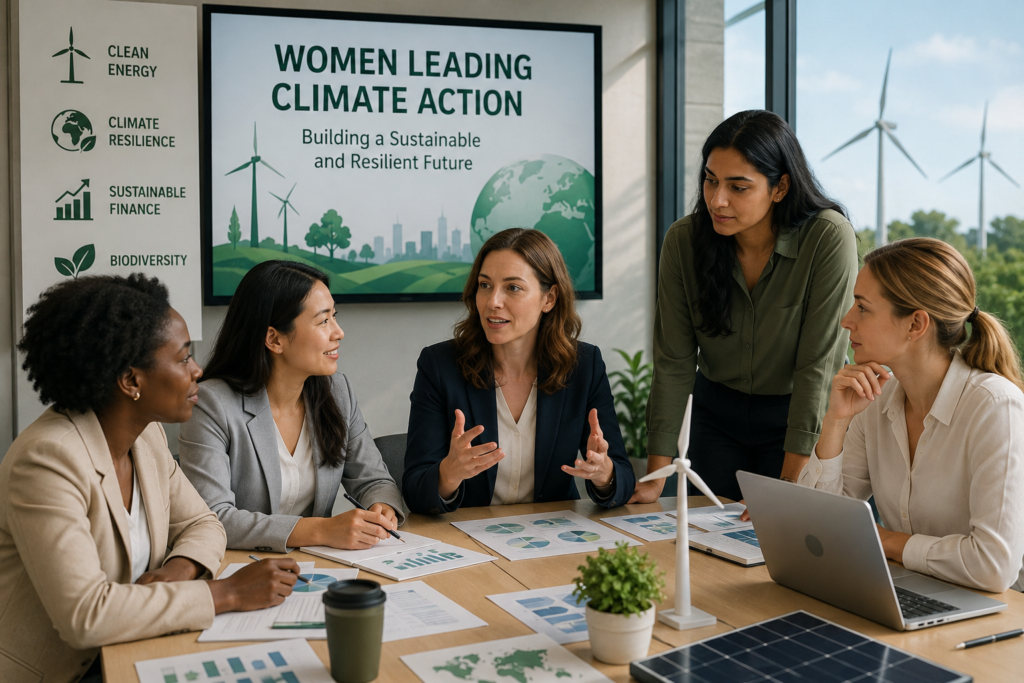
Professional women climate leaders collaborating on global sustainability strategies with renewable energy, clean technology, sustainable finance, and climate resilience planning in a modern eco-friendly office.
generated by ChatGPT

Climate change remains one of the biggest global challenges, but the people leading the response are becoming more diverse than ever. Across governments, businesses, financial institutions, research organizations, and environmental groups, women are making a significant impact by developing practical solutions for a more sustainable future.

At a time when climate policies face political uncertainty and economic pressures in several countries, female leaders continue to push forward with innovation, collaboration, and long term thinking. Their work is helping communities, industries, and governments adapt to a changing climate while supporting the global transition toward cleaner and more sustainable development.

Women Are Taking on Key Climate Leadership Roles

Women are contributing to climate action in many different sectors. Their leadership goes far beyond environmental advocacy. Today, they are helping shape public policy, advancing scientific research, managing sustainable investments, improving urban planning, and leading clean technology projects.

This growing representation demonstrates that solving climate challenges requires diverse perspectives. Different experiences often lead to stronger decision making, better collaboration, and solutions that address both environmental and social needs.

Climate Resilience Requires More Than Cutting Emissions

Reducing greenhouse gas emissions remains essential, but climate experts increasingly agree that this is only one part of the solution.

Communities around the world must also strengthen their ability to cope with rising temperatures, extreme weather events, floods, droughts, and other climate related risks. This includes investing in resilient infrastructure, protecting natural ecosystems, restoring forests, and conserving biodiversity.

These efforts help reduce environmental damage while improving the long term wellbeing of people and local economies.

Clean Technology Is Creating New Opportunities

The global economy is gradually moving toward cleaner industries and more sustainable business practices.

Innovations in renewable energy, battery storage, green manufacturing, sustainable finance, and nature based solutions are creating opportunities for businesses to reduce emissions while improving efficiency and competitiveness.

Many organizations now view sustainability as a business opportunity rather than simply a regulatory requirement. Companies that invest in cleaner technologies today are better positioned for future economic growth.

Businesses Continue Expanding Sustainability Initiatives

Corporate sustainability strategies continue to evolve across industries.

Many multinational companies are investing in renewable energy, reducing emissions throughout their supply chains, and working toward ambitious net zero goals. Businesses are also collaborating with governments, suppliers, and research organizations to accelerate climate innovation.

This cooperative approach is becoming increasingly important because no single organization can address climate challenges alone.

Sustainable Finance Is Supporting Climate Solutions

Financial institutions are playing an important role in accelerating climate action.

Investments are increasingly directed toward renewable energy projects, ecosystem restoration, climate adaptation, and sustainable infrastructure. Access to climate finance is especially important for developing countries, where additional funding can help communities build resilience against future environmental risks.

Experts believe stronger international cooperation will help expand these investments and support global sustainability goals.

Why Diverse Leadership Matters

The growing influence of women in climate leadership reflects a broader shift toward more inclusive decision making.

Women are contributing valuable expertise across engineering, environmental science, finance, technology, education, and community development. Their leadership encourages collaboration and helps create solutions that consider both environmental protection and human wellbeing.

Organizations that embrace diversity often benefit from broader perspectives, stronger innovation, and more balanced decision making.

Looking Ahead

Although climate action continues to face political and economic challenges, progress is still being made around the world.

Innovation, international partnerships, responsible investment, and community engagement remain key drivers of sustainable development. As more women step into influential leadership positions, they are helping shape practical solutions that support both economic growth and environmental protection.

The journey toward global sustainability will require commitment from governments, businesses, investors, researchers, and local communities. By working together and encouraging inclusive leadership, the world can continue making meaningful progress toward a cleaner, more resilient future.

Conclusion

Climate action is entering a new phase where collaboration, innovation, and inclusive leadership are becoming increasingly important. Women are making valuable contributions across multiple sectors and helping shape strategies that address today’s environmental challenges while preparing for tomorrow’s opportunities. Their leadership serves as a reminder that building a sustainable future requires the ideas, expertise, and commitment of people from every background.

4 Financing Trends That Are Reshaping the Future of Sustainable Development

Sustainable development financing concept showing global green investment, renewable energy projects, financial partnerships, and sustainable infrastructure supporting future economic growth.
generated by google gemini

For years, one question has continued to dominate conversations around sustainable development: how will these ambitions be funded?

Governments, institutions, and development agencies around the world face growing pressure to deliver economic progress while managing increasingly complex financial realities. Development assistance is tightening, investment momentum has slowed in many regions, and debt challenges continue to affect national priorities.

At the same time, rising climate risks, inflation, and economic uncertainty are making long term planning more difficult than ever.

Yet the outlook is not entirely challenging.

A noticeable shift is taking place in how development is financed. Rather than depending only on traditional funding models, organisations are exploring more flexible, collaborative, and outcome driven financial approaches.

These changes may not solve every challenge overnight, but they are creating new opportunities to support sustainable growth at a larger scale.

Here are four financing trends that are helping redefine the future of sustainable development.

1. Blended Finance Is Unlocking Greater Investment Potential

One of the most important changes in recent years is the increasing adoption of blended finance.

This approach brings together public funding, philanthropic contributions, and private investment to support projects that deliver social and economic value.

The goal is simple.

Reduce investment risk and attract larger pools of capital.

Many investors remain cautious when entering developing markets because of economic uncertainty and longer return timelines. By sharing financial risk across sectors, governments and institutions can make projects more attractive for private participation.

This creates opportunities for sectors such as healthcare, education, infrastructure, and community development to receive funding that may otherwise remain out of reach.

Blended finance is becoming an important bridge between public goals and private investment capability.

2. Sustainable Finance Is Becoming More Action Oriented

Sustainable finance is no longer limited to conversations about reducing emissions.

The scope is expanding.

Investment strategies now support broader environmental priorities including renewable energy, ecosystem recovery, climate resilience, and protection of water resources.

What makes this shift meaningful is the growing focus on impact rather than volume alone.

Development efforts increasingly aim to improve access to funding while giving countries more control over how financial resources are applied locally.

This reflects a changing understanding of growth.

Economic development and environmental responsibility are becoming more interconnected. Long term progress depends on building systems that strengthen both.

As a result, sustainable finance is becoming a practical driver of infrastructure, energy transformation, and environmental protection.

3. Debt Approaches Are Evolving to Support Development Goals

Debt continues to place significant pressure on many economies.

For developing countries especially, repayment obligations often limit investment in essential areas such as public services, infrastructure, and climate adaptation.

New approaches are beginning to change that conversation.

Flexible debt frameworks and debt swap mechanisms are gaining attention because they offer alternatives that align financial recovery with long term development priorities.

Instead of viewing debt only as an obstacle, these strategies explore ways to redirect financial obligations into investments that create social and environmental value.

If these models continue to expand, countries may gain more room to invest in future growth without compromising financial stability.

4. Strategic Partnerships Are Becoming Essential for Progress

No government or institution can close the development financing gap independently.

That reality is encouraging stronger cooperation across sectors.

International financial institutions, governments, development organisations, and private stakeholders are working together in more integrated ways.

These partnerships combine investment, technical knowledge, implementation capacity, and policy support.

The result is a financing model that focuses not only on funding but also on execution.

Collaborative efforts have already demonstrated how coordinated investment can help communities adopt sustainable practices, strengthen local economies, and generate measurable long term benefits.

Why These Financing Trends Matter

Development financing is entering a period of transformation.

The conversation is shifting from raising more money to using financial resources more effectively.

Blended finance, sustainable investment strategies, modern debt solutions, and stronger partnerships all represent part of a broader movement toward smarter development systems.

None of these approaches is a complete solution on its own.

Together, however, they create a stronger foundation for long term progress.

The true success of development financing will not be measured by announcements or commitments alone.

It will be measured by whether people experience better opportunities, stronger services, and lasting improvements in their everyday lives.

Final Thoughts

Sustainable development depends on more than ambition. It requires financial systems that are flexible, inclusive, and capable of adapting to changing global realities.

The encouraging news is that this shift has already started.

The challenge now is turning financial innovation into meaningful impact.

7 Key ESG Trends That Will Shape Business Strategy in 2026

As businesses prepare for 2026, the ESG landscape is becoming more complex than ever. Political shifts, regulatory changes, litigation risks, and technological innovation are reshaping how companies approach environmental, social, and governance priorities.

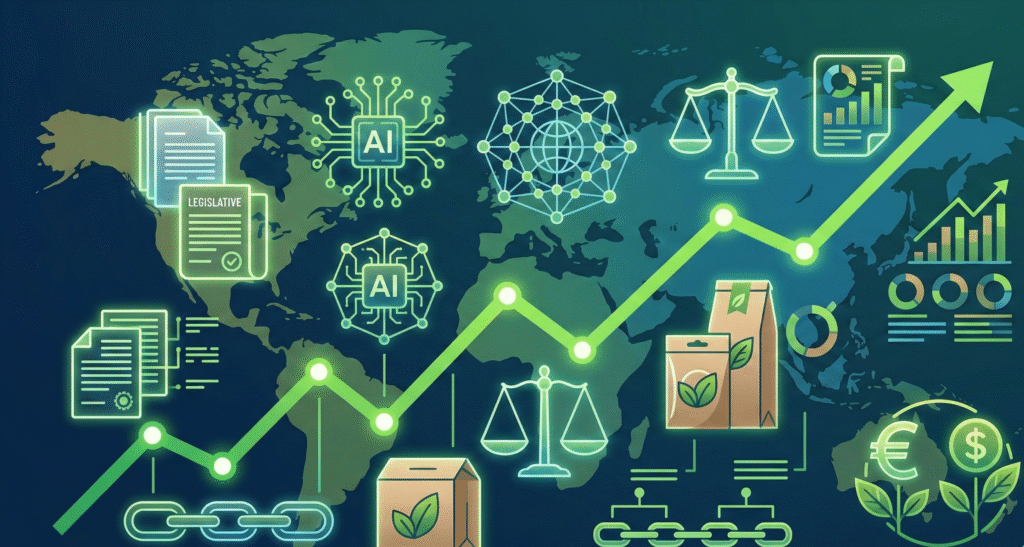
Abstract illustration of a world map overlaid with an upward green trend line and ESG icons including regulatory documents, AI circuits, justice scales, data charts, eco-packaging, supply chains, and green currency symbols, representing key sustainability trends for 2026.
generated by google gemini

Organizations can no longer treat ESG as a compliance exercise. It has become a strategic priority that directly influences reputation, investment, operations, and long-term growth. Below are seven important ESG trends that are expected to shape corporate strategy in 2026.


1. Regulatory Uncertainty Continues Across Regions

The global ESG regulatory environment remains fragmented. While some regions are accelerating sustainability efforts, others are taking a step back.

The European Union is pushing forward with initiatives such as the Clean Industrial Deal to strengthen competitiveness while maintaining climate ambitions. Many countries are also aligning their reporting frameworks with the International Sustainability Standards Board to improve global consistency.

In contrast, parts of the United States are experiencing anti-ESG policy movements at both federal and state levels. This creates additional complexity for multinational companies that must comply with differing regulatory expectations across jurisdictions.

Businesses operating globally must remain agile and invest in regulatory monitoring systems to stay compliant.


2. Artificial Intelligence Expands ESG Impacts Across Value Chains

Artificial intelligence is no longer just a digital transformation tool. Its ESG implications are expanding rapidly.

Beyond concerns about energy use in data centers, companies now need to evaluate AI’s broader environmental and social footprint. Infrastructure demands for water, electricity, and cooling systems can put pressure on net zero commitments.

There are also growing expectations around human rights in AI-driven supply chains. Compliance with regulations such as the EU Corporate Sustainability Due Diligence Directive helps reduce litigation risk and strengthens stakeholder trust.

Organizations that integrate ESG risk assessments into AI strategy will be better positioned to manage future scrutiny.


3. ESG Litigation Becomes More Targeted and Strategic

ESG-related litigation is becoming more sophisticated. Directors, investors, and advisers are increasingly facing claims related to greenwashing, supply chain oversight, and financed emissions.

Recent climate-related rulings in European courts have narrowed certain legal paths. However, advisory opinions from the International Court of Justice have reinforced the concept of state climate responsibility, which could influence future claims.

Businesses should prepare for increased compensation demands and formal complaints filed through OECD mechanisms. Strong governance documentation and transparent reporting will be essential in defending against such claims.


4. Sustainability Reporting Standards Continue to Diverge

Sustainability reporting remains a moving target.

The European Union is simplifying some aspects of the Corporate Sustainability Reporting Directive while maintaining core disclosure requirements. At the same time, several countries are adopting ISSB-based frameworks to enhance global comparability.

In the United States, state-level regulations are stepping in to fill federal gaps. Even where mandates are softened, transition plan disclosures continue to attract investor and regulator attention.

Companies should strengthen internal governance frameworks to adapt quickly to evolving reporting obligations.


5. Environmental Product Regulations Tighten Despite Simplification Efforts

Environmental product rules are becoming stricter, particularly in areas such as packaging, batteries, and PFAS chemicals.

Although the European Union is pursuing regulatory simplification through initiatives like the Omnibus proposal, enforcement remains strong. Carbon pricing mechanisms under the Carbon Border Adjustment Mechanism are testing how imports are taxed based on emissions.

Extended Producer Responsibility schemes are also expanding, supporting the transition to a circular economy. Meanwhile, regulators are increasing scrutiny of green marketing claims, raising the compliance bar for businesses.

Clear documentation and transparent sustainability claims are now critical to avoid reputational damage.


6. Supply Chain Due Diligence Laws Evolve

Supply chain regulation is seeing modest simplification in parts of Europe, including adjustments to the Corporate Sustainability Due Diligence Directive and the EU Deforestation Regulation.

Germany is reviewing its national supply chain requirements, and several Asian countries are introducing new due diligence proposals. South Korea, for example, is considering stronger supply chain accountability legislation.

Companies with global operations must map their entire value chain carefully. This helps manage civil, criminal, and reputational risks while ensuring compliance with multiple overlapping laws.


7. Sustainable Finance and ESG Ratings Face Reform

Sustainable finance regulations are entering a reform phase. The European Union is reviewing its Sustainable Finance Disclosure Regulation to reduce compliance costs and clarify product labeling.

At the same time, ESG rating agencies are coming under increased oversight. The UK Financial Conduct Authority has announced plans to regulate ESG ratings providers starting in 2028. These reforms aim to improve transparency and credibility in sustainable investing.

Investors and asset managers must apply stronger due diligence when making ESG claims, as regulatory scrutiny remains high.


Final Thoughts

The ESG environment in 2026 will require businesses to balance compliance, innovation, and strategic resilience. Regulatory divergence, litigation exposure, AI expansion, and sustainable finance reforms are redefining corporate responsibility.

Organizations that treat ESG as a strategic framework rather than a reporting obligation will gain a competitive advantage. Proactive governance, transparent communication, and integrated risk management will be the key drivers of long-term success.