Tag Archives: electric vehicles

12 Climate Tech Startups Leading the Net Zero Future in 2026

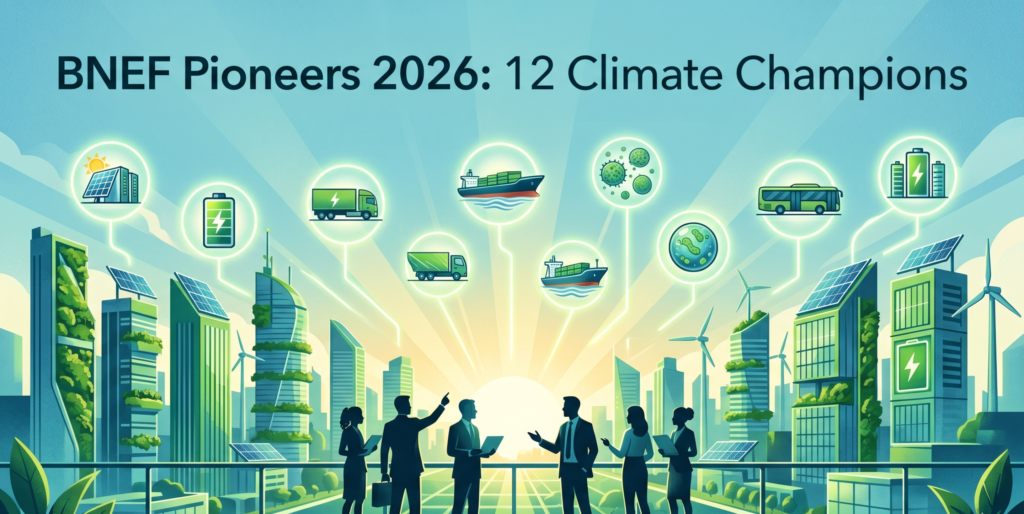
Vibrant illustration of a futuristic eco-city at dawn, featuring 12 glowing icons for BNEF Pioneers 2026 winners: solar data centers, batteries, electric trucks, ships, carbon capture orbs, and buses amid green skyscrapers, with golden sunlight and text "BNEF Pioneers 2026: 12 Climate Champions" overlay.
generated by google gemini

The global push toward a net zero future continues to gain momentum, and innovation is playing a central role in this transition. Recently, BloombergNEF announced the winners of its 2026 Pioneers Award, recognizing 12 promising climate technology startups that are shaping the future of sustainability.

Selected from more than 600 applications across 66 countries, these startups represent some of the most impactful solutions in energy, transportation, and climate innovation today.

Driving Innovation Across Key Climate Challenges

The award highlights startups working on three critical areas that are essential for reducing global emissions and building a more sustainable infrastructure.

Smarter and Greener Data Centers

As demand for data continues to rise, energy consumption in data centers has become a growing concern. Startups such as Emerald AI, HT Materials Science, and Point2 Technology are developing advanced cooling systems and efficiency solutions. Their work aims to reduce energy usage while maintaining high performance, making data infrastructure more sustainable.

Solving the Duck Curve Problem

Managing energy supply and demand remains one of the biggest challenges in renewable energy adoption. Companies like Base Power Company, Qvantum International, and XL Batteries are working on improving energy storage and stabilizing electricity grids. Their innovations help balance fluctuations in renewable energy generation, especially during peak and off-peak hours.

Decarbonizing Heavy Transport and Shipping

Heavy transport and shipping are among the most difficult sectors to decarbonize. Startups such as DeepWay BEV Truck, Silverstream Technologies, and WattEV, Inc. are tackling this issue through electric vehicle technology and advanced solutions that reduce drag in shipping. These developments are helping lower emissions while improving operational efficiency.

Wildcard Innovations Expanding Climate Impact

In addition to the main categories, three startups were recognized as wildcard innovators for their unique contributions to climate solutions.

BasiGo is working to accelerate the adoption of electric buses, making public transport cleaner and more accessible. Endolith is exploring microbial carbon capture, offering a new approach to reducing carbon dioxide levels. GRST focuses on battery recycling, addressing the growing need for sustainable battery lifecycle management.

These companies demonstrate that innovation in climate technology goes beyond traditional sectors and continues to evolve in new and unexpected ways.

Global Recognition at the New York Summit

The selected startups will present their solutions at BloombergNEF’s New York Summit, scheduled for April 21 and 22, 2026. This event brings together industry leaders, investors, and innovators from around the world.

The Pioneers program has a strong track record, with previous participants collectively raising more than 25 billion dollars. This reflects the growing investor confidence in scalable climate technologies that can support global decarbonization efforts.

A Step Forward for a Sustainable Future

The 2026 Pioneers Award highlights the importance of innovation in addressing climate challenges. From energy storage and transport to data infrastructure and carbon capture, these startups are contributing to real-world solutions that can drive meaningful change.

As the world continues its journey toward sustainability, initiatives like this play a vital role in identifying and supporting technologies that can create long-term environmental impact.
Bosch Accelerates AI and EV Push, Positions India as Key Growth Hub

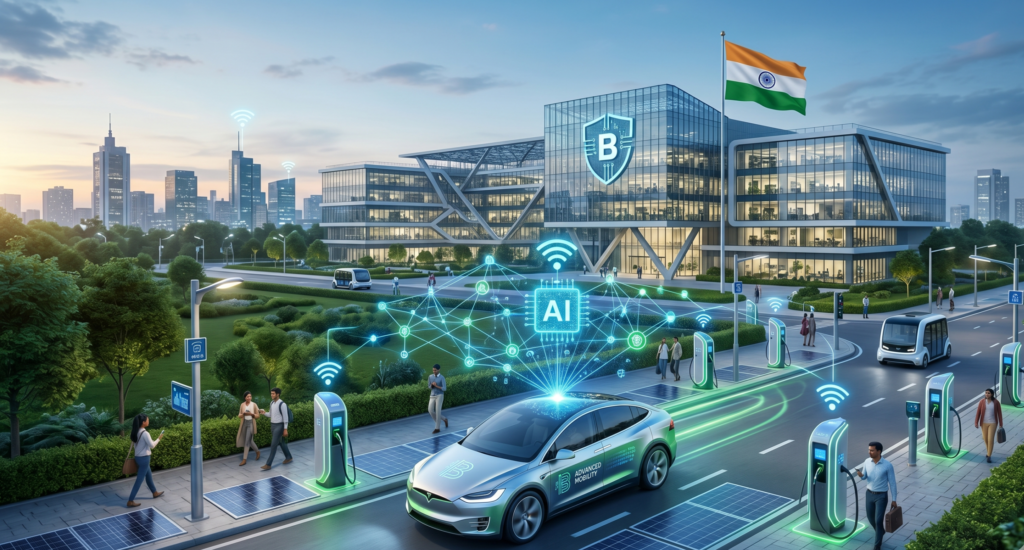
A futuristic scene of an electric car driving on a smart urban road in India, representing Bosch AI strategy, connected to a network of AI and data streams overhead, with a high-tech Bosch-style campus and Indian flag in the background, symbolising innovation, electrification, and advanced mobility technology.
generated by google gemini

Amid global economic uncertainty and shifting geopolitical conditions, Bosch is moving ahead with a strong focus on innovation. The company is prioritising artificial intelligence, electrification, and software to strengthen its position in mobility and industrial technology. India is emerging as a key hub in this strategy.

Adapting to a challenging global environment

Bosch faces rising trade barriers, supply chain disruptions, and changing price trends. These pressures are especially visible in the automotive sector. To stay competitive, the company has introduced structural changes and workforce adjustments. It has also launched a major restructuring plan in Germany.

These steps aim to improve efficiency while maintaining high-quality, technology-driven solutions. Bosch started 2026 on a stable note. First-quarter revenue remained close to last year’s levels, with slight growth after currency adjustments.

The company expects uncertainty to continue. However, it sees innovation as the main driver of long-term growth and profitability.

Strategy 2030 focuses on innovation

Bosch’s Strategy 2030 aims to place the company among the top three suppliers in its core markets. Cost control remains important, but innovation will define its competitive edge.

The company is investing heavily in automotive software, advanced driver-assistance systems, and vehicle computing. The automotive software market is expected to grow rapidly in the coming years. Bosch is positioning itself to capture a strong share.

Demand already looks strong. The company has secured major orders for ADAS components, sensors, and onboard systems.

Electrification and smarter mobility

Electrification remains central to Bosch’s mobility plans. The company expects to deliver millions of components for electric vehicles this year. This strengthens its role in powertrain and drivetrain systems.

Bosch is also developing AI-powered features to improve driving experiences. Some systems can recognise drivers and adjust seating, climate, and infotainment settings automatically.

These innovations make vehicles smarter and easier to use. They also help automakers stand out in a competitive market.

India becomes a strategic hub

India is gaining importance in Bosch’s global network. The country is not just a manufacturing base. It is also becoming a centre for research and software development.

Bosch has partnered with Tata AutoComp Systems to develop electric mobility solutions for the Indian market. This reflects its localised approach.

The company is also investing heavily in India. It aims to expand its capabilities in AI, mobility services, and connected technologies. India’s strong engineering talent and growing market make it an ideal hub.

AI expands beyond mobility

Bosch is extending AI into consumer products and services. It is introducing smart appliances with voice control and advanced power tools with safety features.

These technologies improve efficiency and user experience. They also enable services like remote diagnostics and predictive maintenance.

Bosch is also strengthening its service platforms. It uses AI to optimise fleet operations, logistics, and energy usage. This helps reduce costs for businesses.

Balancing present challenges with future growth

Bosch has reported moderate growth across its business segments. Some divisions are growing steadily, while others face margin pressure due to temporary costs.

This reflects a broader challenge. The company must balance current profitability with long-term investments.

Despite this, Bosch remains confident about its future. It continues to invest in AI, electrification, and software. With strong localisation in markets like India, Bosch aims to lead the next phase of mobility and industrial transformation.