Tag Archives: urban sustainability

Top Sustainability Breakthroughs Shaping 2026

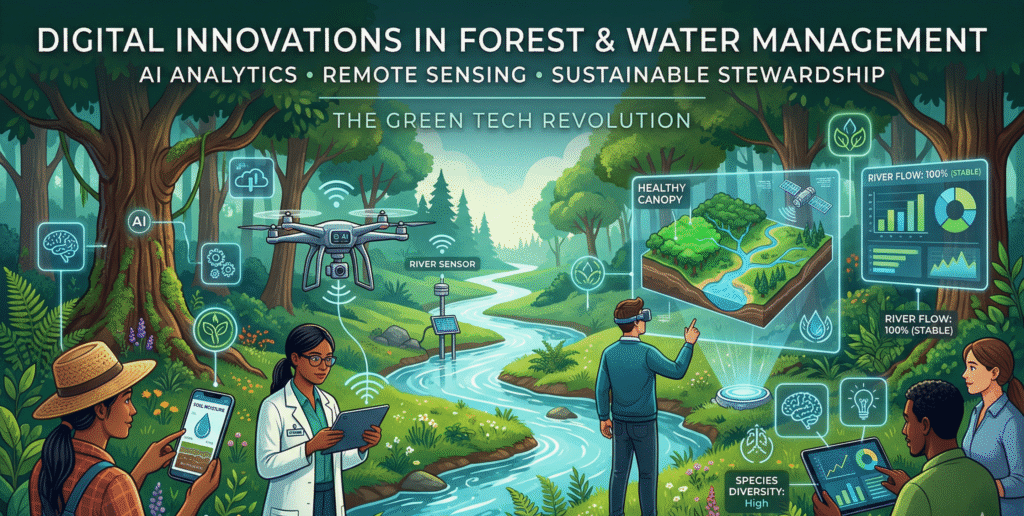
Vibrant digital illustration of a lush forest landscape with a flowing river, featuring diverse farmers, women, and tech experts using smartphones, drones, and satellite holograms to monitor tree health and water flow. Includes subtle AI analytics icons and eco-friendly elements in greens, blues, and earth tones, styled as a futuristic infographic header for sustainability innovations.
generated by google gemini

Sustainability is no longer a future concept. In 2026, it is actively reshaping how we build cities, manage resources, and generate energy. Across industries, new technologies are moving beyond theory and delivering practical, scalable solutions to real-world problems.

In this article, we explore three breakthrough innovations that are redefining energy efficiency, water management, and urban design.

Heat-Storing Building Materials for Smarter Energy Use

One of the most promising developments this year comes from researchers in Finland. They have created an advanced building material that can store and release heat, helping regulate indoor temperatures naturally.

This innovative composite combines waste wood biochar with clay. It also includes a special paraffin-based substance that absorbs heat during the day by melting and releases it at night as it solidifies. The result is a material that maintains comfortable indoor conditions without heavy reliance on air conditioning or heating systems.

Heating and cooling account for nearly 30 percent of global energy consumption. Materials like these can significantly reduce that demand by stabilizing temperatures inside buildings.

These panels are especially useful for spaces such as offices and warehouses. They can be added to existing structures without requiring major renovations. While early testing shows strong potential, large-scale production and safety standards, particularly fire resistance, will play a key role in widespread adoption.

Compact Urban Water Systems Inspired by Nature

Urban water management is another area seeing rapid transformation. Companies like Organica Water are leading the way with systems that mimic natural ecosystems.

Their approach uses plant roots and beneficial microbes to treat wastewater in compact, enclosed environments. These systems operate like artificial wetlands, breaking down pollutants efficiently while using far less space and energy than traditional treatment plants.

Compared to conventional setups, these systems require about 60 percent less space and consume around 30 percent less energy. This makes them particularly valuable in densely populated urban areas where land and resources are limited.

In regions such as South Asia, where a large portion of wastewater remains untreated, these modular units can be installed close to the source. This reduces the need for extensive pipelines and pumping infrastructure.

Beyond treatment, these systems support water reuse in industries, parks, and urban landscapes. They also contribute to local biodiversity. However, successful implementation depends on proper maintenance and skilled operation to meet safety and quality standards.

Flexible Solar Windows Transforming City Buildings

Solar energy is also evolving in exciting ways. Researchers at Hebrew University of Jerusalem have developed flexible solar cells that can be integrated directly into windows.

These advanced cells are made using perovskite materials and are produced through 3D printing. They allow light to pass through while still generating electricity. With an efficiency of around 9.2 percent and transparency of about 35 percent, they strike a balance between energy production and natural lighting.

Another advantage is their flexibility. Unlike traditional solar panels, these cells can bend without breaking, making them ideal for modern architectural designs. Their production process also avoids some of the harsh chemicals used in conventional solar manufacturing.

This technology opens the door to turning entire building facades into energy-generating surfaces. Instead of relying only on rooftops, cities can now harness solar power from vertical spaces.

There are still challenges to address, especially around long-term durability in different weather conditions. Building regulations will also influence how quickly this technology becomes mainstream.

Why These Innovations Matter in 2026

These breakthroughs highlight a clear shift in how sustainability is being approached. Instead of isolated solutions, the focus is now on integrating efficiency directly into everyday systems.

  • Smart materials are reducing energy demand at the source
  • Nature-inspired systems are making infrastructure more efficient and compact
  • Integrated solar technologies are expanding access to clean energy

For those working in sustainability, eco-tech, or even sustainable agriculture, these innovations offer valuable insights. They reflect a broader movement toward regenerative and resource-efficient systems that can be adapted across industries.

As cities continue to grow, adopting such technologies will be essential for building a more resilient and sustainable future.
Bio-Inspired Cooling for Skyscrapers: How Nature Is Shaping Energy Efficient Buildings

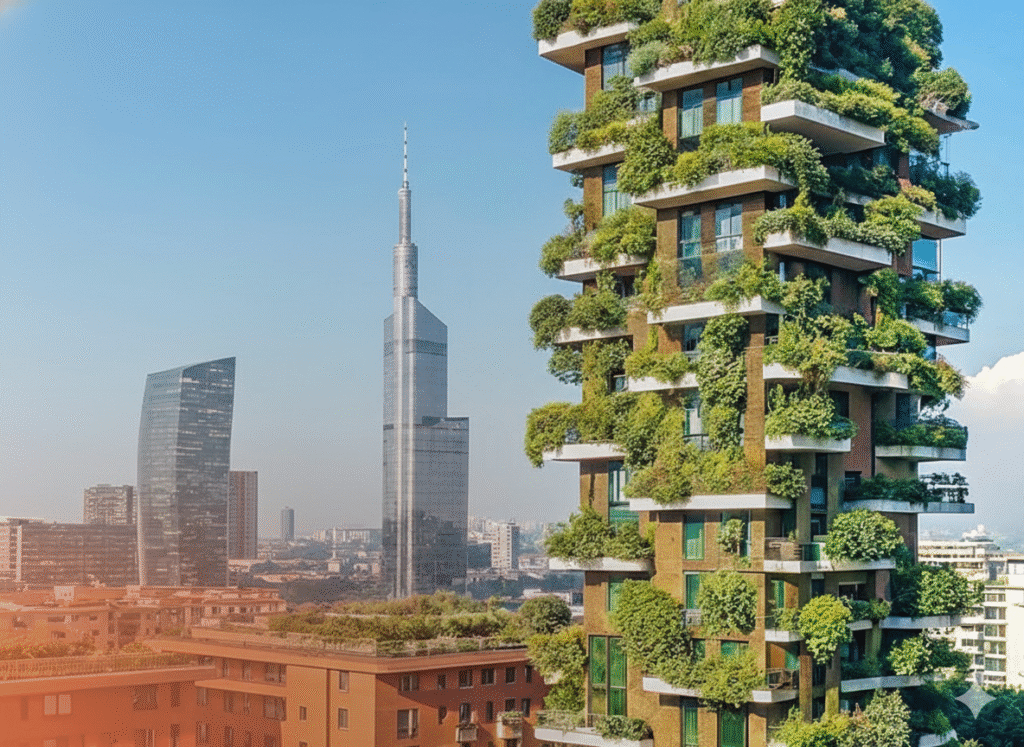
Two towering residential skyscrapers in Milan, known as Bosco Verticale, covered entirely in lush green trees and vegetation, with modern glass buildings in the background under a clear blue sky.
generated by google gemini

As cities expand and skylines rise higher, cooling large buildings has become one of the biggest energy challenges in urban areas. Traditional air conditioning systems consume enormous amounts of electricity, especially in hot climates. To reduce this dependency, engineers and architects are turning to an unlikely mentor: nature.

Bio-inspired cooling is an emerging approach that studies how natural systems regulate temperature and applies those lessons to modern buildings. From termite mounds to plant evaporation, nature offers efficient, low-energy solutions that are now being adapted for skyscrapers and high-rise developments.

What Is Bio-Inspired Cooling?

Bio-inspired cooling uses natural design principles to manage heat inside buildings. Instead of relying entirely on mechanical air conditioning, these systems focus on passive strategies such as natural airflow, shading, and water evaporation.

The goal is simple. Reduce energy consumption, lower emissions, and support long-term net-zero targets. By observing how termites maintain stable temperatures in their mounds or how plants cool themselves through moisture release, architects are creating smarter and more sustainable structures.

Key Bio-Inspired Cooling Techniques for High-Rise Buildings

Several nature-based strategies are proving effective in large commercial and residential towers.

1. Termite Mound Ventilation

Termite mounds maintain nearly constant internal temperatures despite extreme outdoor heat. They achieve this through a natural stack ventilation system, with low and high vents that allow hot air to rise and escape while drawing cooler air inside.

This principle has been successfully applied in modern architecture. The Eastgate Centre in Harare uses passive ventilation inspired by termite mounds. The building significantly reduces energy use and saves millions annually in cooling costs. Such systems work especially well in dry climates.

2. Evaporative Cooling Inspired by Plants

Plants cool themselves through transpiration, a process where moisture evaporates from their leaves and absorbs heat. Buildings can replicate this effect by using water-based cooling surfaces or green walls.

Evaporative cooling systems can reduce cooling energy demand by up to 50 to 70 percent in suitable climates. When combined with vertical gardens or green facades, they also improve air quality and enhance urban biodiversity.

3. Coral-Inspired Heat Dissipation and Tree Canopy Shading

Coral reefs are structured to release heat efficiently while maintaining strength. Architects are studying these structures to design building facades that improve heat dissipation.

Similarly, tree canopies provide shade while allowing filtered light to pass through. Shading systems inspired by tree structures help reduce solar heat gain, lower indoor temperatures, and decrease the urban heat island effect.

Benefits of Bio-Inspired Cooling in Urban Areas

Cooling systems account for a major share of electricity consumption in hot cities. By integrating nature-inspired designs, buildings can significantly cut energy demand.

Key advantages include:

  • Lower electricity bills for cooling
  • Reduced carbon emissions
  • Improved indoor comfort
  • Mitigation of urban heat islands
  • Enhanced biodiversity through green integration

Recent research suggests that energy-efficient building strategies could contribute to meaningful global reductions in building energy use by 2030. As more cities push toward climate resilience and sustainable growth, bio-inspired cooling offers a practical pathway forward.

Challenges in Adoption

Despite its benefits, bio-inspired cooling faces certain barriers. Initial design costs may be higher, and specialized expertise is often required during planning and construction.

However, early integration during the architectural design phase can significantly reduce additional costs. Government grants, sustainability incentives, and collaboration with organizations such as the Biomimicry Institute are helping accelerate adoption.

How to Implement Bio-Inspired Cooling in New Projects

For developers and planners considering this approach, the process typically involves:

  1. Conducting a detailed climate and site analysis
  2. Evaluating feasibility based on local weather patterns
  3. Collaborating with sustainability consultants and architects
  4. Integrating cooling strategies alongside solar energy systems
  5. Monitoring performance through sensors and smart building systems
  6. Exploring public-private funding partnerships

Early planning is critical. When bio-inspired systems are embedded into the core design rather than added later, projects remain cost-effective and technically efficient.

The Future of Sustainable Skyscrapers

As cities like Bhopal continue to grow and modernize, integrating climate-smart infrastructure becomes increasingly important. Bio-inspired cooling aligns perfectly with sustainable urban development goals and green innovation initiatives.

By learning from nature’s time-tested solutions, the next generation of skyscrapers can be both high-performing and environmentally responsible. This approach is not just about reducing energy bills. It represents a shift toward smarter, more resilient cities built in harmony with natural systems.