Tag Archives: business innovation

Why Sustainability Teams Are Becoming a Core Business Function

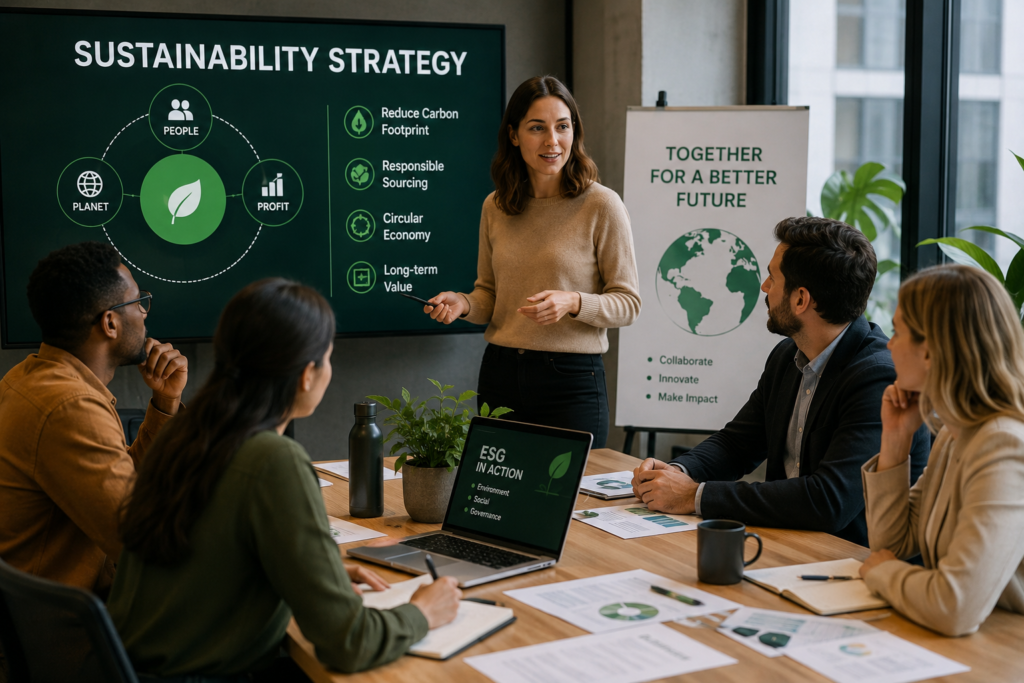
Business professionals discussing sustainability strategy in a modern office meeting, with visual presentations focused on ESG goals, responsible sourcing, circular economy, and long term business value, representing the growing role of sustainability teams in business decision making.
generated by ChatGPT

Sustainability is no longer being treated as a side initiative inside modern organizations. Across industries, companies are beginning to recognize that environmental and social goals cannot be achieved by assigning responsibility to one small team while the rest of the business continues as usual.

Instead, a different approach is taking shape. Sustainability is moving closer to the center of business decision making and becoming part of how organizations plan, operate, and grow.

The Traditional Sustainability Model Is Changing

For many years, sustainability teams were expected to manage a wide range of responsibilities with limited resources.

These teams often handled reporting requirements, supplier coordination, compliance expectations, stakeholder communication, and long term transformation plans at the same time. While this created visibility around sustainability goals, it also created pressure and limited the ability to drive meaningful change across the business.

As expectations continue to increase, many organizations are realizing that this model is becoming difficult to sustain.

Sustainability Is Becoming a Shared Responsibility

A growing number of businesses now see sustainability as something that should influence every major business function.

Instead of operating separately, sustainability goals are being integrated into product development, operations, procurement, finance, and leadership decisions.

This shift allows organizations to move beyond reporting outcomes and focus on creating measurable business impact.

When sustainability becomes part of everyday decision making, teams can respond faster, align priorities more effectively, and create stronger long term results.

Building Teams That Support Long Term Impact

As companies rethink their structures, they are experimenting with different ways to organize sustainability efforts.

Some organizations are introducing specialized positions focused on areas such as:

  • Sustainability data and measurement
  • Supply chain transparency
  • Circular business practices
  • Stakeholder engagement
  • Responsible sourcing

Others are creating cross functional teams where employees contribute sustainability outcomes alongside their existing roles.

There is no single model that works for every business. What matters most is creating a structure that supports collaboration and clear accountability.

What Successful Sustainability Teams Have in Common

Although team structures vary, strong sustainability teams often share several characteristics.

They Connect Sustainability With Business Goals

Teams that succeed are able to translate environmental and social objectives into practical business outcomes.

They Encourage Cross Functional Collaboration

Progress becomes easier when departments work together instead of operating independently.

They Balance Expertise and Execution

Technical sustainability knowledge becomes more valuable when combined with operational and commercial understanding.

Structure Matters but Culture Matters More

Creating a sustainability team is only one part of the process.

Organizations also need to build a culture where sustainability becomes part of normal business behavior rather than an isolated project.

When employees understand how sustainability connects to their daily decisions, participation becomes stronger and progress becomes more sustainable over time.

Large organizations may distribute sustainability specialists across departments while maintaining a central strategy function. Smaller companies may rely on lean teams supported by partnerships and shared leadership.

Both approaches can work when sustainability becomes embedded into how decisions are made.

The Future of Business Is More Integrated

Companies are entering an environment where resilience, adaptability, and responsible growth matter more than ever.

The organizations likely to stand out in the years ahead may not simply be those hiring larger sustainability teams. They may be the ones redesigning how business decisions are made so sustainability becomes part of the operating model itself.

As expectations continue to evolve, businesses that integrate sustainability into core operations will be better positioned to innovate, respond to change, and create long term value.

Final Thoughts

Sustainability is no longer only about meeting expectations. It is becoming a business capability that influences growth, efficiency, and long term competitiveness.

The companies that embrace this shift today may be better prepared for tomorrow.

How Business Leaders Can Navigate Tough Times and Build Sustainable Businesses

Professional business leadership wearing leads a sustainability meeting, presenting charts on innovation and market strategies in a modern boardroom.
Royalty free image via pexels.

Introduction

Business leaders today operate in an environment that is constantly changing. Economic uncertainty, rapid technological development, and shifting political conditions make decision making more complex than ever before. Alongside these short term challenges, companies must also prepare for long term risks such as climate change, biodiversity loss, and growing social inequality.

Modern leadership requires balancing immediate business pressures with responsible long term strategies. Many executive programs focused on sustainability are helping leaders learn how to manage this balance while maintaining strong commercial performance.

Why Sustainability Is Now a Business Priority

For many organizations, sustainability is no longer just about maintaining a positive brand image. It has become closely connected to long term business survival. Environmental risks, resource shortages, and changing customer expectations are reshaping global markets.

Traditional approaches such as simple compliance or sustainability reporting are not enough to create meaningful change. Businesses must take a more active role in transforming the industries they operate in. By promoting sustainable practices across entire markets, companies can create stable and competitive environments that benefit both businesses and society.

The Role of Innovation in Sustainable Markets

Innovation is one of the strongest drivers of sustainable change. Startups and forward thinking companies are already working to design new market models that reward environmentally and socially responsible practices.

These innovators often address major global challenges such as climate change, resource efficiency, and economic inequality. However, they frequently operate in systems that do not fully recognize the value of sustainable solutions.

Strong leadership can help reshape these market systems. By encouraging new business models and supporting sustainable innovation, leaders can turn responsible practices into a real competitive advantage.

Strategic Tools That Support Modern Leaders

Many executive leadership programs now focus on sustainability and long term strategy. These programs help business leaders develop practical tools that support better decision making in uncertain environments.

Participants often gain access to strategic frameworks that allow them to assess risks, identify opportunities, and implement effective sustainability initiatives. They also learn how to engage teams, partners, and regulators in order to drive meaningful change across their organizations.

Another important benefit is the opportunity to connect with other leaders who are facing similar challenges. These professional networks often lead to valuable collaboration and shared learning.

Turning Challenges Into Opportunities

Organizations that want to succeed in the coming decades must move quickly toward cleaner energy, efficient resource use, and more resilient operational systems. At the same time, companies must continue to innovate so they can remain competitive in evolving markets.

When businesses adopt this approach, they can transform environmental and social risks into opportunities for growth. Sustainable strategies often lead to improved efficiency, stronger customer trust, and access to emerging markets.

Conclusion

The challenges facing today’s business leaders are complex, but they also create opportunities for transformation. Leaders who prioritize sustainability while maintaining strong strategic focus are better positioned to guide their organizations through uncertainty.

By embracing innovation, supporting market wide change, and committing to practical action, businesses can build resilient systems that benefit both the economy and society. Organizations that act now will not only manage current challenges but also secure long term success in a rapidly changing world.